
Urology (Urinary Tract & Men's Health): Individualized Homeopathic Care in Dubai
Comprehensive Homeopathic Care for Urinary Tract, Prostate, Bladder, Kidney & Men's Health Disorders
The urinary system and male reproductive system play essential roles in maintaining overall health, fluid balance, waste elimination, hormonal function, fertility, sexual health, and quality of life. Disorders affecting these systems are common and may occur at any stage of life, ranging from urinary tract infections and kidney stones to prostate enlargement, bladder dysfunction, erectile dysfunction, male infertility, and structural disorders affecting the male genital organs. While some urological conditions cause only temporary discomfort, others may significantly affect daily activities, sexual function, reproductive health, kidney function, and long-term well-being if left untreated.
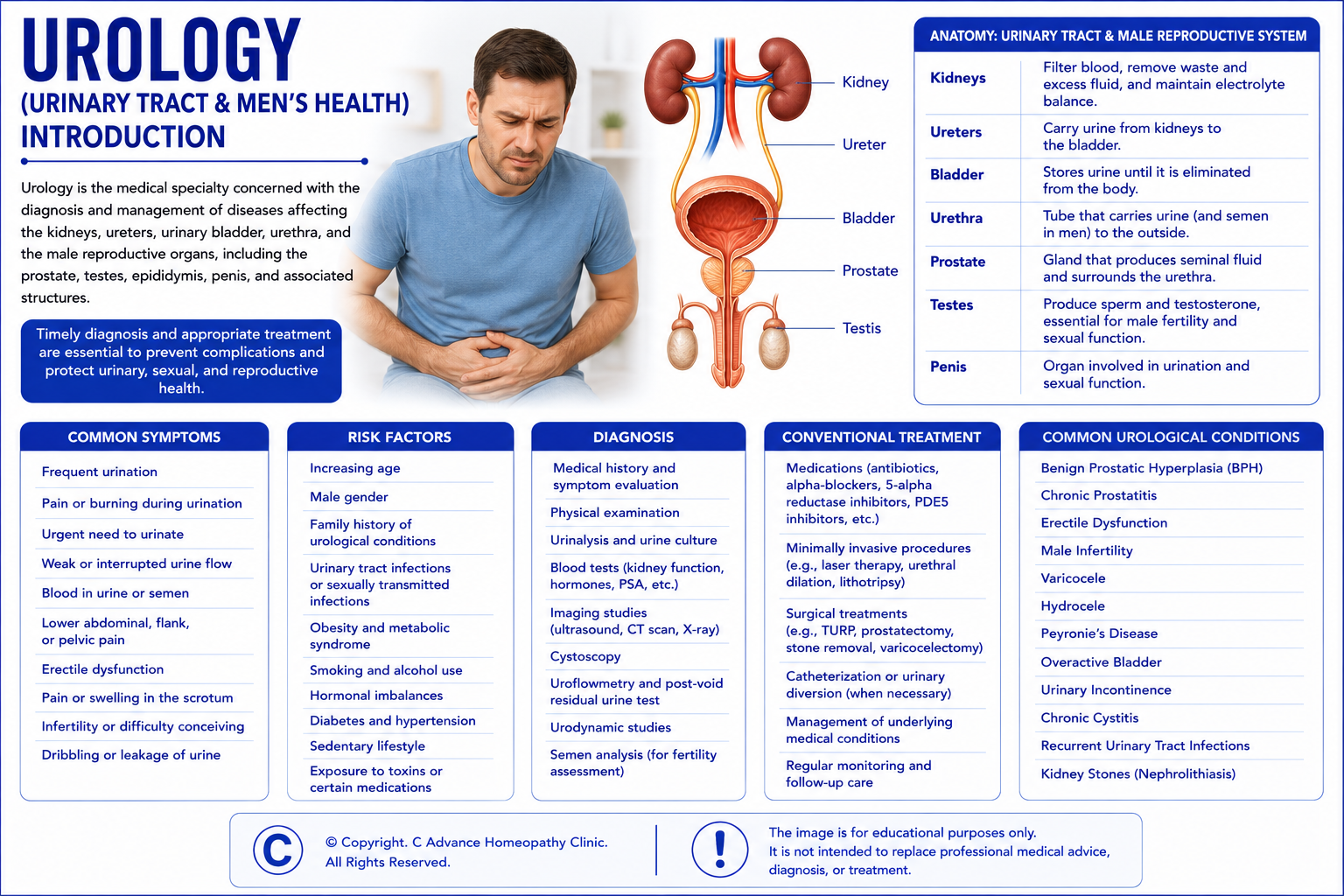
Urology is the medical specialty concerned with the diagnosis and management of diseases affecting the kidneys, ureters, urinary bladder, urethra, and the male reproductive organs, including the prostate, testes, epididymis, penis, and associated structures. Urological disorders develop through a variety of mechanisms, including bacterial infections, urinary obstruction, stone formation, age-related prostate enlargement, hormonal imbalances, neurological disorders affecting bladder control, vascular disease, congenital abnormalities, trauma, and structural changes within the urinary tract or male reproductive system. Many conditions share similar symptoms, making an accurate medical diagnosis essential before treatment is initiated.
Some urological disorders, such as Benign Prostatic Hyperplasia (BPH), Overactive Bladder, and Urinary Incontinence, commonly affect older adults due to age-related changes in bladder and prostate function. Others, including Kidney Stones, Chronic Cystitis, and Recurrent Urinary Tract Infections, may occur across all age groups. Conditions such as Erectile Dysfunction, Male Infertility, Varicocele, Hydrocele, and Peyronie's Disease primarily affect male reproductive and sexual health and may have important physical, psychological, and emotional consequences.
Early diagnosis and appropriate management play an important role in preventing complications such as recurrent infections, urinary retention, bladder damage, kidney impairment, infertility, or progressive deterioration in quality of life. Modern urology offers a wide range of diagnostic investigations and treatment options, including laboratory testing, imaging studies, endoscopic procedures, medications, minimally invasive interventions, and surgical management where clinically indicated. Timely medical evaluation allows many urological conditions to be treated effectively while reducing the risk of long-term complications.
At Advance Homeopathy Clinic Dubai, we provide individualized homeopathic care for patients with a wide range of chronic urological and men's health conditions, including Benign Prostatic Hyperplasia (BPH), Chronic Prostatitis, Erectile Dysfunction, Male Infertility, Overactive Bladder, Urinary Incontinence, Chronic Cystitis, Recurrent Urinary Tract Infections, Kidney Stones (Nephrolithiasis), Hydrocele, Varicocele, and Peyronie's Disease. Our homeopathic approach considers the patient's complete symptom picture, constitutional characteristics, medical history, associated medical conditions, lifestyle, emotional well-being, and overall health rather than focusing solely on the diagnosis.
Homeopathy is offered as a complementary approach alongside conventional urological care. Our goal is to support individualized patient care while encouraging patients to continue appropriate medical investigations, prescribed medications, pelvic floor rehabilitation where appropriate, fertility assessments, lifestyle modification, surgical treatment when indicated, and regular follow-up with their urologist, nephrologist, fertility specialist, or other healthcare professionals whenever required.
Understanding Urological Disorders
Urology is the branch of medicine concerned with diseases affecting the kidneys, ureters, urinary bladder, urethra, and the male reproductive organs, including the prostate, testes, epididymis, penis, and associated structures. Although these organs perform different functions, they work together to maintain normal urinary function, reproductive health, hormonal balance, fertility, and the elimination of waste products from the body.
Urological disorders develop through a variety of mechanisms, and understanding the underlying cause is essential because similar symptoms may arise from very different medical conditions. For example, frequent urination may result from an overactive bladder, urinary tract infection, enlarged prostate, diabetes, excessive fluid intake, certain medications, or neurological disorders. Likewise, difficulty passing urine may occur because of benign enlargement of the prostate, urethral narrowing, bladder muscle dysfunction, or neurological disease. Accurate diagnosis is therefore the foundation of effective treatment.
Several important mechanisms contribute to the development of urological disorders, including:
- Urinary tract infections, caused by bacteria or, less commonly, other microorganisms affecting the bladder, kidneys, or urinary tract.
- Obstruction of urinary flow, resulting from conditions such as benign prostatic hyperplasia, urethral stricture, bladder outlet obstruction, or urinary stones.
- Kidney stone formation, where minerals crystallize within the urinary tract and may obstruct urine flow, producing severe pain and urinary symptoms.
- Age-related changes, particularly enlargement of the prostate and changes in bladder function that commonly occur in older adults.
- Neurological disorders, affecting the communication between the brain, spinal cord, nerves, and bladder, leading to impaired bladder control or urinary retention.
- Pelvic floor dysfunction, which may contribute to urinary incontinence, incomplete bladder emptying, or other lower urinary tract symptoms.
- Hormonal and vascular disorders, which may influence erectile function, male fertility, and sexual health.
- Congenital or structural abnormalities, affecting the kidneys, urinary tract, or male reproductive organs from birth or developing later in life.
- Inflammatory conditions, including chronic prostatitis and chronic cystitis, which may cause persistent urinary or pelvic symptoms even when no active infection is present.
Because these mechanisms often overlap, many patients experience similar urinary symptoms despite having entirely different underlying conditions. Careful medical history, physical examination, laboratory investigations, imaging studies, and specialized urological tests are frequently required to establish an accurate diagnosis and determine the most appropriate treatment plan.
Early recognition and appropriate management are important not only for relieving symptoms but also for preserving kidney function, bladder function, fertility, sexual health, and overall quality of life. Many urological conditions respond well to treatment when identified early, whereas delayed diagnosis may increase the risk of recurrent infections, urinary retention, kidney damage, infertility, or other long-term complications.
How Homeopathy May Support Urological Disorders
Homeopathy is an individualized system of medicine in which treatment is selected according to the patient's unique clinical presentation rather than the diagnosis alone. During consultation, the homeopathic physician evaluates the presenting urological condition together with the patient's constitutional characteristics, medical history, symptom progression, associated medical conditions, lifestyle, emotional well-being, and the overall pattern of symptoms before selecting an appropriate homeopathic medicine.
Because urological disorders differ considerably in their underlying causes, disease severity, and impact on urinary, reproductive, and sexual health, every patient requires an individualized assessment. Two individuals diagnosed with the same condition—for example, benign prostatic hyperplasia, recurrent urinary tract infection, or overactive bladder—may experience different symptoms, disease progression, contributing factors, and treatment goals.
Depending on the individual's clinical presentation, homeopathic treatment may be considered as a complementary approach for patients experiencing:
- Benign prostatic enlargement with lower urinary tract symptoms
- Chronic pelvic pain associated with chronic prostatitis
- Recurrent urinary tract infections
- Chronic cystitis
- Overactive bladder symptoms
- Urinary incontinence
- Kidney stones (between acute episodes and alongside appropriate medical care)
- Erectile dysfunction
- Male infertility
- Hydrocele and varicocele
- Peyronie's disease
- Persistent urinary symptoms affecting quality of life
Homeopathy should complement—not replace—conventional urological care. Patients are encouraged to continue prescribed medications, recommended investigations, pelvic floor rehabilitation, fertility assessments, lifestyle modification, minimally invasive procedures, surgical treatment when indicated, and regular follow-up with their urologist or other healthcare professionals.
1. Benign Prostatic Hyperplasia (BPH)
What is Benign Prostatic Hyperplasia (BPH)?
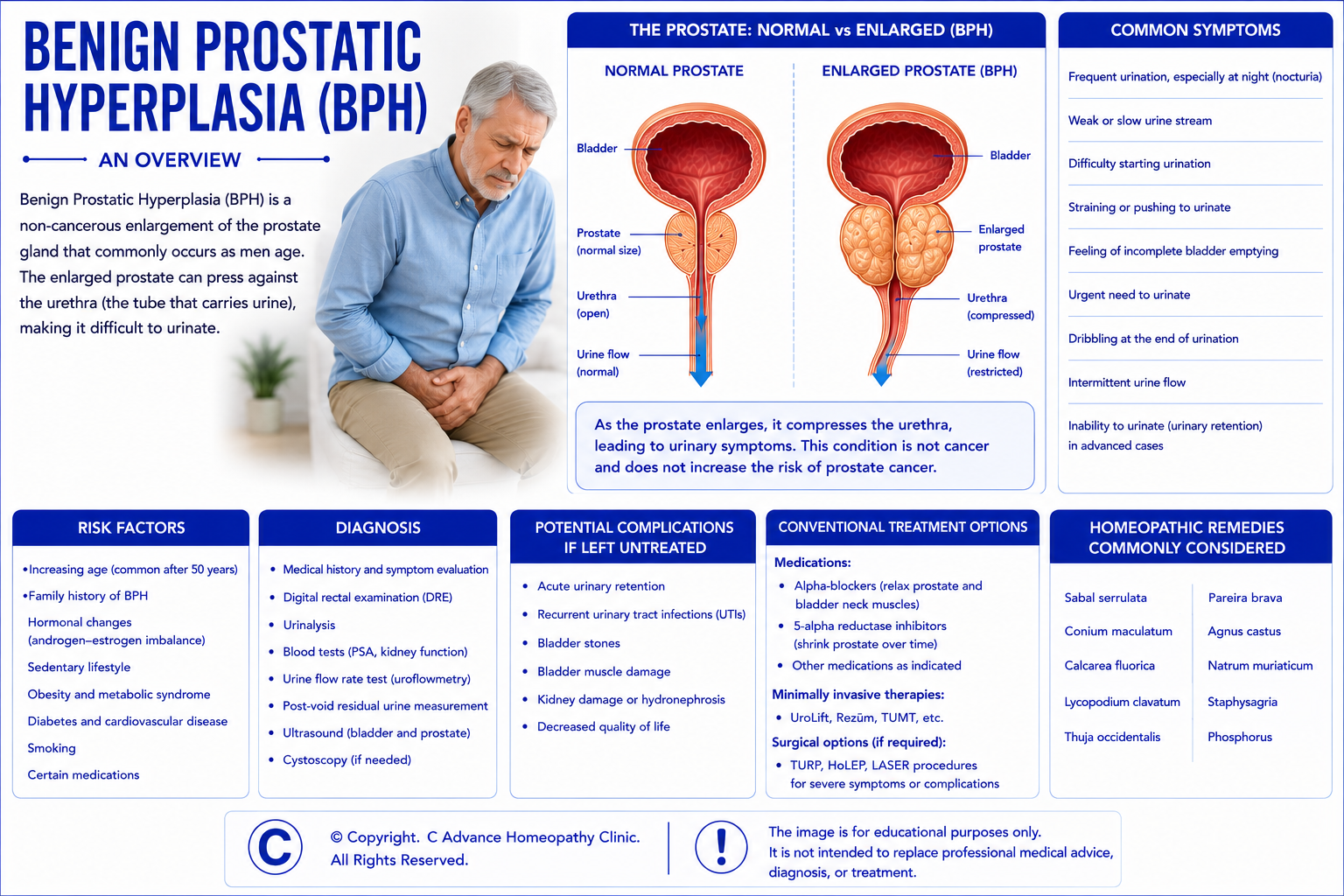
Benign Prostatic Hyperplasia (BPH), also known as benign enlargement of the prostate, is a common age-related condition in which the prostate gland gradually increases in size. The prostate is a small gland located just below the urinary bladder and surrounds the upper part of the urethra—the tube through which urine leaves the body. As the prostate enlarges, it may compress the urethra and partially obstruct the flow of urine, leading to a variety of lower urinary tract symptoms.
BPH is one of the most common urological conditions affecting ageing men. The likelihood of developing prostate enlargement increases progressively with age, particularly after the age of 50 years. Although the condition is benign, meaning it is not prostate cancer, it may significantly affect urinary function, sleep quality, daily activities, and overall quality of life if symptoms become severe. Importantly, having BPH does not mean that a man has prostate cancer, although both conditions may coexist and require appropriate medical evaluation to distinguish between them.
The exact cause of BPH is not completely understood, but it is believed to result from age-related hormonal changes, particularly alterations in the balance of testosterone and dihydrotestosterone (DHT), together with changes in the growth regulation of prostate tissue. As the gland enlarges, the bladder must generate greater pressure to empty urine. Over time, this increased workload may cause the bladder muscle to become thickened, less efficient, or overactive, contributing to urinary urgency, increased frequency, and incomplete bladder emptying. If left untreated in selected patients, significant bladder outlet obstruction may increase the risk of urinary retention, recurrent urinary tract infections, bladder stones, or, in severe cases, impairment of kidney function.
Early diagnosis is important because several other conditions—including prostate cancer, urinary tract infection, bladder disorders, urethral stricture, neurological diseases, and overactive bladder—may produce similar urinary symptoms. Appropriate medical assessment helps establish the correct diagnosis and determine the most suitable treatment.
Common Signs & Symptoms of Benign Prostatic Hyperplasia
Men with BPH may experience one or more of the following:
- Frequent urination, especially during the day
- Increased urination at night (Nocturia)
- Urgency to pass urine
- Difficulty starting urination (Hesitancy)
- Weak or interrupted urinary stream
- Straining during urination
- Prolonged time required to empty the bladder
- Feeling of incomplete bladder emptying
- Dribbling of urine after finishing urination
- Acute urinary retention in severe cases
Risk Factors for Benign Prostatic Hyperplasia
Several factors may increase the likelihood of developing BPH, including:
- Increasing age
- Age above 50 years
- Family history of prostate enlargement
- Hormonal changes associated with ageing
- Obesity
- Type 2 diabetes mellitus
- Metabolic syndrome
- Lack of regular physical activity
- Cardiovascular disease
- Erectile dysfunction, which commonly coexists with BPH
Conventional Management of Benign Prostatic Hyperplasia
Treatment depends on the severity of symptoms, the degree of bladder outlet obstruction, prostate size, and the impact on the patient's quality of life. Many men with mild symptoms require only regular monitoring, while others benefit from medication or surgical intervention.
Conventional management may include:
- Clinical evaluation by a urologist
- Digital rectal examination (DRE)
- Prostate-Specific Antigen (PSA) testing where appropriate
- Urinalysis and urine culture
- Ultrasound examination of the prostate and urinary tract
- Uroflowmetry
- Measurement of post-void residual urine
- Lifestyle modification
- Alpha-blocker medications
- 5-alpha reductase inhibitors
- Combination drug therapy in selected patients
- Minimally invasive procedures
- Transurethral Resection of the Prostate (TURP) or other surgical procedures when indicated
- Regular urological follow-up
Homeopathic Medicines Commonly Considered
The following homeopathic medicines are among those traditionally considered by experienced homeopathic physicians. Medicine selection is individualized and depends on the patient's complete clinical presentation rather than the diagnosis alone.
- Sabal Serrulata
- Conium Maculatum
- Chimaphila Umbellata
- Thuja Occidentalis
- Baryta Carbonica
- Lycopodium Clavatum
- Selenium Metallicum
- Pareira Brava
Homeopathic medicines should only be prescribed by a qualified homeopathic physician after an individualized clinical evaluation.
Important: Complementary Care for Benign Prostatic Hyperplasia (BPH)
Benign Prostatic Hyperplasia (BPH) should always be evaluated and managed by a qualified urologist or appropriately trained healthcare professional to confirm the diagnosis, determine the severity of lower urinary tract symptoms (LUTS), assess the degree of bladder outlet obstruction, evaluate the impact on quality of life, exclude other urological conditions, and develop an individualized management plan. Comprehensive evaluation commonly includes a detailed medical history, assessment of lower urinary tract symptoms using validated symptom questionnaires such as the International Prostate Symptom Score (IPSS) where appropriate, physical examination including Digital Rectal Examination (DRE), urinalysis, prostate-specific antigen (PSA) testing when clinically indicated, kidney function assessment, measurement of post-void residual urine, uroflowmetry, ultrasonography of the urinary tract when appropriate, review of current medications, bladder diary in selected patients, and additional investigations such as cystoscopy or urodynamic studies based on the patient's clinical presentation. Accurate diagnosis is essential because urinary frequency, nocturia, weak urinary stream, urgency, and incomplete bladder emptying may also occur in prostate cancer, urinary tract infection, bladder stones, urethral stricture, overactive bladder, neurogenic bladder dysfunction, bladder cancer, diabetes mellitus, or other urological and medical conditions, each requiring different management.
Men with stable Benign Prostatic Hyperplasia may be considered for individualized homeopathic treatment as a complementary approach following appropriate urological evaluation. Homeopathy may be integrated alongside lifestyle modification, optimization of fluid intake, reduction of evening fluid consumption where appropriate, limitation of caffeine and alcohol, bladder training, management of constipation, weight optimization, regular physical activity, prescribed medications such as alpha-blockers or 5-alpha reductase inhibitors when clinically indicated, minimally invasive procedures, surgical treatment when appropriate, patient education, and regular follow-up with their urologist. Individualized homeopathic prescribing is based on the patient's complete clinical presentation, constitutional characteristics, urinary symptoms, prostate-related complaints, associated medical conditions, lifestyle factors, physical and emotional well-being, functional limitations, medical history, and overall health rather than the diagnosis alone.
Patients should continue all recommended conventional treatment, including regular urological assessment, monitoring of symptom progression, prescribed medications, periodic assessment of kidney function where indicated, monitoring of post-void residual urine, imaging studies when appropriate, minimally invasive therapies, transurethral or other surgical procedures when clinically indicated, and ongoing follow-up with their treating urologist. Homeopathy should not be regarded as a substitute for evidence-based urological care, particularly in men with significant bladder outlet obstruction, recurrent urinary retention, recurrent urinary tract infections, bladder stones, recurrent haematuria due to prostatic enlargement, hydronephrosis, impaired kidney function, suspected prostate cancer, or other complications requiring specialist intervention.
Patients with persistent or worsening urinary symptoms despite appropriate treatment, increasing difficulty emptying the bladder, recurrent urinary tract infections, recurrent episodes of urinary retention, worsening kidney function, persistent haematuria, progressive deterioration in quality of life, uncertainty regarding the diagnosis, or failure of conservative management should continue specialist urological follow-up and regular reassessment. Homeopathy should not replace recommended urological evaluation, PSA testing where appropriate, imaging studies, uroflowmetry, prescribed medications, minimally invasive procedures, surgical management, or other evidence-based treatments recommended by the treating specialist.
Patients who develop complete inability to pass urine, severe lower abdominal pain associated with urinary retention, fever with urinary symptoms, severe flank pain, visible blood clots in the urine, marked reduction in urine output, confusion associated with infection, or any rapidly worsening urinary symptoms should seek immediate emergency medical attention, as these symptoms may indicate acute urinary retention, urosepsis, obstructive uropathy, acute kidney injury, severe urinary tract bleeding, or another serious urological emergency requiring urgent specialist assessment and hospital-based care.
2. Chronic Prostatitis
What is Chronic Prostatitis?
Chronic prostatitis is a long-term condition characterised by persistent pain, discomfort, or inflammation involving the prostate gland and surrounding pelvic structures. Unlike acute bacterial prostatitis, which develops suddenly due to a bacterial infection, chronic prostatitis often persists for several months and may occur with or without evidence of ongoing infection. It is one of the most common urological conditions affecting men, particularly between the ages of 30 and 50 years, and can significantly affect quality of life.
The term Chronic Prostatitis/Chronic Pelvic Pain Syndrome (CP/CPPS) is commonly used because many men experience chronic pelvic pain despite repeated urine or prostate fluid cultures showing no bacterial infection. Current research suggests that chronic prostatitis is a complex condition that may involve persistent inflammation, altered pain processing, pelvic floor muscle dysfunction, immune system dysregulation, previous infections, neurological factors, or psychological stress. In many patients, no single underlying cause can be identified.
Symptoms may fluctuate over time, with periods of improvement followed by recurrent flare-ups. Pain may occur in the perineum (the area between the scrotum and anus), lower abdomen, groin, penis, testes, lower back, or during ejaculation. Many men also experience urinary symptoms similar to those seen in benign prostatic hyperplasia or urinary tract infections, making careful medical evaluation essential to establish an accurate diagnosis and exclude other conditions.
Although chronic prostatitis is not prostate cancer and usually does not increase the risk of developing prostate cancer, persistent urinary or pelvic symptoms should always be assessed by a qualified healthcare professional. Appropriate evaluation helps exclude urinary tract infection, bladder disease, urethral stricture, benign prostatic hyperplasia, sexually transmitted infections, and other conditions that may produce similar symptoms.

Common Signs & Symptoms of Chronic Prostatitis
Men with chronic prostatitis may experience one or more of the following:
- Persistent pelvic or perineal pain
- Pain between the scrotum and anus
- Pain in the lower abdomen or groin
- Pain in the penis or testes
- Pain during or after ejaculation
- Painful urination (Dysuria)
- Increased urinary frequency
- Urinary urgency
- Weak urinary stream in some patients
- Pain after prolonged sitting
- Sexual discomfort or reduced quality of life
Risk Factors for Chronic Prostatitis
Several factors may increase the likelihood of developing chronic prostatitis, including:
- Previous urinary tract infections
- Previous episodes of acute prostatitis
- Pelvic floor muscle dysfunction
- Previous urethral instrumentation or catheterisation
- Chronic pelvic muscle tension
- Neurological disorders affecting pelvic nerves
- Psychological stress
- Sedentary occupation involving prolonged sitting
- Middle-aged adult men
Conventional Management of Chronic Prostatitis
Treatment depends on the underlying clinical subtype, symptom severity, and the presence or absence of bacterial infection. Because chronic prostatitis is often multifactorial, management frequently involves a combination of medical, physical, and behavioural approaches.
Conventional management may include:
- Clinical evaluation by a urologist
- Digital rectal examination
- Urinalysis and urine culture
- Prostate secretion or expressed prostatic secretion testing where indicated
- Screening for sexually transmitted infections when appropriate
- Ultrasound or other imaging studies in selected patients
- Antibiotics when bacterial infection is confirmed or strongly suspected
- Alpha-blocker medications
- Anti-inflammatory medications
- Pelvic floor physiotherapy
- Pain management strategies
- Lifestyle modification
- Regular urological follow-up
Homeopathic Medicines Commonly Considered
The following homeopathic medicines are among those traditionally considered by experienced homeopathic physicians. Medicine selection is individualized and depends on the patient's complete clinical presentation rather than the diagnosis alone.
- Sabal Serrulata
- Chimaphila Umbellata
- Pareira Brava
- Staphysagria
- Thuja Occidentalis
- Conium Maculatum
- Pulsatilla Nigricans
- Selenium Metallicum
Homeopathic medicines should only be prescribed by a qualified homeopathic physician after an individualized clinical evaluation.
Important: Complementary Care for Chronic Prostatitis
Chronic Prostatitis should always be evaluated and managed by a qualified urologist or appropriately trained healthcare professional to confirm the diagnosis, determine the subtype of prostatitis, identify underlying contributing factors, assess symptom severity and quality of life, exclude other urological disorders, and develop an individualized management plan. Comprehensive evaluation commonly includes a detailed medical history, assessment of urinary symptoms, pelvic pain, sexual symptoms, bowel symptoms, and their duration, physical examination including Digital Rectal Examination (DRE), urinalysis, urine microscopy, urine culture and sensitivity testing, pre- and post-prostatic massage urine tests or expressed prostatic secretion analysis where clinically indicated, prostate-specific antigen (PSA) testing when appropriate, assessment of post-void residual urine, uroflowmetry, ultrasonography or other imaging studies when indicated, cystoscopy in selected patients, review of current medications, evaluation of pelvic floor muscle dysfunction, and additional investigations based on the patient's clinical presentation. Accurate diagnosis is essential because chronic pelvic pain and lower urinary tract symptoms may also occur in Benign Prostatic Hyperplasia (BPH), urinary tract infection, bladder pain syndrome (Interstitial Cystitis), bladder stones, urethral stricture, prostate cancer, pelvic floor dysfunction, pudendal neuralgia, neurological disorders, colorectal disease, or other urological and medical conditions, each requiring different management.
Men with stable Chronic Prostatitis may be considered for individualized homeopathic treatment as a complementary approach following appropriate urological evaluation. Homeopathy may be integrated alongside culture-directed antibiotic therapy for chronic bacterial prostatitis where indicated, alpha-blockers, anti-inflammatory medications, pelvic floor physiotherapy, myofascial release techniques, pain management strategies, stress reduction programmes, regular physical activity, healthy lifestyle modification, avoidance of prolonged sitting where appropriate, patient education, psychological support when indicated, and regular follow-up with their urologist. Individualized homeopathic prescribing is based on the patient's complete clinical presentation, constitutional characteristics, urinary symptoms, pelvic pain pattern, sexual symptoms, associated medical conditions, lifestyle factors, emotional well-being, functional limitations, medical history, and overall health rather than the diagnosis alone.
Patients should continue all recommended conventional treatment, including appropriate microbiological investigations, culture-guided antibiotic therapy where bacterial infection is confirmed, multimodal management for Chronic Prostatitis/Chronic Pelvic Pain Syndrome (CP/CPPS), pelvic floor rehabilitation, prescribed medications, pain management, behavioural interventions, psychological support where appropriate, regular reassessment of symptom severity, and ongoing follow-up with their treating urologist. Homeopathy should not be regarded as a substitute for evidence-based urological care, particularly in men with persistent bacterial infection, recurrent urinary retention, significant haematuria, recurrent urinary tract infections, suspected prostate cancer, severe pelvic pain requiring specialist pain management, neurological disorders affecting bladder function, or other conditions requiring specialist investigation or intervention.
Patients with persistent pelvic pain despite appropriate treatment, worsening urinary symptoms, recurrent bacterial infections, increasing difficulty emptying the bladder, progressive sexual dysfunction, recurrent haematuria, uncertainty regarding the diagnosis, failure of multimodal conservative treatment, or significant deterioration in quality of life should continue specialist urological follow-up and regular reassessment. Homeopathy should not replace recommended microbiological investigations, imaging studies, pelvic floor rehabilitation, prescribed medications, pain management programmes, cystoscopy when indicated, or other evidence-based treatments recommended by the treating specialist.
Patients who develop high fever with chills, severe perineal or pelvic pain associated with fever, complete inability to pass urine, visible blood clots in the urine, severe flank pain, confusion, signs of sepsis, rapidly worsening urinary symptoms, or any sudden deterioration in their general condition should seek immediate emergency medical attention, as these symptoms may indicate acute bacterial prostatitis, prostatic abscess, urosepsis, acute urinary retention, obstructive uropathy, or another serious urological emergency requiring urgent specialist assessment and hospital-based care.
3. Erectile Dysfunction
What is Erectile Dysfunction?
Erectile Dysfunction (ED), sometimes referred to as impotence, is the persistent inability to achieve or maintain an erection that is sufficient for satisfactory sexual activity. Although occasional difficulty with erections is common and may occur because of fatigue, stress, anxiety, or temporary illness, persistent erectile dysfunction warrants medical evaluation because it may be an early sign of an underlying health condition requiring treatment.
A normal erection depends on the coordinated function of the brain, nerves, blood vessels, hormones, and psychological factors. Sexual stimulation triggers the release of chemical signals that increase blood flow into the erectile tissues of the penis while reducing blood outflow, allowing an erection to develop and be maintained. Disruption at any stage of this process may result in erectile dysfunction.
Erectile dysfunction is often multifactorial. Common contributing factors include diabetes mellitus, cardiovascular disease, hypertension, obesity, hormonal disorders such as low testosterone, neurological diseases, pelvic surgery, certain medications, smoking, excessive alcohol consumption, psychological stress, anxiety, depression, and relationship difficulties. Because the blood vessels supplying the penis are relatively small, erectile dysfunction may sometimes be one of the earliest clinical manifestations of generalized vascular disease, appearing several years before symptoms of coronary artery disease become evident.
Although erectile dysfunction becomes more common with increasing age, it should not be considered a normal or inevitable part of ageing. Many men experience significant improvement following identification and treatment of the underlying cause. Early medical evaluation not only helps restore sexual function but may also identify important cardiovascular, metabolic, hormonal, or neurological disorders that require timely treatment.

Common Signs & Symptoms of Erectile Dysfunction
Men with erectile dysfunction may experience one or more of the following:
- Difficulty achieving an erection
- Difficulty maintaining an erection during sexual activity
- Reduced rigidity of erections
- Reduced spontaneous or morning erections
- Reduced sexual confidence
- Reduced sexual satisfaction
- Anxiety related to sexual performance
- Reduced libido in some men
- Relationship stress associated with persistent erectile difficulties
Risk Factors for Erectile Dysfunction
Several factors may increase the likelihood of developing erectile dysfunction, including:
- Increasing age
- Diabetes mellitus
- Hypertension
- Cardiovascular disease
- High cholesterol levels
- Obesity
- Smoking
- Excessive alcohol consumption
- Low testosterone levels
- Neurological disorders
- Pelvic surgery or pelvic trauma
- Certain prescription medications
- Depression, anxiety, or chronic psychological stress
- Sedentary lifestyle
Conventional Management of Erectile Dysfunction
Treatment depends upon identifying the underlying cause and addressing reversible risk factors whenever possible.
Conventional management may include:
- Clinical evaluation by a urologist or men's health specialist
- Medical and sexual history
- Physical examination
- Blood investigations, including blood sugar, lipid profile, and hormonal assessment where indicated
- Cardiovascular risk assessment
- Penile Doppler ultrasound in selected patients
- Lifestyle modification
- Weight reduction where appropriate
- Smoking cessation
- Psychological counselling or sex therapy when indicated
- Phosphodiesterase-5 (PDE5) inhibitors
- Vacuum erection devices
- Intracavernosal injection therapy
- Penile prosthesis surgery in selected patients
- Regular medical follow-up
Homeopathic Medicines Commonly Considered
The following homeopathic medicines are among those traditionally considered by experienced homeopathic physicians. Medicine selection is individualized and depends on the patient's complete clinical presentation rather than the diagnosis alone.
- Agnus Castus
- Lycopodium Clavatum
- Selenium Metallicum
- Caladium Seguinum
- Staphysagria
- Nuphar Luteum
- Yohimbinum
- Conium Maculatum
Homeopathic medicines should only be prescribed by a qualified homeopathic physician after an individualized clinical evaluation.
Important: Complementary Care for Erectile Dysfunction
Erectile Dysfunction (ED) should always be evaluated and managed by a qualified urologist, andrologist, sexual medicine specialist, or appropriately trained healthcare professional to confirm the diagnosis, identify the underlying cause, assess the severity of erectile dysfunction, evaluate associated medical and psychological conditions, determine cardiovascular risk, and develop an individualized management plan. Comprehensive evaluation commonly includes a detailed medical, sexual, and psychosocial history, physical examination, assessment of erectile function using validated questionnaires where appropriate, review of current medications, evaluation of cardiovascular risk factors, measurement of blood pressure, laboratory investigations including fasting blood glucose or HbA1c, lipid profile, kidney function tests, testosterone and other hormonal evaluation where clinically indicated, assessment of thyroid function when appropriate, penile Doppler ultrasonography in selected patients, nocturnal penile tumescence testing where indicated, and additional investigations based on the patient's clinical presentation. Accurate diagnosis is essential because erectile dysfunction may result from cardiovascular disease, diabetes mellitus, hypertension, dyslipidemia, hormonal disorders such as hypogonadism, neurological disorders, Peyronie's disease, medication-related adverse effects, depression, anxiety, relationship difficulties, pelvic surgery, pelvic trauma, substance misuse, or other systemic medical conditions, each requiring different management.
Men with stable Erectile Dysfunction may be considered for individualized homeopathic treatment as a complementary approach following appropriate medical evaluation. Homeopathy may be integrated alongside lifestyle modification, smoking cessation, regular physical activity, weight optimization, management of diabetes, hypertension, dyslipidemia and other cardiovascular risk factors, psychological counselling or sex therapy where appropriate, treatment of endocrine disorders, prescribed phosphodiesterase type-5 (PDE-5) inhibitors when clinically indicated, vacuum erection devices, intracavernosal injections, intraurethral therapies, penile prosthesis surgery for selected patients, patient education, and regular follow-up with their treating specialist. Individualized homeopathic prescribing is based on the patient's complete clinical presentation, constitutional characteristics, sexual symptoms, associated medical conditions, emotional well-being, relationship factors, lifestyle, medical history, and overall health rather than the diagnosis alone.
Patients should continue all recommended conventional treatment, including evaluation and treatment of underlying cardiovascular and metabolic disease, optimization of diabetes and blood pressure control, management of hormonal abnormalities, prescribed PDE-5 inhibitors or other evidence-based therapies, psychological or relationship counselling when appropriate, regular cardiovascular risk assessment, and ongoing follow-up with their urologist or sexual medicine specialist. Homeopathy should not be regarded as a substitute for evidence-based medical care, particularly in men with suspected cardiovascular disease, severe hormonal disorders, neurological disease, Peyronie's disease requiring intervention, post-prostate cancer treatment erectile dysfunction, significant psychological illness, or other conditions requiring specialist investigation or management.
Patients with persistent erectile dysfunction despite appropriate treatment, progressive worsening of sexual function, symptoms suggestive of low testosterone or other endocrine disorders, recurrent treatment failure, uncertainty regarding the diagnosis, significant psychological distress, suspected vascular disease, or erectile dysfunction associated with exertional chest discomfort or reduced exercise tolerance should continue specialist follow-up and regular reassessment. Homeopathy should not replace recommended cardiovascular evaluation, hormonal assessment, penile vascular investigations, prescribed medications, psychological therapy, vacuum devices, injectable therapies, penile prosthesis surgery, or other evidence-based treatments recommended by the treating specialist.
Men who develop sudden painful prolonged erection lasting more than four hours (priapism), severe penile pain following trauma, sudden penile swelling with deformity after injury, chest pain or shortness of breath during sexual activity, loss of consciousness, sudden neurological symptoms, or any rapidly worsening medical condition should seek immediate emergency medical attention, as these symptoms may indicate priapism, penile fracture, acute cardiovascular disease, stroke, serious trauma, or another life-threatening medical emergency requiring urgent specialist assessment and hospital-based care.
4. Male Infertility
What is Male Infertility?
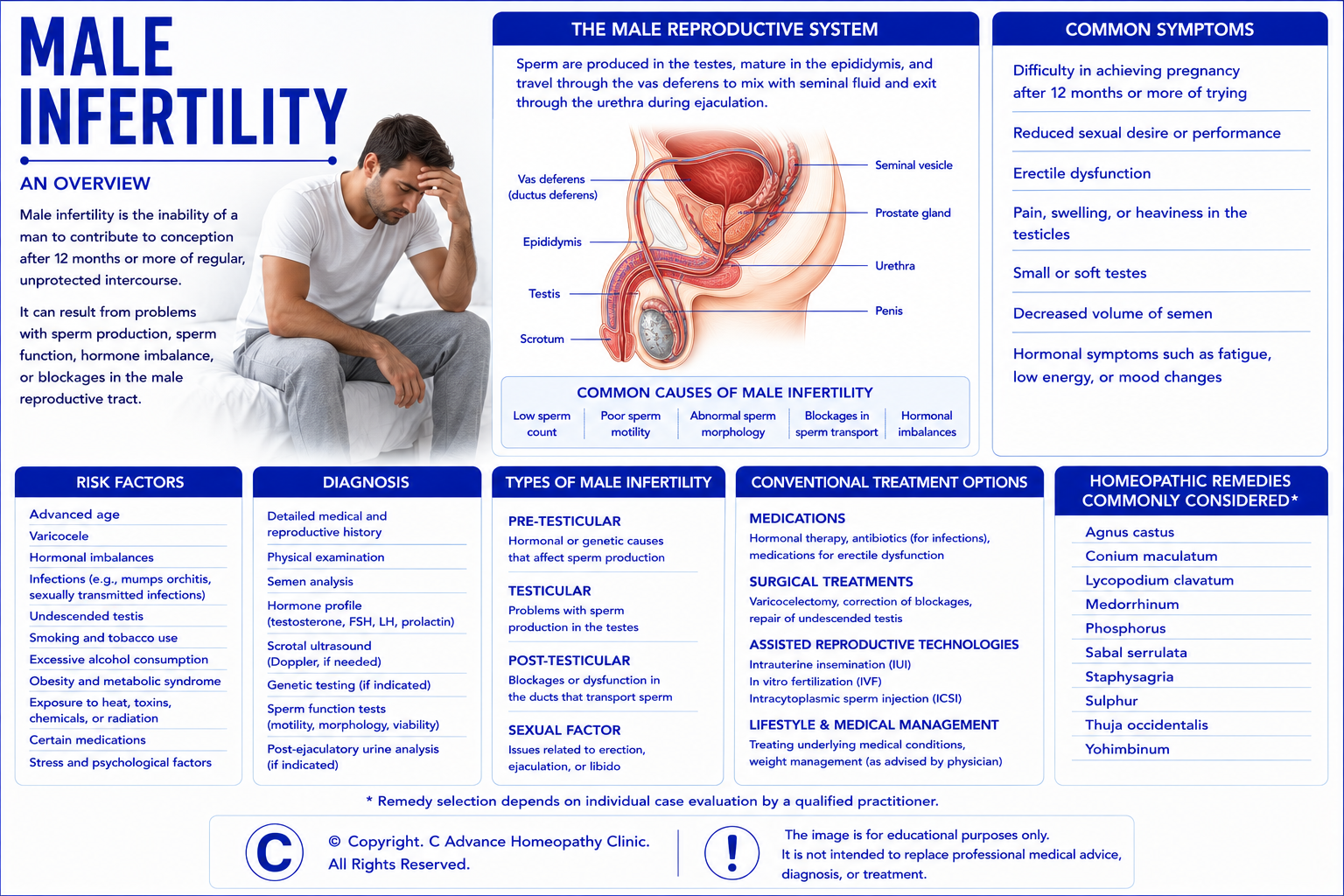
Male infertility is the inability of a male partner to contribute to conception despite 12 months of regular, unprotected sexual intercourse. Infertility affects approximately one in six couples worldwide, and male factors contribute either alone or in combination with female factors in nearly half of all infertile couples. Because fertility depends upon both partners, evaluation of infertility should always include assessment of both the male and female partners.
Male fertility depends on the production of an adequate number of healthy sperm, their normal structure (morphology), good movement (motility), and the successful delivery of sperm into the female reproductive tract. This complex process requires normal function of the testes, epididymis, vas deferens, prostate, seminal vesicles, hormones, blood supply, nervous system, and normal sexual function. Disturbance at any stage may reduce fertility and lower the likelihood of natural conception.
Male infertility may result from a wide variety of causes, including reduced sperm production, impaired sperm motility, abnormal sperm morphology, varicocele, hormonal disorders, genetic abnormalities, infections affecting the reproductive tract, obstruction of the seminal ducts, erectile or ejaculatory disorders, previous surgery, certain medications, environmental exposures, smoking, excessive alcohol consumption, obesity, and chronic medical illnesses. In some men, however, no specific cause can be identified despite comprehensive evaluation, a condition referred to as idiopathic male infertility.
Because many causes of male infertility are potentially treatable, early evaluation is important. A detailed medical history, physical examination, semen analysis, hormonal investigations, and additional specialized tests where indicated help identify reversible factors and guide appropriate management. Advances in medical treatment and assisted reproductive techniques have significantly improved the chances of achieving pregnancy for many couples.
Common Signs & Symptoms of Male Infertility
Many men with infertility have no obvious symptoms, and the condition is often discovered only during fertility evaluation. Some men may experience one or more of the following:
- Difficulty achieving conception after 12 months of regular unprotected intercourse
- Abnormal semen analysis
- Reduced sperm count
- Poor sperm motility
- Abnormal sperm morphology
- Reduced semen volume
- Erectile or ejaculatory dysfunction
- Testicular pain or discomfort in some patients
- Swelling of the scrotum due to varicocele in selected patients
- Reduced libido in men with hormonal disorders
Risk Factors for Male Infertility
Several factors may increase the likelihood of male infertility, including:
- Varicocele
- Increasing age
- Hormonal disorders
- Genetic abnormalities
- Previous mumps orchitis
- Undescended testes
- Previous testicular injury or surgery
- Smoking
- Excessive alcohol consumption
- Obesity
- Diabetes mellitus
- Exposure to excessive heat
- Environmental or occupational toxins
- Certain medications
- Previous chemotherapy or radiotherapy
Conventional Management of Male Infertility
Management depends on identifying and treating the underlying cause whenever possible.
Conventional management may include:
- Clinical evaluation by a urologist or fertility specialist
- Detailed reproductive and medical history
- Physical examination
- Semen analysis
- Hormonal evaluation
- Scrotal ultrasound
- Genetic testing where indicated
- Treatment of infections when present
- Hormonal therapy in selected patients
- Varicocele repair where appropriate
- Lifestyle modification
- Assisted reproductive techniques (IUI, IVF, or ICSI) when indicated
- Regular fertility follow-up
Homeopathic Medicines Commonly Considered
The following homeopathic medicines are among those traditionally considered by experienced homeopathic physicians. Medicine selection is individualized and depends on the patient's complete clinical presentation rather than the diagnosis alone.
- Agnus Castus
- Selenium Metallicum
- X-Ray
- Conium Maculatum
- Lycopodium Clavatum
- Caladium Seguinum
- Acidum Phosphoricum
- Sabal Serrulata
Homeopathic medicines should only be prescribed by a qualified homeopathic physician after an individualized clinical evaluation.
Important: Complementary Care for Male Infertility
Male Infertility should always be evaluated and managed by a qualified urologist, andrologist, reproductive medicine specialist, or appropriately trained healthcare professional to determine the underlying cause, assess reproductive health, identify potentially reversible factors, evaluate both partners, and develop an individualized fertility management plan. Comprehensive evaluation commonly includes a detailed reproductive, medical, and sexual history, comprehensive physical examination, semen analysis (often repeated to confirm abnormalities), hormonal evaluation including testosterone and pituitary hormones where clinically indicated, scrotal ultrasonography with Doppler assessment when appropriate, genetic testing in selected patients, assessment for varicocele, evaluation of erectile and ejaculatory function, review of current medications, lifestyle assessment, and additional investigations based on the patient's clinical presentation. Accurate diagnosis is essential because male infertility may result from reduced sperm production, impaired sperm motility, abnormal sperm morphology, varicocele, hormonal disorders, genetic abnormalities, previous infections such as mumps orchitis, obstruction of the reproductive tract, erectile dysfunction, ejaculatory disorders, systemic illnesses, environmental exposures, or idiopathic infertility, each requiring different management.
Men undergoing evaluation for Male Infertility may be considered for individualized homeopathic treatment as a complementary approach following appropriate fertility assessment. Homeopathy may be integrated alongside treatment of reversible causes, lifestyle modification, smoking cessation, limitation of alcohol intake, weight optimization, nutritional counselling, treatment of hormonal abnormalities where indicated, surgical correction of varicocele when appropriate, management of erectile or ejaculatory dysfunction, assisted reproductive technologies (ART) such as Intrauterine Insemination (IUI), In Vitro Fertilization (IVF), or Intracytoplasmic Sperm Injection (ICSI) when clinically indicated, psychological support, and regular follow-up with the fertility specialist. Individualized homeopathic prescribing is based on the patient's complete clinical presentation, constitutional characteristics, reproductive history, associated medical conditions, lifestyle factors, emotional well-being, family history, fertility investigations, and overall health rather than the diagnosis alone.
Men should continue all recommended conventional treatment, including repeated semen analysis where appropriate, hormonal investigations, genetic evaluation when indicated, imaging studies, treatment of endocrine disorders, management of infections, surgical treatment of varicocele or obstructive lesions where clinically indicated, assisted reproductive technologies (ART), preconception counselling, optimization of chronic medical conditions, and regular follow-up with their urologist or fertility specialist. Homeopathy should not be regarded as a substitute for evidence-based fertility investigations or reproductive treatment, particularly in men with azoospermia, severe oligozoospermia, significant genetic abnormalities, bilateral obstruction of the reproductive tract, severe hormonal disorders, advanced testicular failure, previous chemotherapy or radiotherapy causing infertility, or other conditions requiring specialist reproductive management.
Men with persistent infertility despite appropriate treatment, repeated abnormal semen analyses, progressive deterioration in sperm quality, suspected endocrine disease, recurrent genital infections, significant varicocele, uncertainty regarding the diagnosis, erectile or ejaculatory dysfunction affecting fertility, or repeated failure of assisted reproductive treatment should continue specialist fertility follow-up and regular reassessment. Homeopathy should not replace recommended semen analysis, hormonal assessment, genetic testing, imaging studies, surgical treatment, assisted reproductive technologies (ART), or other evidence-based reproductive interventions recommended by the treating fertility specialist.
Men who develop sudden severe testicular pain, rapidly enlarging scrotal swelling, testicular trauma, fever associated with scrotal pain, a newly detected testicular lump, sudden inability to pass urine, or any rapidly worsening scrotal or urinary symptoms should seek immediate emergency medical attention, as these symptoms may indicate testicular torsion, epididymo-orchitis, testicular tumour, severe infection, acute urinary obstruction, or another serious urological emergency requiring urgent specialist assessment and hospital-based care.
5. Overactive Bladder (OAB)
What is Overactive Bladder?
Overactive Bladder (OAB) is a common urinary condition characterised by a sudden, difficult-to-control urge to pass urine, usually accompanied by increased urinary frequency during the day and night, with or without urgency urinary incontinence. Unlike urinary tract infections, where symptoms are caused by an active infection, overactive bladder results from abnormal bladder function in which the bladder muscle (detrusor muscle) contracts involuntarily, even when the bladder is not completely full.
The normal urinary bladder stores urine at low pressure and empties only when a person voluntarily decides to urinate. In overactive bladder, this normal storage function becomes disturbed. The bladder muscle contracts prematurely, creating an urgent need to void despite relatively small volumes of urine. These involuntary contractions may occur because of age-related changes, neurological disorders, bladder outlet obstruction, previous pelvic surgery, diabetes, or other conditions. In many patients, however, no single identifiable cause is found, a condition referred to as idiopathic overactive bladder.
Overactive bladder affects both men and women and becomes increasingly common with advancing age, although it can occur in younger adults as well. The condition may significantly interfere with work, travel, sleep, exercise, and social activities. Many individuals restrict their daily routines because they are constantly searching for nearby toilet facilities or worry about accidental urine leakage. Despite its frequency, overactive bladder is not a normal part of ageing, and effective evaluation and treatment are available for many patients.
Because urgency and frequency may also occur in urinary tract infections, diabetes mellitus, bladder stones, benign prostatic hyperplasia, interstitial cystitis, bladder cancer, or neurological disorders, careful medical evaluation is essential to establish the correct diagnosis before treatment is initiated.

Common Signs & Symptoms of Overactive Bladder
Patients with overactive bladder may experience one or more of the following:
- Sudden, compelling urge to pass urine (Urgency)
- Increased daytime urinary frequency
- Frequent urination during the night (Nocturia)
- Urgency urinary incontinence
- Passing small amounts of urine frequently
- Difficulty postponing urination
- Interruption of daily activities because of urinary urgency
- Sleep disturbance due to repeated nighttime urination
- Anxiety related to fear of urine leakage
Risk Factors for Overactive Bladder
Several factors may increase the likelihood of developing overactive bladder, including:
- Increasing age
- Neurological disorders
- Diabetes mellitus
- Benign Prostatic Hyperplasia
- Previous pelvic surgery
- Obesity
- Chronic constipation
- Recurrent urinary tract infections
- Excessive caffeine intake
- Certain medications
Conventional Management of Overactive Bladder
Treatment aims to reduce urgency, improve bladder storage capacity, minimise urinary leakage, and improve quality of life.
Conventional management may include:
- Clinical evaluation by a urologist
- Urinalysis and urine culture
- Bladder diary
- Measurement of post-void residual urine
- Uroflowmetry where indicated
- Lifestyle modification
- Bladder training
- Pelvic floor muscle exercises
- Reduction of caffeine intake where appropriate
- Antimuscarinic medications
- Beta-3 adrenergic agonists
- Botulinum toxin injections in selected patients
- Sacral neuromodulation or other advanced therapies where indicated
- Regular urological follow-up
Homeopathic Medicines Commonly Considered for Overactive Bladder
The following homeopathic medicines are among those traditionally considered by experienced homeopathic physicians. Medicine selection is individualized and depends on the patient's complete clinical presentation rather than the diagnosis alone.
- Equisetum Hyemale
- Causticum
- Kreosotum
- Sepia
- Pulsatilla Nigricans
- Benzoic Acid
- Pareira Brava
- Lycopodium Clavatum
Homeopathic medicines should only be prescribed by a qualified homeopathic physician after an individualized clinical evaluation.
Important: Complementary Care for Overactive Bladder (OAB)
Overactive Bladder (OAB) should always be evaluated and managed by a qualified urologist, urogynecologist, or appropriately trained healthcare professional to confirm the diagnosis, determine the underlying cause of urinary symptoms, assess symptom severity and impact on quality of life, exclude other urinary tract or neurological disorders, and develop an individualized management plan. Comprehensive evaluation commonly includes a detailed medical history, bladder symptom assessment, review of fluid intake and voiding habits, bladder diary, physical examination, urinalysis, urine culture where clinically indicated, assessment of post-void residual urine, uroflowmetry when appropriate, review of current medications, evaluation for pelvic organ prolapse in women, prostate enlargement in men, blood glucose testing where clinically indicated, urodynamic studies in selected patients, cystoscopy or imaging studies when indicated, and additional investigations based on the patient's clinical presentation. Accurate diagnosis is essential because urinary urgency and frequency may also occur in urinary tract infection, bladder stones, bladder cancer, interstitial cystitis (bladder pain syndrome), benign prostatic hyperplasia (BPH), urethral obstruction, diabetes mellitus, neurological disorders such as multiple sclerosis or Parkinson's disease, spinal cord disorders, excessive fluid intake, or medication-related urinary symptoms, each requiring different management.
Patients with stable Overactive Bladder may be considered for individualized homeopathic treatment as a complementary approach following appropriate urological evaluation. Homeopathy may be integrated alongside bladder training, scheduled voiding programmes, pelvic floor muscle exercises, physiotherapy, weight management where appropriate, reduction of bladder irritants such as excessive caffeine and alcohol, smoking cessation, optimization of fluid intake, treatment of underlying medical conditions, prescribed medications including antimuscarinic agents or beta-3 adrenergic agonists when clinically indicated, intravesical botulinum toxin injections, sacral neuromodulation or other advanced therapies where appropriate, patient education, and regular follow-up with the treating urologist. Individualized homeopathic prescribing is based on the patient's complete clinical presentation, constitutional characteristics, urinary symptoms, associated medical conditions, lifestyle factors, emotional well-being, functional limitations, medical history, and overall health rather than the diagnosis alone.
Patients should continue all recommended conventional treatment, including behavioural therapy, bladder retraining programmes, pelvic floor rehabilitation, prescribed medications, regular review of treatment response, management of contributing medical conditions, monitoring for medication-related adverse effects, advanced therapies when clinically indicated, and ongoing follow-up with their urologist or urogynecologist. Homeopathy should not be regarded as a substitute for evidence-based urological care, particularly in patients with significant urinary retention, recurrent urinary tract infections, bladder outlet obstruction, neurological bladder dysfunction, severe incontinence affecting daily activities, suspected bladder cancer, persistent haematuria, or other conditions requiring specialist investigation or intervention.
Patients with persistent urinary urgency or frequency despite appropriate treatment, worsening urinary incontinence, recurrent urinary tract infections, increasing difficulty emptying the bladder, persistent blood in the urine, uncertainty regarding the diagnosis, suspected neurological disease, significant deterioration in quality of life, or failure of conservative treatment should continue specialist urological follow-up and regular reassessment. Homeopathy should not replace recommended urological evaluation, urine testing, imaging studies, cystoscopy, urodynamic assessment, prescribed medications, neuromodulation, or other evidence-based treatments recommended by the treating specialist.
Patients who develop complete inability to pass urine, severe lower abdominal pain associated with urinary retention, visible blood clots in the urine, persistent gross haematuria, high fever with urinary symptoms, severe flank pain with fever, sudden weakness or numbness of the legs associated with bladder dysfunction, loss of bladder or bowel control, or any rapidly worsening urinary symptoms should seek immediate emergency medical attention, as these symptoms may indicate acute urinary retention, severe urinary tract infection, urosepsis, bladder outlet obstruction, spinal cord compression, cauda equina syndrome, urinary tract malignancy, or another serious urological or neurological emergency requiring urgent specialist assessment and hospital-based care.
6. Urinary Incontinence
What is Urinary Incontinence?
Urinary incontinence is the involuntary leakage of urine, resulting in the loss of normal bladder control. Rather than being a disease itself, urinary incontinence is a symptom that may arise from a variety of underlying medical conditions affecting the bladder, urinary sphincter, pelvic floor muscles, nervous system, or urinary outlet. Although urinary incontinence becomes more common with increasing age, it is not a normal part of ageing and should always be appropriately evaluated.
Normal bladder control depends upon the coordinated function of the urinary bladder, urethral sphincters, pelvic floor muscles, and the nervous system. As the bladder gradually fills, it stores urine at low pressure while remaining relaxed. At an appropriate time, the brain coordinates relaxation of the urinary sphincter together with contraction of the bladder muscle, allowing controlled emptying of the bladder. Disruption of this finely regulated mechanism may lead to urinary leakage.
Several different types of urinary incontinence are recognised. Stress urinary incontinence occurs when physical activities such as coughing, sneezing, laughing, or lifting increase abdominal pressure and overcome the resistance of the urinary sphincter. Urge urinary incontinence results from involuntary bladder contractions associated with overactive bladder. Overflow incontinence develops when the bladder fails to empty, leading to continuous dribbling of urine, while functional incontinence occurs when physical or cognitive impairment prevents timely access to toilet facilities. Some individuals experience mixed urinary incontinence, combining features of both stress and urge incontinence.
Urinary incontinence may significantly affect physical, emotional, and social well-being. Many individuals reduce travel, avoid social gatherings, interrupt exercise routines, or experience embarrassment because of fear of urine leakage. Despite these challenges, many forms of urinary incontinence can be substantially improved through appropriate medical evaluation and individualized treatment.

Common Signs & Symptoms of Urinary Incontinence
Patients with urinary incontinence may experience one or more of the following:
- Involuntary leakage of urine
- Leakage during coughing, sneezing, laughing, or lifting
- Sudden urge followed by urine leakage
- Frequent urination
- Nocturia
- Difficulty reaching the toilet in time
- Continuous dribbling of urine
- Feeling of incomplete bladder emptying in some patients
- Recurrent urinary tract infections in selected individuals
- Limitation of daily activities because of urinary leakage
Risk Factors for Urinary Incontinence
Several factors may increase the likelihood of urinary incontinence, including:
- Increasing age
- Pregnancy and childbirth
- Menopause
- Pelvic floor muscle weakness
- Benign Prostatic Hyperplasia
- Previous pelvic surgery
- Neurological disorders
- Diabetes mellitus
- Obesity
- Chronic constipation
- Chronic cough
- Certain medications
Conventional Management of Urinary Incontinence
Treatment depends upon the type of urinary incontinence and the underlying cause.
Conventional management may include:
- Clinical evaluation by a urologist or urogynecologist
- Urinalysis and urine culture
- Bladder diary
- Uroflowmetry
- Measurement of post-void residual urine
- Urodynamic studies where indicated
- Pelvic floor muscle training
- Bladder training
- Lifestyle modification
- Weight reduction where appropriate
- Medications for urge urinary incontinence
- Pessaries for selected women
- Minimally invasive procedures
- Surgical treatment where clinically indicated
- Regular follow-up
Homeopathic Medicines Commonly Considered for Urinary Incontinence
The following homeopathic medicines are among those traditionally considered by experienced homeopathic physicians. Medicine selection is individualized and depends on the patient's complete clinical presentation rather than the diagnosis alone.
- Causticum
- Equisetum Hyemale
- Kreosotum
- Sepia
- Pulsatilla Nigricans
- Natrum Muriaticum
- Zincum Metallicum
- Ferrum Phosphoricum
Homeopathic medicines should only be prescribed by a qualified homeopathic physician after an individualized clinical evaluation.
Important: Complementary Care for Urinary Incontinence
Urinary Incontinence should always be evaluated and managed by a qualified urologist, urogynecologist, or appropriately trained healthcare professional to determine the type of urinary incontinence, identify the underlying cause, assess symptom severity and functional impact, exclude serious urinary tract or neurological disorders, and develop an individualized management plan. Comprehensive evaluation commonly includes a detailed medical history, bladder symptom assessment, bladder diary, physical examination, assessment of pelvic floor function, neurological examination where clinically indicated, urinalysis, urine culture when appropriate, measurement of post-void residual urine, uroflowmetry, review of current medications, evaluation for pelvic organ prolapse in women, prostate enlargement in men, assessment of mobility and cognitive function where relevant, urodynamic studies in selected patients, cystoscopy or imaging studies when clinically indicated, and additional investigations based on the patient's clinical presentation. Accurate diagnosis is essential because urinary leakage may result from stress urinary incontinence, urge urinary incontinence, mixed urinary incontinence, overflow incontinence, functional incontinence, urinary tract infection, bladder outlet obstruction, benign prostatic hyperplasia (BPH), neurological disorders, diabetes mellitus, bladder stones, urinary tract malignancy, fistulae, or other urological and medical conditions, each requiring different management.
Patients with stable Urinary Incontinence may be considered for individualized homeopathic treatment as a complementary approach following appropriate urological evaluation. Homeopathy may be integrated alongside pelvic floor muscle training, bladder retraining programmes, behavioural therapy, physiotherapy, weight management where appropriate, smoking cessation, optimization of fluid intake, management of constipation, treatment of underlying medical conditions, prescribed medications where clinically indicated, continence devices, pessary use when appropriate, minimally invasive procedures, surgical treatment for selected patients, patient education, and regular follow-up with the treating specialist. Individualized homeopathic prescribing is based on the patient's complete clinical presentation, constitutional characteristics, urinary symptoms, associated medical conditions, lifestyle factors, physical and emotional well-being, functional limitations, medical history, and overall health rather than the diagnosis alone.
Patients should continue all recommended conventional treatment, including pelvic floor rehabilitation, bladder training, prescribed medications, management of contributing medical conditions, continence assessment, regular monitoring of treatment response, minimally invasive procedures or surgery where clinically indicated, and ongoing follow-up with their urologist or urogynecologist. Homeopathy should not be regarded as a substitute for evidence-based urological care, particularly in patients with significant pelvic organ prolapse, severe stress urinary incontinence requiring surgical intervention, chronic urinary retention, neurological bladder dysfunction, recurrent urinary tract infections, persistent haematuria, suspected urinary tract malignancy, or other conditions requiring specialist management.
Patients with persistent urinary leakage despite appropriate treatment, worsening urinary symptoms, increasing difficulty emptying the bladder, recurrent urinary tract infections, progressive pelvic organ prolapse, uncertainty regarding the diagnosis, significant deterioration in quality of life, neurological symptoms affecting bladder control, or failure of conservative treatment should continue specialist urological follow-up and regular reassessment. Homeopathy should not replace recommended urological evaluation, urodynamic studies, imaging investigations, prescribed medications, pelvic floor rehabilitation, surgical management, or other evidence-based treatments recommended by the treating specialist.
Patients who develop complete inability to pass urine, severe lower abdominal pain associated with urinary retention, visible blood in the urine, high fever with urinary symptoms, severe flank pain, sudden weakness or numbness of the legs, loss of bladder or bowel control, rapidly progressive pelvic pain, or any rapidly worsening urinary symptoms should seek immediate emergency medical attention, as these symptoms may indicate acute urinary retention, severe urinary tract infection, urosepsis, spinal cord compression, cauda equina syndrome, urinary tract malignancy, severe bladder outlet obstruction, or another serious urological or neurological emergency requiring urgent specialist assessment and hospital-based care.
7. Chronic Cystitis
What is Chronic Cystitis?
Chronic cystitis refers to persistent or recurrent inflammation of the urinary bladder that causes ongoing urinary symptoms for weeks, months, or sometimes longer. Unlike acute bacterial cystitis, which is usually caused by a urinary tract infection and often responds promptly to antibiotic treatment, chronic cystitis may develop because of repeated infections, persistent bladder inflammation, structural abnormalities, bladder irritation, previous pelvic treatment, or other underlying urological conditions. In some patients, chronic bladder symptoms occur despite repeated urine cultures showing no evidence of active bacterial infection.
One important condition that may resemble chronic cystitis is Interstitial Cystitis/Bladder Pain Syndrome (IC/BPS), a chronic disorder characterised by bladder pain, urinary urgency, frequency, and discomfort without an identifiable infection. Although chronic bacterial cystitis and interstitial cystitis differ in their underlying mechanisms, they may produce similar symptoms and require careful medical evaluation to establish the correct diagnosis.
The bladder normally stores urine at low pressure until voluntary emptying occurs. Persistent inflammation or irritation of the bladder lining may increase the sensitivity of bladder nerves, reduce bladder capacity, and trigger frequent urges to urinate, pelvic discomfort, and pain during bladder filling. Because similar symptoms may also occur in urinary tract infections, bladder stones, overactive bladder, urinary tract obstruction, bladder cancer, endometriosis, or neurological disorders, appropriate medical assessment is essential before treatment is initiated.
Although chronic cystitis is usually not life-threatening, persistent urinary symptoms should never be ignored. Early diagnosis helps identify treatable causes, reduces the risk of recurrent infections, protects bladder function, and improves long-term quality of life.

Common Signs & Symptoms of Chronic Cystitis
Patients with chronic cystitis may experience one or more of the following:
- Increased urinary frequency
- Persistent urinary urgency
- Burning during urination (Dysuria)
- Pain or discomfort over the bladder
- Pelvic pain
- Pain that increases as the bladder fills
- Temporary relief after passing urine
- Frequent nighttime urination (Nocturia)
- Recurrent episodes of urinary discomfort
- Blood in the urine in selected patients
Risk Factors for Chronic Cystitis
Several factors may increase the likelihood of developing chronic cystitis, including:
- Recurrent urinary tract infections
- Female gender
- Previous bladder infection
- Urinary tract obstruction
- Bladder stones
- Diabetes mellitus
- Long-term urinary catheterisation
- Pelvic radiotherapy
- Menopause
- Bladder pain syndrome (Interstitial Cystitis)
- Neurogenic bladder
Conventional Management of Chronic Cystitis
Treatment depends upon identifying the underlying cause of persistent bladder inflammation.
Conventional management may include:
- Clinical evaluation by a urologist
- Urinalysis and urine culture
- Urine cytology where indicated
- Ultrasound of the urinary tract
- Cystoscopy
- CT scan in selected patients
- Antibiotic therapy when bacterial infection is confirmed
- Bladder instillation therapy in selected patients
- Pain management
- Dietary and lifestyle modification
- Management of contributing medical conditions
- Regular urological follow-up
Homeopathic Medicines Commonly Considered for Chronic Cystitis
The following homeopathic medicines are among those traditionally considered by experienced homeopathic physicians. Medicine selection is individualized and depends on the patient's complete clinical presentation rather than the diagnosis alone.
- Cantharis
- Sarsaparilla
- Staphysagria
- Pareira Brava
- Equisetum Hyemale
- Cubeba
- Apis Mellifica
- Berberis Vulgaris
- Mercurius Corrosivus
Homeopathic medicines should only be prescribed by a qualified homeopathic physician after an individualized clinical evaluation.
Important: Complementary Care for Chronic Cystitis
Chronic Cystitis should always be evaluated and managed by a qualified urologist or appropriately trained healthcare professional to confirm the diagnosis, identify the underlying cause of persistent bladder symptoms, determine the presence of ongoing infection or bladder inflammation, exclude structural abnormalities and urinary tract malignancy, assess bladder function, and develop an individualized management plan. Comprehensive evaluation commonly includes a detailed medical history, assessment of urinary symptoms and their duration, physical examination, urinalysis, urine microscopy, urine culture and sensitivity testing, review of previous antibiotic treatments, assessment of post-void residual urine where appropriate, imaging studies such as ultrasonography or Computed Tomography (CT) when clinically indicated, cystoscopy for persistent or unexplained symptoms, urine cytology when indicated, review of current medications, and additional investigations based on the patient's clinical presentation. Accurate diagnosis is essential because chronic urinary frequency, urgency, dysuria, and bladder discomfort may also occur in Interstitial Cystitis/Bladder Pain Syndrome (IC/BPS), recurrent urinary tract infection, bladder stones, bladder outlet obstruction, benign prostatic hyperplasia (BPH), overactive bladder, urinary tract tuberculosis, bladder cancer, radiation cystitis, neurological bladder dysfunction, or other urological conditions, each requiring different management.
Patients with stable Chronic Cystitis may be considered for individualized homeopathic treatment as a complementary approach following appropriate urological evaluation. Homeopathy may be integrated alongside culture-directed antibiotic therapy when infection is present, adequate hydration, bladder training where appropriate, avoidance of known bladder irritants, smoking cessation, management of underlying urinary tract abnormalities, pelvic floor physiotherapy when indicated, pain management strategies, healthy lifestyle modification, patient education, and regular follow-up with their urologist. Individualized homeopathic prescribing is based on the patient's complete clinical presentation, constitutional characteristics, urinary symptoms, pattern of recurrence, associated medical conditions, lifestyle factors, physical and emotional well-being, medical history, and overall health rather than the diagnosis alone.
Patients should continue all recommended conventional treatment, including urine culture-guided antibiotic therapy where indicated, repeat urine testing to confirm resolution of infection when appropriate, cystoscopic evaluation when clinically indicated, imaging studies for recurrent or persistent symptoms, management of bladder outlet obstruction or urinary stones where present, treatment of contributing medical conditions such as diabetes mellitus, bladder rehabilitation where appropriate, and ongoing urological follow-up. Homeopathy should not be regarded as a substitute for evidence-based urological care, particularly in patients with persistent bacterial infection, recurrent haematuria, bladder outlet obstruction, urinary tract stones, suspected bladder cancer, urinary tract tuberculosis, severe bladder dysfunction, immunocompromised states, or other conditions requiring specialist investigation or intervention.
Patients with persistent urinary symptoms despite appropriate treatment, recurrent positive urine cultures, worsening bladder pain, increasing urinary frequency, visible blood in the urine, recurrent urinary tract infections, uncertainty regarding the diagnosis, failure to respond to antibiotic therapy, suspected Interstitial Cystitis/Bladder Pain Syndrome, or significant deterioration in bladder function should continue specialist urological follow-up and regular reassessment. Homeopathy should not replace recommended urine culture, cystoscopy, imaging studies, antibiotic therapy, bladder rehabilitation, surgical intervention when indicated, or other evidence-based treatments recommended by the treating specialist.
Patients who develop high fever with chills, severe flank pain, persistent vomiting, visible blood clots in the urine, inability to pass urine, severe lower abdominal pain, confusion, signs of sepsis, or any rapidly worsening urinary symptoms should seek immediate emergency medical attention, as these symptoms may indicate acute pyelonephritis, urosepsis, acute urinary retention, obstructive uropathy, severe urinary tract bleeding, urinary tract malignancy, or another serious urological emergency requiring urgent specialist assessment and hospital-based care.
8. Recurrent Urinary Tract Infection (Recurrent UTI)
What is Recurrent Urinary Tract Infection?
A Recurrent Urinary Tract Infection (Recurrent UTI) is defined as repeated episodes of bacterial infection affecting the urinary tract. It is generally diagnosed when a patient experiences two or more culture-confirmed urinary tract infections within six months or three or more infections within one year. Although each episode may respond to appropriate antibiotic treatment, recurrent infections suggest that an underlying predisposing factor should be investigated rather than repeatedly treating individual episodes alone.
Most recurrent urinary tract infections involve the lower urinary tract, particularly the bladder (recurrent cystitis), although some patients may develop repeated kidney infections (recurrent pyelonephritis), which require prompt medical attention because of the risk of kidney damage. Women are affected more frequently than men because of anatomical differences, while recurrent urinary tract infections in men are less common and often warrant investigation for underlying conditions such as benign prostatic hyperplasia, chronic prostatitis, urinary tract obstruction, bladder stones, or other structural abnormalities.
Several factors may contribute to recurrent urinary tract infections, including incomplete bladder emptying, urinary tract obstruction, kidney stones, diabetes mellitus, menopause, urinary catheterisation, congenital abnormalities of the urinary tract, vesicoureteric reflux, and impaired immune defence mechanisms. Because repeated infections may occasionally indicate more serious underlying disease, careful medical evaluation is essential to identify and correct reversible causes whenever possible.
Although recurrent urinary tract infections are common, they should not be considered a normal part of ageing or accepted as an unavoidable condition. Appropriate diagnosis, identification of contributing factors, and individualized management may substantially reduce recurrence and improve long-term urinary health.

Common Signs & Symptoms of Recurrent Urinary Tract Infection
Patients with recurrent urinary tract infections may experience one or more of the following:
- Repeated episodes of burning during urination (Dysuria)
- Increased urinary frequency
- Urinary urgency
- Pain or discomfort over the bladder
- Cloudy or foul-smelling urine
- Blood in the urine (Hematuria)
- Fever during some episodes
- Flank pain when the kidneys are involved
- Recurrent positive urine cultures
- Persistent urinary symptoms between infections in some patients
Risk Factors for Recurrent Urinary Tract Infection
Several factors may increase the likelihood of recurrent urinary tract infections, including:
- Female gender
- Previous urinary tract infections
- Sexual activity
- Menopause
- Diabetes mellitus
- Kidney stones
- Benign Prostatic Hyperplasia
- Chronic prostatitis
- Urinary tract obstruction
- Incomplete bladder emptying
- Long-term urinary catheterisation
- Congenital urinary tract abnormalities
- Vesicoureteric reflux
- Immunocompromised states
Conventional Management of Recurrent Urinary Tract Infection
Treatment focuses on eliminating active infection, identifying predisposing factors, preventing recurrence, and protecting long-term urinary tract and kidney health.
Conventional management may include:
- Clinical evaluation by a urologist or primary care physician
- Urinalysis
- Urine culture and antibiotic sensitivity testing
- Ultrasound of the kidneys and urinary tract
- CT scan in selected patients
- Cystoscopy where indicated
- Assessment of post-void residual urine
- Treatment of urinary obstruction or bladder dysfunction
- Antibiotic therapy based on culture results
- Preventive antibiotic strategies in selected patients
- Lifestyle modification
- Regular urological follow-up
Homeopathic Medicines Commonly Considered for Recurrent Urinary Tract Infection
The following homeopathic medicines are among those traditionally considered by experienced homeopathic physicians. Medicine selection is individualized and depends on the patient's complete clinical presentation rather than the diagnosis alone.
- Cantharis
- Cubeba
- Sarsaparilla
- Pareira Brava
- Mercurius Corrosivus
- Equisetum Hyemale
- Staphysagria
- Apis Mellifica
Homeopathic medicines should only be prescribed by a qualified homeopathic physician after an individualized clinical evaluation.
Important: Complementary Care for Recurrent Urinary Tract Infection (Recurrent UTI)
Recurrent Urinary Tract Infection (Recurrent UTI) should always be evaluated and managed by a qualified urologist, urogynecologist, nephrologist, or appropriately trained healthcare professional to confirm the diagnosis, identify the underlying cause of recurrent infections, determine predisposing anatomical or functional abnormalities, assess the risk of kidney involvement, and develop an individualized long-term prevention and treatment plan. Comprehensive evaluation commonly includes a detailed medical history, assessment of the frequency and pattern of urinary tract infections, review of previous urine culture results and antibiotic treatments, physical examination, urinalysis, urine microscopy, urine culture and sensitivity testing, assessment of post-void residual urine where appropriate, evaluation of bladder emptying, ultrasonography of the urinary tract, Computed Tomography (CT) or other imaging studies when clinically indicated, cystoscopy in selected patients, review of current medications, assessment for diabetes mellitus, kidney stones, benign prostatic hyperplasia (BPH), pelvic organ prolapse, urinary catheter use, neurogenic bladder, and additional investigations based on the patient's clinical presentation. Accurate diagnosis is essential because recurrent urinary symptoms may also occur in Interstitial Cystitis/Bladder Pain Syndrome (IC/BPS), chronic cystitis, urinary tract stones, bladder outlet obstruction, vesicoureteral reflux, urinary tract tuberculosis, bladder cancer, overactive bladder, sexually transmitted infections, or other urological conditions, each requiring different management.
Patients with stable Recurrent Urinary Tract Infection may be considered for individualized homeopathic treatment as a complementary approach following appropriate urological evaluation. Homeopathy may be integrated alongside culture-directed antibiotic therapy when infection is present, adequate hydration, optimization of bladder emptying, correction of reversible urological abnormalities where appropriate, management of diabetes and other contributing medical conditions, postmenopausal vaginal estrogen therapy where clinically indicated, behavioural and lifestyle modification, patient education, healthy voiding habits, preventive strategies recommended by the treating specialist, and regular follow-up with their urologist. Individualized homeopathic prescribing is based on the patient's complete clinical presentation, constitutional characteristics, urinary symptoms, pattern of recurrence, associated medical conditions, lifestyle factors, physical and emotional well-being, medical history, and overall health rather than the diagnosis alone.
Patients should continue all recommended conventional treatment, including urine culture-guided antibiotic therapy, repeat urine cultures where clinically indicated, investigation and correction of underlying anatomical or functional abnormalities, management of kidney stones, treatment of bladder outlet obstruction or incomplete bladder emptying, prophylactic antibiotic therapy when appropriate, regular monitoring of kidney function where indicated, imaging studies for recurrent or complicated infections, and ongoing specialist follow-up. Homeopathy should not be regarded as a substitute for evidence-based urological care, particularly in patients with complicated urinary tract infections, recurrent pyelonephritis, urinary tract obstruction, kidney stones, neurogenic bladder, urinary catheter-related infections, pregnancy-associated urinary infections, immunocompromised states, chronic kidney disease, or other conditions requiring specialist investigation or intervention.
Patients with persistent recurrent infections despite appropriate treatment, repeated positive urine cultures with resistant organisms, increasing urinary symptoms, recurrent fever, worsening kidney function, persistent haematuria, uncertainty regarding the diagnosis, recurrent pyelonephritis, suspected urinary tract abnormalities, or failure of preventive strategies should continue specialist urological follow-up and regular reassessment. Homeopathy should not replace recommended urine culture, imaging studies, cystoscopy when indicated, antibiotic therapy, correction of underlying urological abnormalities, or other evidence-based treatments recommended by the treating specialist.
Patients who develop high fever with chills, severe flank pain, persistent vomiting, confusion, markedly reduced urine output, visible blood clots in the urine, severe lower abdominal pain associated with inability to pass urine, signs of sepsis, or any rapidly worsening urinary symptoms should seek immediate emergency medical attention, as these symptoms may indicate acute pyelonephritis, urosepsis, obstructive uropathy, acute kidney injury, severe urinary tract bleeding, urinary tract obstruction, or another life-threatening urological emergency requiring urgent specialist assessment and hospital-based care.
9. Kidney Stones (Nephrolithiasis)
What are Kidney Stones (Nephrolithiasis)?
Kidney stones, medically known as Nephrolithiasis, are hard crystalline deposits that develop within the kidneys when minerals and salts present in the urine become highly concentrated and crystallize. Over time, these crystals may enlarge and form stones of varying sizes. Some stones remain within the kidney without causing symptoms, while others migrate into the ureter—the narrow tube connecting the kidney to the bladder—where they may partially or completely obstruct the flow of urine, producing the severe pain known as renal colic.
Kidney stones are among the most common urological disorders and may affect adults of all ages. Several different types of stones exist, including calcium oxalate stones, calcium phosphate stones, uric acid stones, struvite stones, and cystine stones, each developing through different metabolic or urinary abnormalities. Factors such as inadequate fluid intake, hot climates, dietary habits, obesity, metabolic disorders, recurrent urinary tract infections, certain medications, and genetic predisposition may increase the likelihood of stone formation.
The symptoms experienced by patients depend largely on the size, location, and degree of urinary obstruction rather than the size of the stone itself. A very small stone entering the ureter may produce excruciating pain, whereas a much larger stone remaining inside the kidney may cause few or no symptoms. Obstruction of urine flow may increase pressure within the kidney, producing the characteristic severe flank pain that often radiates towards the lower abdomen, groin, or genital region.
Most kidney stones pass spontaneously, particularly smaller stones. However, larger stones or those causing persistent obstruction, infection, uncontrolled pain, or impairment of kidney function may require medical or surgical intervention. Recurrent stone formation is common; therefore, identifying the underlying metabolic or lifestyle factors is an important part of long-term management and prevention.
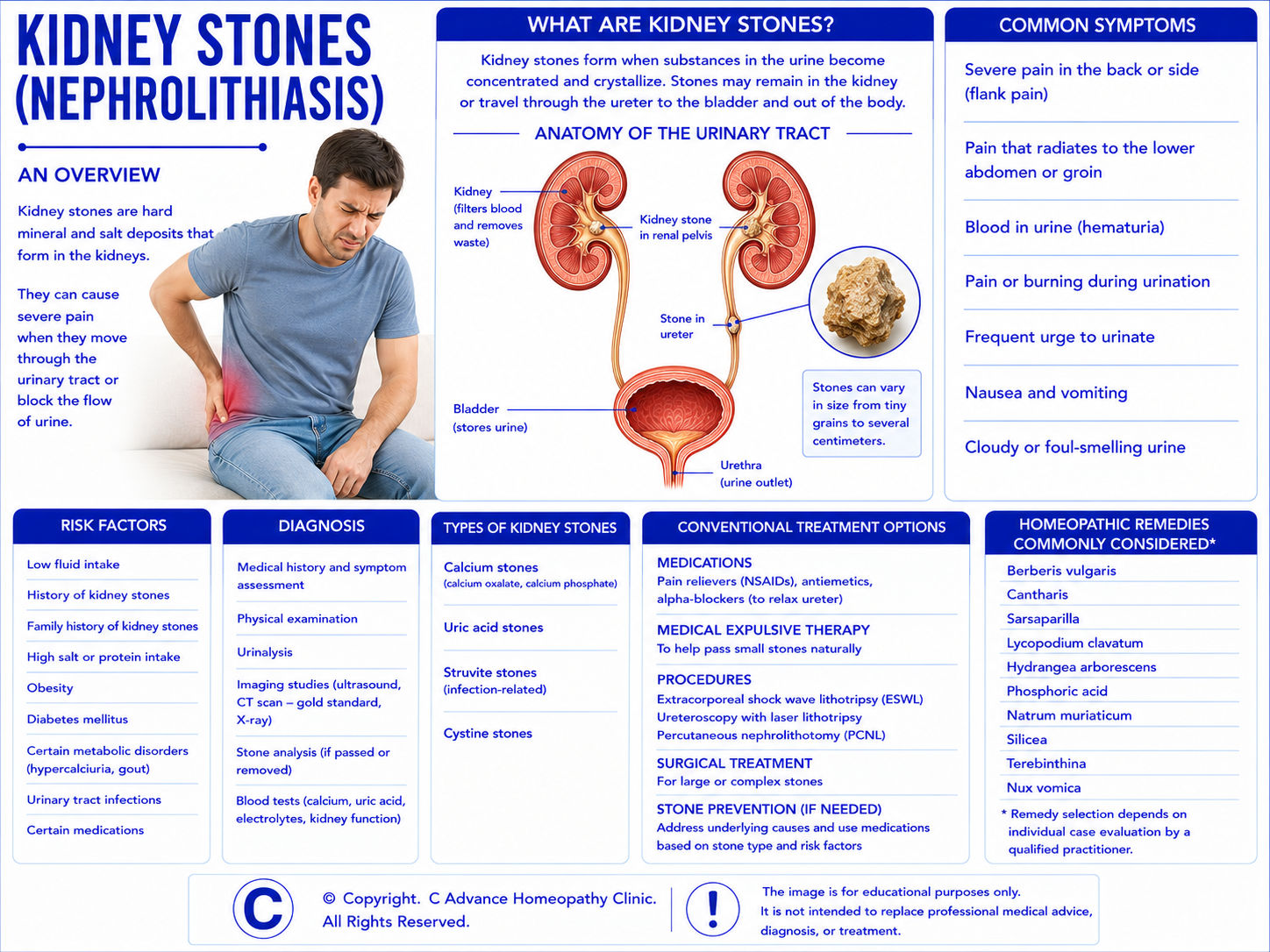
Common Signs & Symptoms of Kidney Stones
Patients with kidney stones may experience one or more of the following:
- Sudden severe pain in the flank or lower back (Renal colic)
- Pain radiating towards the lower abdomen, groin, or genital region
- Blood in the urine (Hematuria)
- Burning during urination when the stone reaches the lower urinary tract
- Increased urinary frequency or urgency
- Nausea and vomiting
- Difficulty finding a comfortable position because of pain
- Cloudy or foul-smelling urine if infection is present
- Fever and chills when associated with urinary tract infection
- Passage of small stones or gravel in the urine
Risk Factors for Kidney Stones
Several factors may increase the likelihood of developing kidney stones, including:
- Previous kidney stones
- Family history of nephrolithiasis
- Inadequate fluid intake
- Living in hot climates
- Diet high in sodium or animal protein
- Obesity
- Hyperparathyroidism
- Gout or elevated uric acid levels
- Recurrent urinary tract infections
- Certain medications
- Metabolic disorders affecting calcium or oxalate metabolism
Conventional Management of Kidney Stones
Treatment depends upon the size, location, composition, degree of obstruction, and the presence of infection or impaired kidney function.
Conventional management may include:
- Clinical evaluation by a urologist
- Urinalysis and urine culture
- Blood investigations including kidney function tests
- Ultrasound examination
- Non-contrast CT scan (CT KUB)
- Stone analysis after passage or removal
- Metabolic evaluation for recurrent stone formers
- Adequate hydration
- Pain management
- Medical expulsive therapy where appropriate
- Extracorporeal Shock Wave Lithotripsy (ESWL)
- Ureteroscopy with laser lithotripsy
- Percutaneous nephrolithotomy (PCNL) for large stones
- Regular follow-up to prevent recurrence
Homeopathic Medicines Commonly Considered
The following homeopathic medicines are among those traditionally considered by experienced homeopathic physicians. Medicine selection is individualized and depends on the patient's complete clinical presentation rather than the diagnosis alone.
- Berberis Vulgaris
- Pareira Brava
- Sarsaparilla
- Lycopodium Clavatum
- Ocimum Canum
- Hydrangea Arborescens
- Benzoic Acid
- Urtica Urens
Homeopathic medicines should only be prescribed by a qualified homeopathic physician after an individualized clinical evaluation.
Important: Complementary Care for Kidney Stones (Nephrolithiasis)
Kidney stones should always be evaluated by a qualified urologist to determine the size, location, degree of urinary obstruction, stone composition, and impact on kidney function. Appropriate investigations, including imaging studies and metabolic evaluation, help guide treatment decisions and identify factors that may increase the risk of recurrent stone formation.
Patients with small, non-obstructing kidney stones or those with a history of recurrent stone formation may be considered for individualized homeopathic treatment as a complementary approach following appropriate urological assessment. Homeopathy may also be considered during the long-term follow-up phase alongside conventional preventive strategies, including adequate hydration, dietary modification, metabolic evaluation, and regular monitoring for stone recurrence.
Large stones, stones causing significant urinary obstruction, persistent uncontrolled pain, recurrent infection, declining kidney function, bilateral obstruction, or stones unlikely to pass spontaneously are primarily managed using conventional urological treatment. Depending on the clinical situation, this may include medical expulsive therapy, extracorporeal shock wave lithotripsy (ESWL), ureteroscopy, percutaneous nephrolithotomy (PCNL), or other surgical procedures. Homeopathy should not be regarded as an alternative when urgent urological intervention has been recommended.
Patients who develop severe flank pain associated with fever, chills, persistent vomiting, inability to pass urine, reduced urine output, stones affecting a solitary kidney, or symptoms of urinary sepsis should seek immediate medical attention, as an obstructed and infected urinary system represents a urological emergency requiring prompt specialist treatment.
10. Hydrocele
What is Hydrocele?
A Hydrocele is an abnormal accumulation of clear fluid within the thin sac (tunica vaginalis) surrounding the testicle, resulting in painless swelling of one or both sides of the scrotum. It is one of the most common benign causes of scrotal enlargement and may occur in newborn infants, children, and adults. Although hydroceles are usually harmless and non-cancerous, any new scrotal swelling should be evaluated by a healthcare professional to exclude other conditions requiring treatment.
In infants, hydroceles commonly develop because a small channel (processus vaginalis) connecting the abdominal cavity to the scrotum remains open after birth, allowing fluid to collect around the testicle. Many congenital hydroceles resolve spontaneously during the first year of life. In adults, hydroceles usually develop because of an imbalance between the production and absorption of fluid within the tunica vaginalis. They may occur without an obvious cause (primary hydrocele) or develop secondary to inflammation, infection, trauma, previous surgery, testicular tumours, or other disorders affecting the scrotum.
Most hydroceles enlarge gradually and are painless. However, very large hydroceles may produce a feeling of heaviness, discomfort during walking or exercise, cosmetic concerns, or difficulty wearing fitted clothing. Although hydroceles generally do not affect fertility directly, underlying conditions associated with a hydrocele—such as infection, testicular disease, or varicocele—may require further investigation.
Because several conditions, including inguinal hernia, epididymal cyst, varicocele, testicular torsion, epididymitis, orchitis, and testicular cancer, may also present as scrotal swelling, careful medical examination and scrotal ultrasound are important to establish an accurate diagnosis.

Common Signs & Symptoms of Hydrocele
Patients with hydrocele may experience one or more of the following:
- Painless swelling of one or both sides of the scrotum
- Gradual increase in scrotal size
- Feeling of heaviness within the scrotum
- Mild discomfort with prolonged standing or walking
- Tightness of the scrotal skin
- Cosmetic concerns due to scrotal enlargement
- Fluctuating swelling in some congenital hydroceles
- Rarely, discomfort if the hydrocele becomes very large
Risk Factors for Hydrocele
Several factors may increase the likelihood of developing a hydrocele, including:
- Congenital persistence of the processus vaginalis
- Increasing age
- Previous scrotal injury
- Epididymitis or orchitis
- Previous scrotal or inguinal surgery
- Testicular inflammation
- Inguinal hernia
- Lymphatic obstruction
- Previous radiation therapy in selected patients
Conventional Management of Hydrocele
Treatment depends on the patient's age, symptoms, hydrocele size, and the underlying cause.
Conventional management may include:
- Clinical evaluation by a urologist
- Physical examination
- Transillumination of the scrotum
- Scrotal ultrasound
- Observation for small, asymptomatic hydroceles
- Treatment of underlying infection or inflammation where present
- Hydrocelectomy (surgical repair) when indicated
- Aspiration with or without sclerotherapy in selected patients who are unsuitable for surgery
- Regular urological follow-up
Homeopathic Medicines Commonly Considered
The following homeopathic medicines are among those traditionally considered by experienced homeopathic physicians. Medicine selection is individualized and depends on the patient's complete clinical presentation rather than the diagnosis alone.
- Clematis Erecta
- Rhododendron
- Pulsatilla Nigricans
- Aurum Metallicum
- Apis Mellifica
- Conium Maculatum
- Silicea
- Calcarea Fluorica
Important: Complementary Care for Hydrocele
Hydrocele should always be evaluated by a qualified urologist to confirm the diagnosis and exclude other causes of scrotal swelling, such as inguinal hernia, varicocele, epididymal cyst, infection, testicular torsion, or testicular tumour.
Large, long-standing, tense, or progressively enlarging hydroceles are primarily managed surgically. Surgical repair (hydrocelectomy) remains the established and definitive treatment for patients with significant symptoms, large hydroceles, or complications. Homeopathy should not be regarded as an alternative to surgery when surgical intervention is medically indicated.
In our clinical experience, selected patients with recently diagnosed, small hydroceles may be considered for individualized homeopathic treatment as a complementary approach after appropriate urological evaluation. These patients should undergo regular clinical examination and ultrasound monitoring to assess the size of the hydrocele and ensure that the condition is not progressing.
Patients should continue recommended investigations and regular follow-up with their urologist throughout treatment. Any increase in hydrocele size, development of pain, redness, fever, a newly detected testicular lump, or sudden scrotal swelling requires prompt medical reassessment.
11. Varicocele
What is Varicocele?
A Varicocele is an abnormal enlargement and dilatation of the veins within the spermatic cord (pampiniform venous plexus) that drain blood from the testicle. It is often described as being similar to varicose veins of the leg, but occurring within the scrotum. Varicoceles are among the most common correctable causes of male infertility and are found in approximately 15% of the general male population and in a significantly higher proportion of men undergoing fertility evaluation.
Varicoceles occur more commonly on the left side because of the anatomical arrangement of the left testicular vein, although they may also occur on the right side or involve both testes. In many men, varicoceles produce no symptoms and are discovered incidentally during routine examination or fertility assessment. Others may experience a dull aching pain, a feeling of heaviness in the scrotum, or notice enlarged veins that feel like a "bag of worms."
The exact mechanism by which varicoceles affect fertility is not completely understood. Current evidence suggests that impaired venous drainage may increase the temperature around the testes, reduce oxygen delivery, increase oxidative stress, and alter the normal environment required for sperm production. Over time, this may impair sperm count, motility, morphology, and overall testicular function in selected individuals. However, not every man with a varicocele develops infertility, and many remain fertile throughout life.
Because similar scrotal swellings may occur due to hydrocele, epididymal cysts, inguinal hernia, testicular tumours, or other scrotal disorders, careful clinical examination together with scrotal Doppler ultrasound is important to establish an accurate diagnosis and determine the severity of the condition.
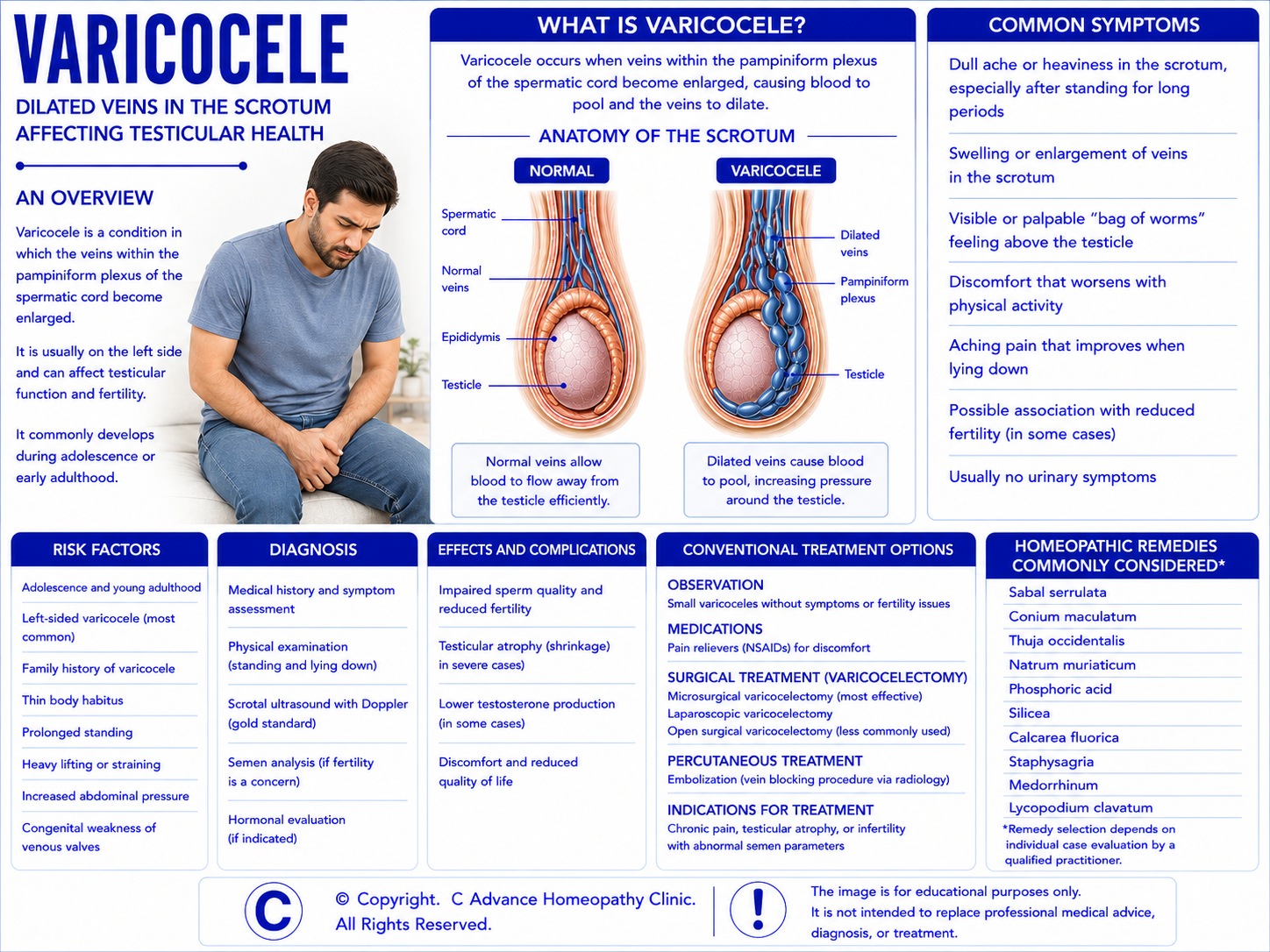
Common Signs & Symptoms of Varicocele
Patients with varicocele may experience one or more of the following:
- Visible or enlarged scrotal veins
- Veins feeling like a "bag of worms"
- Dull aching pain in the scrotum
- Feeling of heaviness, especially after prolonged standing
- Symptoms improving on lying down
- Testicular discomfort after exercise
- Testicular shrinkage (atrophy) in selected patients
- Abnormal semen analysis in some men
- Infertility in selected cases
Risk Factors for Varicocele
Several factors may increase the likelihood of developing varicocele, including:
- Male gender
- Adolescence and young adulthood
- Anatomical variation of the left testicular vein
- Family history
- Increased abdominal pressure
- Prolonged standing occupations
Conventional Management of Varicocele
Management depends on symptom severity, fertility status, testicular growth, and semen analysis findings.
Conventional management may include:
- Clinical evaluation by a urologist
- Physical examination
- Scrotal Doppler ultrasound
- Semen analysis
- Hormonal evaluation where indicated
- Observation for asymptomatic patients
- Pain management
- Microsurgical varicocelectomy
- Laparoscopic repair
- Percutaneous embolization
- Regular follow-up
Homeopathic Medicines Commonly Considered
The following homeopathic medicines are among those traditionally considered by experienced homeopathic physicians. Medicine selection is individualized and depends on the patient's complete clinical presentation rather than the diagnosis alone.
- Hamamelis Virginiana
- Pulsatilla Nigricans
- Clematis Erecta
- Rhododendron
- Aurum Metallicum
- Conium Maculatum
- Calcarea Fluorica
- Fluoric Acid
Important: Complementary Care for Varicocele
Varicocele should always be evaluated by a qualified urologist to determine its clinical grade, impact on testicular function, semen quality, and future fertility potential. Clinical examination, scrotal Doppler ultrasound, and semen analysis, where appropriate, help determine whether observation, surgical intervention, or fertility treatment is indicated.
Patients with small, low-grade varicoceles causing mild symptoms and those with normal testicular size and satisfactory semen parameters may be considered for individualized homeopathic treatment as a complementary approach following appropriate urological assessment. Homeopathy may be used alongside lifestyle modification, scrotal support where appropriate, and regular clinical follow-up.
Patients with moderate to large varicoceles associated with persistent pain, progressive testicular atrophy, significantly abnormal semen parameters, infertility requiring correction, or impaired testicular function are primarily managed using conventional urological treatment. Microsurgical varicocelectomy remains the gold standard for appropriately selected patients. Homeopathy should not be regarded as an alternative when surgical correction has been recommended because of impaired fertility or progressive testicular damage.
Patients who develop sudden severe scrotal pain, rapidly enlarging scrotal swelling, fever, persistent redness, a newly detected testicular lump, or acute onset of a right-sided varicocele in adulthood should seek immediate medical attention, as these findings may indicate testicular torsion, infection, testicular tumour, or, rarely, an underlying abdominal or renal disorder requiring urgent evaluation.
12. Peyronie's Disease
What is Peyronie's Disease?
Peyronie's Disease is a connective tissue disorder characterised by the development of fibrous scar tissue (plaques) within the tunica albuginea, the strong fibrous layer surrounding the erectile bodies of the penis. These plaques reduce the normal elasticity of the penile tissue and may cause curvature, shortening, narrowing, indentation, pain during erection, and, in some men, erectile dysfunction.
The condition usually develops gradually and most commonly affects men between 40 and 70 years of age, although younger men may also be affected. The exact cause is not completely understood. Current evidence suggests that Peyronie's disease may result from repeated minor trauma to the erect penis during sexual activity or daily life in genetically susceptible individuals. Instead of healing normally, abnormal scar tissue forms within the tunica albuginea, leading to progressive deformity during erection.
Peyronie's disease typically progresses through two clinical phases. During the acute (active) phase, which may last between 6 and 18 months, patients often experience penile pain during erection, progressive curvature, and changes in penile shape as the plaque develops. During the chronic (stable) phase, pain usually improves, but the curvature and deformity generally stabilize. Some men experience only mild curvature with little interference during intercourse, whereas others develop significant deformity that makes sexual intercourse difficult or impossible.
Although Peyronie's disease is not a malignant condition and does not increase the risk of penile cancer, it may have a profound impact on sexual function, self-confidence, emotional well-being, and intimate relationships. Because penile curvature may occasionally result from congenital abnormalities, trauma, or other penile disorders, appropriate urological evaluation is essential to establish an accurate diagnosis and determine the most appropriate management.

Common Signs & Symptoms of Peyronie's Disease
Patients with Peyronie's disease may experience one or more of the following:
- Curvature of the penis during erection
- Palpable hard plaque beneath the penile skin
- Penile pain, particularly during the early stage
- Penile shortening
- Narrowing or hourglass deformity of the penis
- Difficulty during sexual intercourse
- Erectile dysfunction
- Psychological distress or reduced sexual confidence
- Stable deformity during the chronic phase
Risk Factors for Peyronie's Disease
Several factors may increase the likelihood of developing Peyronie's disease, including:
- Increasing age
- Repeated minor penile trauma
- Family history
- Diabetes mellitus
- Erectile dysfunction
- Dupuytren's contracture
- Smoking
- Connective tissue disorders
- Previous penile surgery
Conventional Management of Peyronie's Disease
Treatment depends upon the stage of the disease, severity of curvature, erectile function, and the degree to which the deformity affects sexual activity.
Conventional management may include:
- Clinical evaluation by a urologist
- Physical examination
- Penile ultrasound where indicated
- Measurement and documentation of penile curvature
- Observation during the stable phase when symptoms are mild
- Oral medications in selected patients
- Penile traction therapy
- Intralesional injection therapy (such as collagenase where appropriate)
- Vacuum erection devices in selected patients
- Surgical correction for severe stable deformity
- Penile prosthesis surgery when severe erectile dysfunction coexists
- Regular follow-up
Homeopathic Medicines Commonly Considered
The following homeopathic medicines are among those traditionally considered by experienced homeopathic physicians. Medicine selection is individualized and depends on the patient's complete clinical presentation rather than the diagnosis alone.
- Thiosinaminum
- Calcarea Fluorica
- Graphites
- Silicea
- Fluoric Acid
- Lycopodium Clavatum
- Conium Maculatum
- Nitric Acid
Important: Complementary Care for Peyronie's Disease
Peyronie's disease should always be evaluated by a qualified urologist to determine the stage of the disease, degree of penile curvature, erectile function, and the impact on sexual activity. Careful clinical assessment helps distinguish the active inflammatory phase from the stable fibrotic phase and guides appropriate treatment decisions.
Patients with recently diagnosed Peyronie's disease, mild penile curvature, minimal functional impairment, or those in the early (active) phase may be considered for individualized homeopathic treatment as a complementary approach following appropriate urological assessment. Homeopathy may be used alongside observation, penile traction therapy, lifestyle modification, and other conservative measures when appropriate.
Patients with severe penile curvature, significant penile shortening, inability to have satisfactory sexual intercourse, advanced stable fibrotic plaques, or severe erectile dysfunction are primarily managed using conventional urological treatment. Depending on the clinical situation, treatment may include intralesional therapy, surgical correction, or penile prosthesis implantation. Homeopathy should not be regarded as an alternative when corrective intervention has been recommended because of significant structural deformity or functional impairment.
Patients who develop sudden penile trauma with swelling or bruising (suspected penile fracture), rapidly progressive deformity, severe erectile dysfunction, or persistent penile pain requiring urgent assessment should seek immediate medical attention, as these conditions require prompt specialist evaluation.
A Note About Homeopathic Medicines
Homeopathic treatment is based on the principle of individualization. Rather than selecting medicines solely according to the medical diagnosis, a qualified homeopathic physician carefully evaluates each patient's unique pattern of symptoms, medical history, constitutional characteristics, lifestyle, associated medical conditions, family history, emotional well-being, and overall health before prescribing a homeopathic medicine.
For example, two patients diagnosed with Benign Prostatic Hyperplasia (BPH), Chronic Prostatitis, Overactive Bladder, Kidney Stones, Erectile Dysfunction, or Recurrent Urinary Tract Infection may receive different homeopathic medicines because the pattern of symptoms, disease progression, underlying contributing factors, physical characteristics, associated medical conditions, and constitutional features may differ considerably from one individual to another.
Similarly, patients experiencing urinary frequency may have entirely different underlying causes. One patient may have an enlarged prostate, another an overactive bladder, another diabetes mellitus, while another may have a urinary tract infection or neurological bladder dysfunction. Likewise, erectile dysfunction may arise from vascular disease, diabetes, hormonal imbalance, neurological disorders, medication-related effects, psychological factors, or structural penile conditions. Homeopathic prescribing therefore considers the individual patient rather than the diagnosis alone.
Homeopathic treatment aims to support the individual as a whole rather than focusing exclusively on the disease label. Medicine selection is based upon a comprehensive clinical assessment and should always be performed by a qualified homeopathic physician following an accurate medical diagnosis.
Although several homeopathic medicines have traditionally been used by experienced homeopathic physicians in the management of urinary tract and men's health disorders, there is no single homeopathic medicine that is appropriate for every patient with the same diagnosis. Treatment decisions depend upon the complete clinical picture rather than isolated symptoms or disease names.
Patients should avoid self-prescribing homeopathic medicines for chronic urological conditions without professional guidance. Many urinary symptoms require appropriate medical investigations because they may indicate significant underlying disorders affecting the kidneys, bladder, prostate, or male reproductive system. Accurate diagnosis, appropriate investigations, and regular follow-up remain essential components of safe and responsible patient care.
Our Homeopathic Approach to Urological Disorders
At Advance Homeopathy Clinic Dubai, we believe that successful homeopathic treatment begins with understanding the individual rather than focusing solely on the diagnosis. Patients with urinary tract or men's health disorders often present with similar symptoms, yet the underlying causes, disease severity, associated medical conditions, and individual health profiles may differ considerably. Our objective is to understand the complete clinical picture before selecting an individualized homeopathic medicine.
The consultation process begins with an initial screening consultation, during which we review the patient's presenting concerns, previous medical records, investigations, and current treatment. This consultation helps determine whether homeopathic care may be appropriate, identifies patients who require further medical investigations or specialist referral, and allows us to discuss the potential scope and limitations of homeopathic treatment for the individual's condition.
Patients who proceed with treatment undergo a comprehensive homeopathic consultation, which typically lasts 45 to 60 minutes. During this consultation, we obtain a detailed and structured case history that includes the presenting complaints, urinary and sexual symptoms where applicable, medical and surgical history, previous treatments, associated medical conditions, family history, lifestyle factors, occupational influences, constitutional characteristics, and the progression of the illness over time. Particular attention is given to understanding the patient's individuality rather than focusing solely on the diagnosis.
Where available, we carefully review laboratory investigations, urine analysis and culture reports, imaging studies, ultrasound examinations, CT scans, MRI scans, cystoscopy findings, uroflowmetry reports, post-void residual urine measurements, PSA reports, semen analysis, hormonal investigations, Doppler studies, operative notes, and specialist consultations. Reviewing these investigations enables us to better understand the nature and severity of the condition while working collaboratively with conventional medical care.
Clinical information is documented using our standardized homeopathic case record, ensuring that every consultation follows a systematic and consistent clinical framework. Our electronic medical record (EMR) system is integrated with the Dubai Health Authority (DHA), supporting secure documentation and continuity of patient care. We also utilise modern voice-to-text transcription technology to improve the accuracy and completeness of clinical records while preserving the patient's history as naturally as possible.
Following the consultation, the collected clinical information is analysed using established homeopathic principles together with modern homeopathic case-analysis software. This systematic evaluation helps identify the patient's individual symptom pattern and supports the careful selection of an appropriate homeopathic medicine. The final prescription is always based on the physician's clinical judgement and individualized assessment, with technology serving only as a clinical support tool rather than replacing professional decision-making.
Regular follow-up consultations form an essential part of long-term management for many chronic urological conditions. Depending on the nature of the illness, patients are typically reviewed every two to four weeks during the initial phase of treatment, although the frequency is individualized according to the patient's clinical progress. During each follow-up, we evaluate changes in symptoms, review relevant investigations when required, monitor disease progression, assess treatment response, and modify the treatment plan whenever clinically appropriate.
For conditions such as Benign Prostatic Hyperplasia, Chronic Prostatitis, Overactive Bladder, Recurrent Urinary Tract Infection, Kidney Stones, Male Infertility, Varicocele, and Peyronie's Disease, we encourage patients to maintain regular follow-up with their treating urologist. Homeopathy is provided as a complementary approach, integrated with conventional medical care, recommended investigations, lifestyle modification, pelvic floor rehabilitation, fertility management, and surgical treatment whenever indicated.
Our approach combines classical homeopathic principles, systematic clinical documentation, careful case analysis, evidence-informed decision-making, and responsible collaboration with modern urological practice. By integrating individualized prescribing with comprehensive assessment and regular follow-up, we aim to provide patient-centred care while supporting urinary health, reproductive health, sexual function, and overall well-being.
Why Choose Advance Homeopathy Clinic Dubai for Urological Disorders?
Choosing the right healthcare provider for urinary tract or men's health conditions involves more than selecting a treatment. Patients benefit from a clinic that performs a thorough clinical evaluation, carefully reviews previous medical records and investigations, works collaboratively with conventional urological care, and develops an individualized management plan based on each patient's unique healthcare needs.
At Advance Homeopathy Clinic Dubai, we provide individualized homeopathic consultations for patients with a wide range of chronic urological and men's health conditions. Our approach combines the principles of classical homeopathy with systematic clinical assessment, evidence-informed practice, comprehensive documentation, and long-term follow-up.
Our approach includes:
Comprehensive Individualized Consultations
Every patient undergoes a detailed clinical assessment that includes the presenting condition, urinary and sexual symptoms where applicable, medical history, surgical history, constitutional characteristics, family history, lifestyle factors, occupational influences, previous treatments, and the progression of the illness before selecting an individualized homeopathic medicine.
Careful Review of Medical Reports
Whenever available, we carefully review urine analysis and culture reports, blood investigations, PSA reports, semen analysis, ultrasound examinations, Doppler studies, CT and MRI scans, uroflowmetry, post-void residual urine measurements, cystoscopy findings, operative notes, and specialist consultation reports to better understand the patient's condition and support individualized clinical decision-making.
Structured Clinical Documentation
Each consultation is recorded using our standardized homeopathic case record together with our Dubai Health Authority (DHA)-integrated Electronic Medical Record (EMR) system. This structured documentation promotes continuity of care, enables objective assessment during follow-up, and helps monitor long-term clinical progress.
Individualized Homeopathic Prescribing
Homeopathic medicines are prescribed according to the patient's complete clinical presentation rather than the diagnosis alone. Every prescription is based upon a comprehensive clinical assessment and careful application of established homeopathic principles, recognising that patients with the same diagnosis may require different medicines.
Responsible Complementary Care
We practise homeopathy as a complementary system of medicine. Patients are encouraged to continue recommended medical investigations, prescribed medications, pelvic floor rehabilitation, fertility assessment, lifestyle modification, and surgical treatment whenever indicated. We believe that collaboration with urologists and other healthcare professionals provides the safest and most comprehensive approach to patient care.
Long-Term Clinical Follow-Up
Many chronic urological disorders require ongoing monitoring rather than a single consultation. During follow-up, we evaluate changes in symptoms, review relevant investigations when appropriate, monitor disease progression, assess treatment response, and modify the treatment plan according to the patient's evolving healthcare needs.
Evidence-Informed Clinical Practice
Our clinical recommendations are guided by careful medical assessment, established homeopathic principles, current medical knowledge, and the responsible integration of homeopathy with conventional healthcare. We believe that patients benefit most when accurate diagnosis, objective investigations, clinical expertise, and individualized treatment planning inform healthcare decisions.
Experienced Homeopathic Physicians
Our physicians have extensive experience in individualized homeopathic prescribing and the management of both acute and chronic medical conditions. Every patient receives a comprehensive evaluation with careful attention to clinical safety, responsible prescribing, realistic treatment expectations, and regular follow-up.
International Patient Care
We provide consultations for patients in Dubai, across the UAE, and internationally through both in-clinic and online services, making individualized homeopathic care accessible regardless of location.
Patient Education and Shared Decision-Making
We believe that informed patients make better healthcare decisions. Throughout the consultation process, we explain the nature of the condition, discuss available investigations where appropriate, review current treatment options, explain the potential role and limitations of homeopathy, and encourage patients to participate actively in decisions regarding their healthcare.
Our Commitment
Our objective is to provide responsible, individualized, and evidence-informed homeopathic care while working collaboratively with modern urological practice. We believe that accurate diagnosis, comprehensive clinical evaluation, systematic documentation, regular follow-up, and open communication form the foundation of high-quality patient care.
Whether a patient is experiencing Benign Prostatic Hyperplasia, Chronic Prostatitis, Erectile Dysfunction, Male Infertility, Overactive Bladder, Urinary Incontinence, Chronic Cystitis, Recurrent Urinary Tract Infection, Kidney Stones, Hydrocele, Varicocele, or Peyronie's Disease, our goal is to provide individualized care while supporting patients through every stage of their healthcare journey in collaboration with their treating specialists.
Research in Homeopathy and Urological Disorders
Homeopathy has been used by physicians in the management of urinary tract and men's health disorders for more than two centuries. Over recent decades, researchers have explored its potential role in chronic urological conditions through observational studies, pragmatic clinical studies, randomized controlled trials, and systematic reviews.
The available scientific evidence varies considerably between different urological conditions. Some areas, particularly chronic lower urinary tract symptoms and recurrent urinary tract infections, have been investigated more extensively than others, whereas high-quality clinical research remains limited for conditions such as benign prostatic hyperplasia, chronic prostatitis, erectile dysfunction, male infertility, and Peyronie's disease.
Current urological guidelines continue to recommend evidence-based conventional medical and surgical management as the foundation of treatment for urinary tract obstruction, significant benign prostatic enlargement, urinary stone disease, male infertility, erectile dysfunction caused by identifiable medical conditions, and structural disorders affecting the urinary tract and male reproductive organs. Homeopathy should therefore be regarded as a complementary approach that may be considered alongside appropriate conventional medical care rather than as a replacement for established investigations or treatments.
At Advance Homeopathy Clinic Dubai, we encourage patients to make informed healthcare decisions based upon accurate diagnosis, appropriate investigations, clinical expertise, patient preferences, and the best available scientific evidence. Our clinical approach integrates individualized homeopathic prescribing with responsible collaboration alongside modern urological practice.
Current State of Research
Published research evaluating homeopathy in urology includes observational studies, randomized controlled trials, and systematic reviews. However, the overall body of evidence remains limited, heterogeneous, and condition specific.
Some published studies have reported:
- Improvements in patient-reported urinary symptoms in selected chronic conditions.
- Improvement in quality-of-life measures in some observational studies.
- Individualized prescribing approaches reflecting routine homeopathic clinical practice.
- Good patient acceptability and adherence in selected clinical settings.
At the same time, systematic reviews consistently conclude that the current evidence is insufficient to establish definitive clinical effectiveness across most urological disorders. Limitations include small sample sizes, methodological differences between studies, variability in prescribing methods, heterogeneous patient populations, and inconsistent outcome measures. Further well-designed clinical trials are required before firm conclusions can be drawn regarding the role of homeopathy in urological practice.
Our Perspective
Our approach is guided by responsible, patient-centred, and evidence-informed clinical care.
For patients choosing homeopathic treatment, we believe it should always be provided:
- Following an accurate medical diagnosis.
- After appropriate urological evaluation and recommended investigations.
- Alongside conventional medical or surgical treatment whenever indicated.
- Using individualized homeopathic prescribing rather than diagnosis-based prescribing.
- With regular clinical follow-up and objective monitoring of disease progression.
- Without delaying medically necessary investigations, emergency care, or specialist referral.
Throughout this article, we have also highlighted that the scope of complementary homeopathic care differs from one condition to another. Certain conditions—such as Chronic Prostatitis/Chronic Pelvic Pain Syndrome, Overactive Bladder, Chronic Cystitis, and Recurrent Urinary Tract Infections—may be appropriate for complementary individualized homeopathic management following appropriate evaluation.
Conversely, conditions such as advanced benign prostatic hyperplasia with significant obstruction, large hydroceles, clinically significant varicoceles associated with impaired fertility, obstructing kidney stones, and advanced Peyronie's disease with marked structural deformity are primarily managed using established conventional medical or surgical treatments. Clearly defining these boundaries reflects our commitment to responsible clinical practice and helps patients make informed decisions regarding their healthcare.
Frequently Asked Questions (FAQs)
Can homeopathy be used alongside my urologist's treatment?
Yes. At Advance Homeopathy Clinic Dubai, homeopathy is offered as a complementary approach alongside conventional urological care. Patients are encouraged to continue prescribed medications, recommended investigations, pelvic floor rehabilitation, fertility treatment, and surgical care whenever indicated.
Can homeopathy treat an enlarged prostate (BPH)?
The suitability of homeopathic treatment depends on the severity of the condition. Patients with mild to moderate lower urinary tract symptoms may be considered for individualized complementary homeopathic care following appropriate urological evaluation. However, significant bladder outlet obstruction, recurrent urinary retention, kidney impairment, or other complications require conventional medical or surgical management.
Can homeopathy dissolve kidney stones?
Kidney stones should always be evaluated by a urologist to determine their size, location, and whether they are causing urinary obstruction. Small, non-obstructing stones and patients with recurrent stone formation may be considered for complementary homeopathic care alongside conventional preventive measures. However, obstructing stones, infected stones, or stones causing impaired kidney function require prompt conventional urological treatment.
Can homeopathy help recurrent urinary tract infections?
Patients with recurrent urinary tract infections should undergo appropriate evaluation to identify underlying causes such as urinary obstruction, bladder dysfunction, kidney stones, or other structural abnormalities. Homeopathy may be considered as a complementary approach following appropriate medical evaluation while continuing culture-directed treatment and other recommendations from the treating physician.
Can homeopathy improve erectile dysfunction?
Erectile dysfunction may result from vascular disease, diabetes, hormonal disorders, neurological conditions, medications, psychological factors, or structural penile disorders. Homeopathy may be considered as a complementary approach in appropriately selected patients after medical evaluation. Identifying and treating the underlying cause remains an essential part of management.
Can homeopathy improve male fertility?
Male infertility has many possible causes, including abnormalities in sperm production, hormonal disorders, varicocele, infections, genetic conditions, and lifestyle factors. Homeopathy may be considered as a complementary approach following comprehensive fertility evaluation. Couples are encouraged to continue investigations and fertility treatment recommended by their reproductive specialist.
Can hydrocele and varicocele be treated with homeopathy?
The role of homeopathy depends upon the size, severity, and clinical impact of the condition. Small hydroceles or low-grade varicoceles with mild symptoms may be considered for complementary homeopathic treatment following urological assessment. Large hydroceles, significant varicoceles associated with infertility or progressive testicular damage, and conditions requiring surgical correction should continue conventional management.
Can homeopathy treat Peyronie's disease?
Patients with recently diagnosed mild Peyronie's disease may be considered for individualized complementary homeopathic treatment following appropriate urological assessment. However, severe penile curvature, advanced fibrotic plaques, or significant functional impairment generally require conventional urological treatment, including intralesional therapy or surgery where appropriate.
Will I need investigations before starting homeopathic treatment?
Not every patient requires additional investigations. However, existing medical reports—including urine tests, PSA reports, semen analysis, ultrasound, CT scans, Doppler studies, uroflowmetry, cystoscopy reports, or other investigations—are carefully reviewed whenever available to better understand the condition and guide individualized clinical assessment.
Are online consultations available?
Yes. We provide both in-clinic consultations in Dubai and online consultations for patients across the UAE and internationally. If additional investigations or physical examination are required, patients may also be advised to consult a local urologist or other appropriate healthcare professional.
When should I seek urgent medical attention?
You should seek immediate medical attention if you experience:
- Complete inability to pass urine
- Severe flank pain associated with fever or chills
- Sudden severe scrotal pain or swelling
- Blood in the urine with significant pain or clot retention
- Painful erection lasting approximately four hours or longer (priapism)
- Suspected penile fracture or significant genital trauma
- Persistent high fever with urinary symptoms
- Rapidly worsening urinary obstruction
These conditions require urgent medical evaluation and should not be managed with home treatment alone.
Research in Homeopathy and Urological Disorders
Research Overview
Homeopathy has been investigated as a complementary approach in the management of a variety of urological and men's health disorders, particularly chronic conditions characterized by lower urinary tract symptoms, chronic pelvic pain, recurrent urinary tract infections, urinary urgency, urinary frequency, urinary incontinence, erectile dysfunction, chronic bladder symptoms, male infertility, and chronic urological discomfort affecting quality of life. Published research has explored individualized homeopathic treatment in patients with Benign Prostatic Hyperplasia (BPH), Chronic Prostatitis/Chronic Pelvic Pain Syndrome (CP/CPPS), Recurrent Urinary Tract Infection (UTI), Chronic Cystitis, Overactive Bladder (OAB), Urinary Incontinence, Erectile Dysfunction, Male Infertility, Kidney Stones (Nephrolithiasis), and selected benign disorders of the male reproductive system. Comparatively fewer published studies have specifically evaluated Hydrocele, Varicocele, Peyronie's Disease, and other less common urological conditions, where the available scientific evidence remains limited.
The available scientific literature includes randomized controlled trials, observational studies, prospective and retrospective cohort studies, pragmatic clinical studies, case series, systematic reviews, and narrative reviews. Most published studies have evaluated outcomes such as lower urinary tract symptoms, urinary frequency, nocturia, urgency, pelvic pain, quality of life, sexual function, patient-reported symptom improvement, recurrence of urinary tract infections, and overall functional status, rather than demonstrating objective improvements in prostate size, bladder contractility, urinary flow parameters, post-void residual urine, semen quality, fertility outcomes, stone clearance, or long-term preservation of urinary tract function.
Among urological disorders, the greatest amount of published homeopathic research has focused on Benign Prostatic Hyperplasia (BPH), Chronic Prostatitis/Chronic Pelvic Pain Syndrome, recurrent urinary tract infections, and Kidney Stones, largely because of their high prevalence and substantial impact on urinary symptoms and quality of life. Smaller studies have also investigated Overactive Bladder, Erectile Dysfunction, Chronic Cystitis, and Male Infertility. However, comparatively little high-quality clinical research has been published for Hydrocele, Varicocele, Peyronie's Disease, and other uncommon benign urological disorders, where the available evidence consists primarily of observational studies, case reports, and limited clinical investigations.
Because individualized homeopathic prescribing is based on each patient's complete clinical presentation, constitutional characteristics, urinary and reproductive symptoms, associated medical conditions, lifestyle factors, disease manifestations, emotional well-being, functional limitations, and overall health rather than the urological diagnosis alone, evaluating individualized treatment using conventional randomized clinical trial methodology presents important methodological challenges. Consequently, the available evidence should be interpreted with appropriate consideration of both its strengths and its limitations.
Current State of Research
Published urological research includes randomized controlled trials, observational studies, pragmatic clinical studies, systematic reviews, and meta-analyses evaluating homeopathy as a complementary intervention alongside conventional urological care. Some individual studies have reported improvements in lower urinary tract symptoms, urinary frequency, nocturia, urgency, chronic pelvic pain, bladder discomfort, patient-reported symptom scores, quality of life, and selected measures of sexual function among selected patients receiving individualized homeopathic treatment in addition to standard medical management.
However, the overall body of scientific evidence remains limited, heterogeneous, and condition-specific. Many published studies involve relatively small sample sizes, variability in diagnostic criteria, individualized prescribing approaches, differences in concurrent conventional treatments, inconsistent outcome measures, and relatively short follow-up periods, all of which reduce the certainty of their findings. Importantly, most studies evaluate subjective clinical outcomes, such as symptom severity and quality of life, rather than demonstrating objective improvements in prostate volume, maximum urinary flow rate (Qmax), post-void residual urine, urodynamic parameters, microbiological eradication of infection, stone passage rates, semen parameters, pregnancy rates, prevention of structural urinary tract damage, preservation of kidney function, or long-term disease progression.
Systematic reviews generally conclude that current evidence is insufficient to establish homeopathy as an effective treatment for urological disorders or to recommend its routine use as part of standard urological practice. While some individual studies have reported encouraging findings in selected patients with Benign Prostatic Hyperplasia, Chronic Prostatitis/Chronic Pelvic Pain Syndrome, recurrent urinary tract infections, and other chronic urological disorders, further well-designed, adequately powered, independently replicated clinical trials using standardized diagnostic criteria, validated symptom scores, objective urological outcome measures, imaging-based assessments, microbiological endpoints where appropriate, and longer follow-up are required before firm conclusions can be drawn regarding the role of individualized homeopathic care in urology.
Current international urological guidelines continue to recommend accurate diagnosis, laboratory investigations, imaging studies, culture-guided antimicrobial therapy when indicated, pharmacological treatment, pelvic floor rehabilitation, behavioural therapy, minimally invasive interventions, endoscopic procedures, surgery where appropriate, fertility evaluation, assisted reproductive techniques when indicated, lifestyle modification, and regular specialist follow-up as the foundation of modern urological care. Complementary therapies, including homeopathy, should therefore be regarded only as supportive approaches that may be considered alongside—but never as replacements for—evidence-based urological treatment.
Our Clinical Perspective
At Advance Homeopathy Clinic Dubai, we believe that successful management of urological disorders begins with accurate diagnosis, identification of the underlying cause, preservation of urinary tract and kidney function, optimization of reproductive and sexual health, prevention of long-term complications, relief of chronic urinary symptoms, and timely evidence-based medical or surgical treatment whenever required. Modern urology has significantly improved patient outcomes through advances in diagnostic imaging, endoscopic techniques, pharmacological therapies, minimally invasive procedures, reconstructive surgery, fertility medicine, and multidisciplinary care. These evidence-based treatments should never be delayed or replaced by complementary therapies when medically indicated.
Our role is to provide individualized homeopathic care as a complementary approach, integrated within each patient's overall urological management plan. Every patient undergoes a comprehensive assessment that includes the confirmed diagnosis, symptom pattern, disease severity, laboratory investigations, imaging studies where available, associated medical conditions, current medications, constitutional characteristics, lifestyle, emotional well-being, urinary and reproductive health, and overall clinical status before an individualized homeopathic medicine is selected.
Throughout this article, we have consistently emphasized that homeopathy is presented only as a complementary approach within modern urological care. We do not present homeopathy as a substitute for antibiotics, pharmacological treatment, pelvic floor rehabilitation, fertility investigations, assisted reproductive technologies, minimally invasive procedures, endoscopic treatment, surgical intervention, laboratory monitoring, imaging studies, or any other evidence-based treatment recommended by the treating urologist or other healthcare professionals.
Patients with Benign Prostatic Hyperplasia (BPH), Chronic Prostatitis, Erectile Dysfunction, Male Infertility, Overactive Bladder, Urinary Incontinence, Chronic Cystitis, Recurrent Urinary Tract Infection, Kidney Stones, Hydrocele, Varicocele, or Peyronie's Disease should continue regular specialist follow-up, prescribed medications, recommended investigations, pelvic floor rehabilitation where appropriate, fertility assessment, lifestyle modification, and surgical treatment when clinically indicated. Patients who experience persistent or worsening urinary symptoms, recurrent infections, progressive urinary obstruction, recurrent stone disease, declining kidney function, worsening sexual dysfunction, infertility, recurrent haematuria, medication-related adverse effects, or persistent symptoms despite appropriate treatment should undergo prompt specialist reassessment rather than delaying evidence-based intervention.
Patients who develop complete inability to pass urine, severe flank pain with fever, high fever associated with urinary symptoms, visible blood clots in the urine, rapidly enlarging scrotal swelling, sudden severe testicular pain, prolonged painful erection (priapism), chest pain during sexual activity, marked reduction in urine output, confusion, or any rapidly worsening urological symptoms should seek immediate emergency medical attention, as these situations may represent acute urinary retention, pyelonephritis, urosepsis, obstructive uropathy, testicular torsion, penile fracture, priapism, acute kidney injury, cardiovascular emergencies, or other life-threatening urological or medical conditions requiring urgent specialist assessment and hospital-based treatment.
Our approach combines individualized homeopathic prescribing, careful urological assessment, collaboration with urologists, nephrologists, fertility specialists, andrologists, physiotherapists, radiologists, surgeons, and other healthcare professionals whenever appropriate, together with an evidence-informed understanding of current urological research. As scientific knowledge continues to evolve, we remain committed to integrating emerging evidence into clinical practice while maintaining the principles of individualized patient care, patient safety, responsible integrative healthcare, and ethical medical practice.
