
Child Development & Behavioral Disorders: Individualized Homeopathic Care in Dubai
Comprehensive Homeopathic Care for Child Development & Behavioral Disorders in Dubai
Childhood is a period of rapid physical, cognitive, emotional, language, social, and behavioural development. Although every child develops at their own pace, some children experience developmental or behavioural disorders that affect communication, learning, attention, behaviour, speech, social interaction, or emotional regulation. These conditions can influence a child's academic performance, relationships, daily functioning, and overall quality of life. Early recognition, accurate diagnosis, and timely intervention play a vital role in helping children achieve their maximum developmental potential.
Child Development & Behavioral Disorders comprise a diverse group of neurodevelopmental conditions, including Autism Spectrum Disorder (ASD), Attention-Deficit/Hyperactivity Disorder (ADHD), Learning Disorders, Tic Disorders, and Childhood-Onset Fluency Disorder (Stuttering). These conditions differ considerably in their presentation and severity, and every child demonstrates unique strengths, challenges, and developmental needs.
Modern child healthcare emphasizes comprehensive assessment and multidisciplinary management involving developmental paediatricians, child psychiatrists, paediatric neurologists, psychologists, speech and language therapists, occupational therapists, behavioural therapists, educators, and parents working together. Early intervention programmes, individualized educational support, and family involvement have significantly improved developmental outcomes and long-term quality of life for many children.
At Advance Homeopathy Clinic Dubai, we provide individualized homeopathic care for children with developmental and behavioural disorders. Homeopathy is offered only as a complementary therapy alongside evidence-based medical, developmental, behavioural, and educational interventions, and never as a replacement for specialist assessment or recommended therapies.
Our experienced homeopathic physicians perform a comprehensive evaluation that includes the child's developmental milestones, pregnancy and birth history, medical history, behavioural profile, communication skills, emotional characteristics, educational performance, previous therapies, family history, and overall health before selecting an individualized homeopathic medicine.
Our clinic provides complementary homeopathic care for children with:
- Autism Spectrum Disorder (ASD)
- Attention-Deficit/Hyperactivity Disorder (ADHD)
- Learning Disorders (Dyslexia, Dysgraphia, and Dyscalculia)
- Tic Disorders (including Tourette Syndrome)
- Childhood-Onset Fluency Disorder (Stuttering)
Patients from more than 20 countries and over 100 nationalities have trusted Advance Homeopathy Clinic Dubai for individualized homeopathic care. We provide both in-clinic and online consultations together with a Free First Consultation, allowing parents to understand whether homeopathy may play an appropriate complementary role in their child's overall healthcare plan.
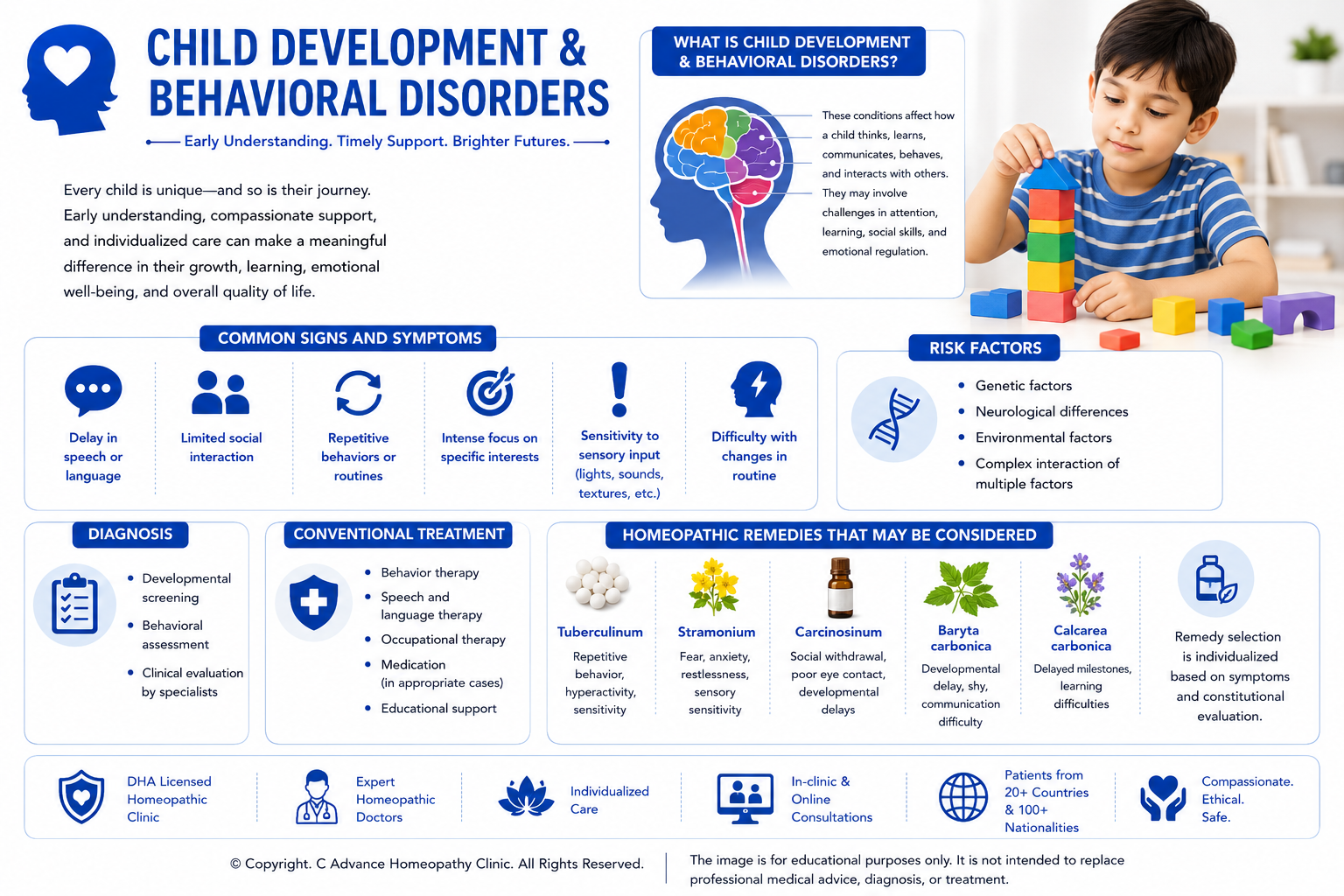
Understanding Child Development & Behavioral Disorders
Child Development & Behavioral Disorders are a group of conditions that affect how children develop, learn, communicate, think, behave, regulate emotions, or interact with others. These conditions usually begin during early childhood and may influence academic achievement, social relationships, emotional well-being, independence, and everyday functioning throughout life.
Most developmental and behavioural disorders result from differences in brain development and function. Their exact causes are often multifactorial and may involve genetic, biological, prenatal, and environmental influences. In many children, no single cause can be identified. Importantly, these conditions are not caused by poor parenting, and families should never be blamed for a child's developmental difficulties.
Among the most common developmental and behavioural disorders are Autism Spectrum Disorder (ASD), Attention-Deficit/Hyperactivity Disorder (ADHD), Learning Disorders, Tic Disorders, and Childhood-Onset Fluency Disorder (Stuttering). Some children may experience more than one developmental condition simultaneously, requiring a coordinated and individualized treatment approach.
Current evidence shows that early diagnosis, individualized intervention, family education, educational support, and ongoing developmental monitoring can significantly improve communication skills, adaptive behaviour, learning abilities, emotional regulation, social participation, and overall quality of life.
How Homeopathy May Support Children with Developmental & Behavioral Disorders
Homeopathy does not replace conventional medical care, developmental therapies, behavioural interventions, speech therapy, occupational therapy, or educational support. Instead, it may be considered as part of an individualized complementary care plan for selected children who are already receiving appropriate multidisciplinary care.
Depending on each child's individual presentation, homeopathic care may be considered to help support areas such as:
- Emotional regulation
- Anxiety and emotional distress
- Behavioural challenges
- Irritability
- Sleep disturbances
- Hyperactivity
- Attention and concentration difficulties
- Social confidence
- Overall well-being and quality of life
Every child is unique. The selection of homeopathic medicines is individualized and depends on the child's developmental history, behavioural characteristics, emotional profile, constitutional features, associated symptoms, medical history, family history, and overall health rather than the diagnosis alone.
1. Autism Spectrum Disorder (ASD)
What is Autism Spectrum Disorder?
Autism Spectrum Disorder (ASD) is a neurodevelopmental condition characterized by persistent differences in social communication, social interaction, and patterns of behaviour, interests, or activities. The term "spectrum" reflects the broad range of abilities, strengths, challenges, and support needs observed among individuals with autism.
Children with ASD may experience differences in language development, communication, eye contact, understanding social cues, imaginative play, emotional regulation, sensory processing, and behavioural flexibility. Some children possess exceptional strengths in areas such as memory, mathematics, music, visual thinking, or pattern recognition, while others require substantial support with communication, daily living skills, and social interaction.
The exact cause of Autism Spectrum Disorder is not fully understood. Current scientific evidence suggests that autism results from complex interactions between genetic and neurodevelopmental factors. Extensive scientific research has found no evidence that routine childhood vaccinations cause autism.
Early diagnosis followed by individualized intervention, speech and language therapy, occupational therapy, behavioural therapy, educational support, and active family involvement can significantly improve developmental outcomes and help children develop their communication, social, adaptive, and learning skills.
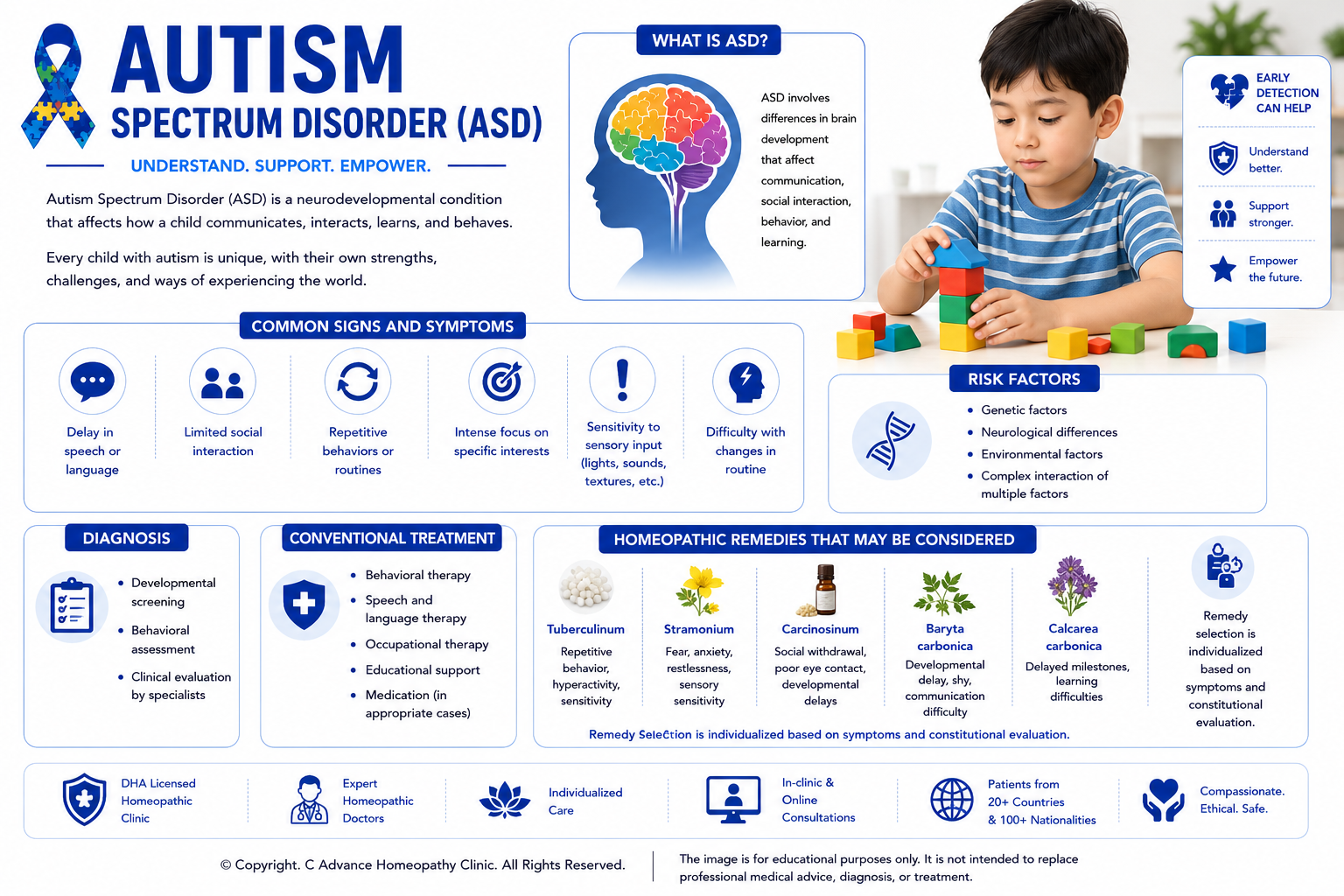
Common Signs and Symptoms of Autism Spectrum Disorder
The presentation varies considerably between children. Common features may include:
- Delayed speech or language development
- Limited eye contact
- Difficulty understanding or responding to social interaction
- Reduced use of gestures or facial expressions
- Preference for solitary play
- Repetitive movements such as hand flapping, rocking, or spinning
- Repetitive speech or echolalia
- Strong preference for routines and predictability
- Highly focused or restricted interests
- Sensitivity to sounds, lights, textures, smells, or touch
- Difficulty coping with changes in routine
- Emotional dysregulation or behavioural outbursts in some situations
Risk Factors for Autism Spectrum Disorder
Although the exact cause remains unknown, several factors have been associated with an increased likelihood of Autism Spectrum Disorder, including:
- Genetic factors
- Family history of autism
- Certain genetic syndromes
- Advanced parental age
- Premature birth
- Low birth weight
- Certain prenatal and perinatal factors
Having one or more of these factors does not necessarily mean that a child will develop autism.
Conventional Management of Autism Spectrum Disorder
There is no single treatment that is appropriate for every child with Autism Spectrum Disorder. Management is individualized according to each child's developmental profile, communication abilities, strengths, challenges, and support needs.
Conventional management commonly includes:
- Early intervention programmes
- Speech and language therapy
- Occupational therapy
- Behavioural interventions
- Parent education and training
- Individualized educational programmes
- Social skills training
- Psychological support
- Medical management of associated conditions, when indicated
Homeopathic Medicines Commonly Considered for Autism Spectrum Disorder
Some homeopathic medicines that experienced homeopathic physicians may consider as part of an individualized treatment plan include:
- Carcinosinum
- Baryta Carbonica
- Calcarea Carbonica
- Stramonium
- Tarentula Hispanica
- Tuberculinum
- Medorrhinum
- Natrum Muriaticum
- Silicea
- Hyoscyamus Niger
Homeopathic medicines should only be prescribed by a qualified homeopathic physician after an individualized clinical evaluation.
Important: Complementary Care for Autism Spectrum Disorder (ASD)
Autism Spectrum Disorder should always be diagnosed and evaluated by appropriately qualified healthcare professionals, such as a developmental paediatrician, child psychiatrist, paediatric neurologist, or clinical psychologist, using standardized developmental assessment and diagnostic criteria. A comprehensive evaluation helps identify the child's strengths, developmental profile, communication abilities, learning needs, associated medical or behavioural conditions, and the level of support required. Early diagnosis allows timely intervention, which is one of the most important factors influencing long-term developmental outcomes.
Children diagnosed with Autism Spectrum Disorder may be considered for individualized homeopathic treatment as a complementary approach following appropriate developmental assessment. Homeopathy may be integrated alongside speech and language therapy, occupational therapy, behavioural interventions, Applied Behaviour Analysis (ABA) where appropriate, educational support, parent training programmes, psychological care, and regular developmental follow-up. Parents are strongly encouraged to continue all recommended therapies and educational interventions, as these remain the foundation of evidence-based autism care.
The primary role of complementary homeopathic care is to provide an individualized, child-centred approach based on the child's unique developmental history, behavioural characteristics, emotional profile, constitutional features, associated symptoms, medical history, family history, and overall health. Homeopathy should not be regarded as a substitute for developmental therapies, educational interventions, behavioural programmes, specialist medical care, or any other evidence-based treatment recommended by the child's healthcare team.
Children who experience developmental regression, loss of previously acquired language or social skills, recurrent seizures, persistent severe sleep disturbance, significant self-injurious behaviour, aggressive behaviour posing a risk to themselves or others, severe feeding difficulties resulting in poor nutrition, or any sudden neurological deterioration should undergo prompt specialist medical evaluation, as these situations may indicate associated medical or neurological conditions requiring urgent assessment and management.
2. Attention-Deficit/Hyperactivity Disorder (ADHD)
What is Attention-Deficit/Hyperactivity Disorder?
Attention-Deficit/Hyperactivity Disorder (ADHD) is one of the most common neurodevelopmental disorders of childhood. It is characterized by persistent patterns of inattention, hyperactivity, and impulsivity that interfere with learning, academic performance, behaviour, social relationships, and everyday functioning. Although symptoms usually become apparent during early childhood, ADHD may continue into adolescence and adulthood.
Children with ADHD may have difficulty maintaining attention, completing schoolwork, organizing tasks, following instructions, controlling impulsive behaviour, or remaining seated when expected. These challenges can affect academic achievement, self-confidence, family relationships, and peer interactions. At the same time, many children with ADHD are intelligent, creative, energetic, and capable of thriving when provided with appropriate support and individualized intervention.
The exact cause of ADHD is not fully understood. Current scientific evidence suggests that ADHD results from a combination of genetic, neurological, and environmental factors that influence brain development and executive functioning. ADHD is not caused by poor parenting, lack of discipline, or excessive screen time, although environmental factors may influence behaviour in some children.
Early diagnosis followed by individualized management can significantly improve learning, behaviour, emotional well-being, social development, and overall quality of life.
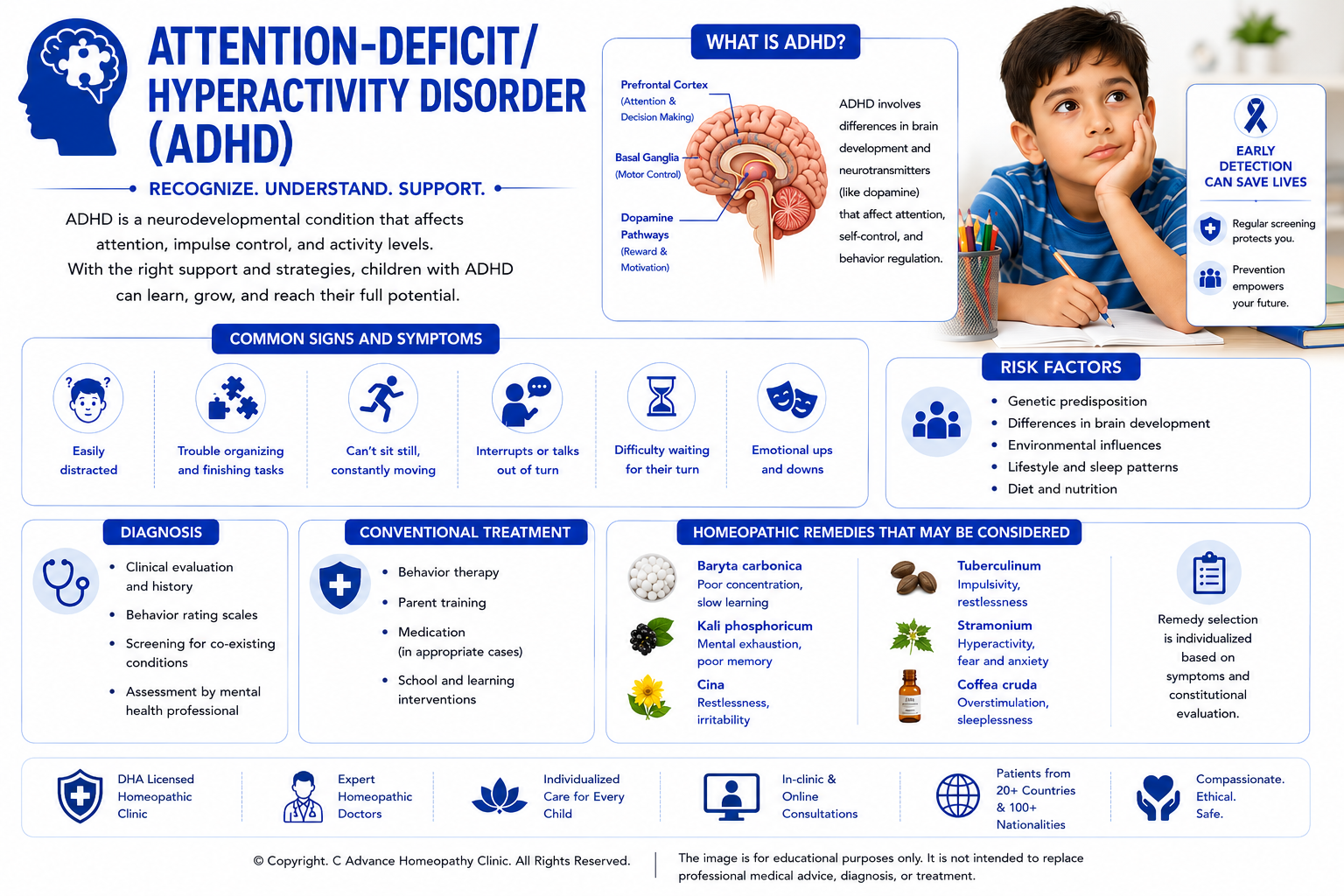
Common Signs and Symptoms of ADHD
Symptoms vary between children and may present predominantly as inattentive, predominantly hyperactive-impulsive, or combined type.
Common features include:
- Difficulty maintaining attention
- Easily distracted
- Frequent careless mistakes
- Difficulty completing tasks
- Poor organizational skills
- Forgetfulness in daily activities
- Frequently losing personal belongings
- Excessive talking
- Difficulty waiting for their turn
- Interrupting conversations or activities
- Constant fidgeting or restlessness
- Difficulty remaining seated
- Acting impulsively
- Difficulty following multi-step instructions
Risk Factors for ADHD
Several factors have been associated with an increased likelihood of ADHD, including:
- Family history of ADHD
- Genetic factors
- Premature birth
- Low birth weight
- Prenatal exposure to tobacco, alcohol, or certain substances
- Exposure to environmental toxins such as lead
- Certain neurological or developmental conditions
Having one or more risk factors does not necessarily mean that a child will develop ADHD.
Conventional Management of ADHD
Management is individualized according to the child's age, symptom severity, educational needs, associated conditions, and family circumstances.
Conventional management commonly includes:
- Parent education and behavioural training
- Behavioural therapy
- School-based educational support
- Classroom accommodations
- Psychological support
- Organizational and executive function training
- Medication, when clinically indicated
- Regular developmental follow-up
Homeopathic Medicines Commonly Considered for Attention-Deficit/Hyperactivity Disorder
Some homeopathic medicines that experienced homeopathic physicians may consider as part of an individualized treatment plan include:
- Tarentula Hispanica
- Tuberculinum
- Zincum Metallicum
- Hyoscyamus Niger
- Stramonium
- Cina
- Medorrhinum
- Chamomilla
- Lycopodium Clavatum
- Calcarea Phosphorica
- Baryta Carbonica
Homeopathic medicines should only be prescribed by a qualified homeopathic physician after an individualized clinical evaluation.
Important: Complementary Care for Attention-Deficit/Hyperactivity Disorder (ADHD)
Attention-Deficit/Hyperactivity Disorder (ADHD) should always be diagnosed and evaluated by appropriately qualified healthcare professionals, such as a developmental paediatrician, child psychiatrist, paediatric neurologist, or clinical psychologist, using a comprehensive developmental assessment and standardized diagnostic criteria. Careful evaluation is important to confirm the diagnosis, assess symptom severity, identify co-existing conditions such as learning disorders, anxiety, autism spectrum disorder, tic disorders, sleep disorders, or behavioural difficulties, and develop an individualized management plan.
Children diagnosed with ADHD may be considered for individualized homeopathic treatment as a complementary approach following appropriate developmental assessment. Homeopathy may be integrated alongside behavioural therapy, parent training programmes, school-based educational support, classroom accommodations, psychological interventions, organizational skills training, medication when clinically indicated, and regular developmental follow-up. Parents are strongly encouraged to continue all recommended educational, behavioural, psychological, and medical interventions, as these remain the foundation of evidence-based ADHD management.
The primary role of complementary homeopathic care is to provide an individualized, child-centred approach based on the child's behavioural profile, emotional characteristics, developmental history, constitutional features, associated symptoms, medical history, family history, educational needs, and overall health. Homeopathy should not be regarded as a substitute for behavioural interventions, educational support, psychological care, prescribed medication when indicated, or any other evidence-based treatment recommended by the child's healthcare team.
Children who develop marked deterioration in behaviour or school performance, significant emotional distress, severe anxiety or depression, suicidal thoughts or self-harming behaviour, sudden neurological symptoms, recurrent seizures, significant aggression resulting in risk of harm to themselves or others, or severe medication-related adverse effects should undergo prompt specialist medical evaluation, as these situations require timely assessment and appropriate management by the treating healthcare team.
3. Learning Disorders
What are Learning Disorders?
Learning Disorders are neurodevelopmental conditions in which children experience persistent difficulties in acquiring and applying academic skills despite having normal intelligence, receiving appropriate education, and being provided with adequate learning opportunities. These disorders are not caused by poor motivation, inadequate teaching, or lack of effort.
Specific Learning Disorders primarily affect reading, written expression, mathematics, or a combination of these skills. They may influence academic achievement, classroom participation, self-confidence, and social development. Early recognition and individualized educational intervention allow many children to develop effective learning strategies and achieve their full academic potential.
The three most common Specific Learning Disorders are Dyslexia, Dysgraphia, and Dyscalculia.
3.1 Dyslexia
What is Dyslexia?
Dyslexia is a Specific Learning Disorder that primarily affects reading accuracy, reading fluency, spelling, and the ability to recognize and decode written words. Children with dyslexia usually have normal intelligence but experience persistent difficulties in processing written language.
The severity of dyslexia varies considerably between individuals. Early diagnosis followed by structured literacy programmes and individualized educational support can substantially improve reading skills and academic performance.

Common Signs and Symptoms of Dyslexia
Common features include:
- Delayed reading development
- Difficulty recognizing letters and words
- Slow or inaccurate reading
- Frequent spelling mistakes
- Difficulty understanding written text
- Confusion between similar letters
- Difficulty learning new vocabulary
- Avoidance of reading activities
Risk Factors for Dyslexia
Several factors have been associated with an increased likelihood of dyslexia, including:
- Family history of dyslexia
- Genetic factors
- Developmental language disorders
- Premature birth
- Low birth weight
- Certain neurological conditions
Conventional Management of Dyslexia
Conventional management commonly includes:
- Comprehensive psychoeducational assessment
- Structured literacy programmes
- Individualized educational planning
- School accommodations
- Reading intervention programmes
- Speech and language therapy, when indicated
- Parent education
- Regular educational review
Homeopathic Medicines Commonly Considered for Dyslexia
Some homeopathic medicines that experienced homeopathic physicians may consider as part of an individualized treatment plan include:
- Baryta Carbonica
- Calcarea Phosphorica
- Lycopodium Clavatum
- Zincum Metallicum
- Anacardium Orientale
- Kali Phosphoricum
- Silicea
- Natrum Muriaticum
Homeopathic medicines should only be prescribed by a qualified homeopathic physician after an individualized clinical evaluation.
Important: Complementary Care for Dyslexia
Dyslexia should always be evaluated through a comprehensive psychoeducational assessment conducted by appropriately qualified professionals, such as an educational psychologist, clinical psychologist, developmental paediatrician, learning specialist, or speech and language therapist, to confirm the diagnosis, identify the child's specific learning profile, assess strengths and challenges, and exclude other conditions that may affect reading and language development. Early identification allows timely educational intervention and helps children develop effective reading strategies while minimizing the long-term impact on academic achievement and self-confidence.
Children diagnosed with dyslexia may be considered for individualized homeopathic treatment as a complementary approach following appropriate educational and developmental assessment. Homeopathy may be integrated alongside structured literacy programmes, individualized educational plans (IEPs), school-based accommodations, reading intervention programmes, speech and language therapy where indicated, parent education, and regular educational review. Parents are strongly encouraged to continue all recommended educational interventions, as these remain the foundation of evidence-based management for dyslexia.
The primary role of complementary homeopathic care is to provide an individualized, child-centred approach based on the child's developmental history, learning profile, emotional characteristics, behavioural patterns, constitutional features, associated symptoms, medical history, family history, and overall health. Homeopathy should not be regarded as a substitute for structured literacy instruction, educational support, speech and language therapy, school accommodations, or any other evidence-based intervention recommended by the child's educational and healthcare professionals.
Children who experience persistent academic regression despite appropriate intervention, significant language delay, marked difficulty across multiple areas of learning, progressive neurological symptoms, recurrent seizures, visual or hearing concerns affecting learning, severe emotional distress related to school, or any sudden loss of previously acquired academic skills should undergo prompt specialist evaluation, as these situations may indicate additional developmental, neurological, sensory, or medical conditions requiring further assessment and management.
3.2 Dysgraphia
What is Dysgraphia?
Dysgraphia is a Specific Learning Disorder affecting written expression. Children with dysgraphia experience persistent difficulty with handwriting, spelling, organizing written ideas, sentence construction, and producing written work efficiently despite receiving appropriate instruction.
Early educational intervention and occupational therapy help many children improve handwriting, written communication, and classroom performance.

Common Signs and Symptoms of Dysgraphia
Common features include:
- Poor or illegible handwriting
- Difficulty forming letters correctly
- Slow writing speed
- Frequent spelling mistakes
- Difficulty organizing written work
- Uneven spacing between words
- Hand fatigue while writing
- Avoidance of writing tasks
Risk Factors for Dysgraphia
Several factors have been associated with an increased likelihood of dysgraphia, including:
- Family history of learning disorders
- Developmental coordination difficulties
- Developmental language disorders
- Premature birth
- Certain neurological conditions
Conventional Management of Dysgraphia
Conventional management commonly includes:
- Occupational therapy
- Individualized educational programmes
- Handwriting intervention
- Written expression support
- School accommodations
- Assistive technology, when appropriate
- Parent education
- Regular educational review
Homeopathic Medicines Commonly Considered for Dysgraphia
Some homeopathic medicines that experienced homeopathic physicians may consider as part of an individualized treatment plan include:
- Baryta Carbonica
- Calcarea Phosphorica
- Zincum Metallicum
- Anacardium Orientale
- Lycopodium Clavatum
- Silicea
- Kali Phosphoricum
Homeopathic medicines should only be prescribed by a qualified homeopathic physician after an individualized clinical evaluation.
Important: Complementary Care for Dysgraphia
Dysgraphia should always be evaluated through a comprehensive psychoeducational and developmental assessment conducted by appropriately qualified professionals, such as an educational psychologist, clinical psychologist, developmental paediatrician, occupational therapist, or learning specialist, to confirm the diagnosis, identify the child's specific difficulties with written expression and handwriting, assess fine motor skills, and exclude other developmental, neurological, visual, or learning conditions that may contribute to writing difficulties. Early identification allows timely intervention and helps children develop effective writing strategies while improving academic participation and self-confidence.
Children diagnosed with dysgraphia may be considered for individualized homeopathic treatment as a complementary approach following appropriate educational and developmental assessment. Homeopathy may be integrated alongside occupational therapy, handwriting intervention programmes, individualized educational plans (IEPs), school-based accommodations, written expression support, assistive technology where appropriate, parent education, and regular educational review. Parents are strongly encouraged to continue all recommended educational and therapeutic interventions, as these remain the foundation of evidence-based management for dysgraphia.
The primary role of complementary homeopathic care is to provide an individualized, child-centred approach based on the child's developmental history, learning profile, behavioural characteristics, emotional profile, constitutional features, associated symptoms, medical history, family history, and overall health. Homeopathy should not be regarded as a substitute for occupational therapy, handwriting intervention, educational support, school accommodations, assistive technology, or any other evidence-based intervention recommended by the child's educational and healthcare professionals.
Children who experience persistent deterioration in writing skills despite appropriate intervention, significant fine motor difficulties affecting daily activities, marked language or learning difficulties across multiple academic areas, progressive neurological symptoms, recurrent seizures, visual impairment affecting writing, or sudden loss of previously acquired writing abilities should undergo prompt specialist evaluation, as these situations may indicate additional developmental, neurological, or medical conditions requiring further assessment and management.
3.3 Dyscalculia
What is Dyscalculia?
Dyscalculia is a Specific Learning Disorder affecting mathematical understanding, numerical reasoning, and calculation skills. Children with dyscalculia may have difficulty understanding numbers, performing calculations, estimating quantities, telling time, managing money appropriate for their age, and understanding mathematical concepts.
Like other learning disorders, dyscalculia is unrelated to intelligence and responds best to individualized educational intervention.
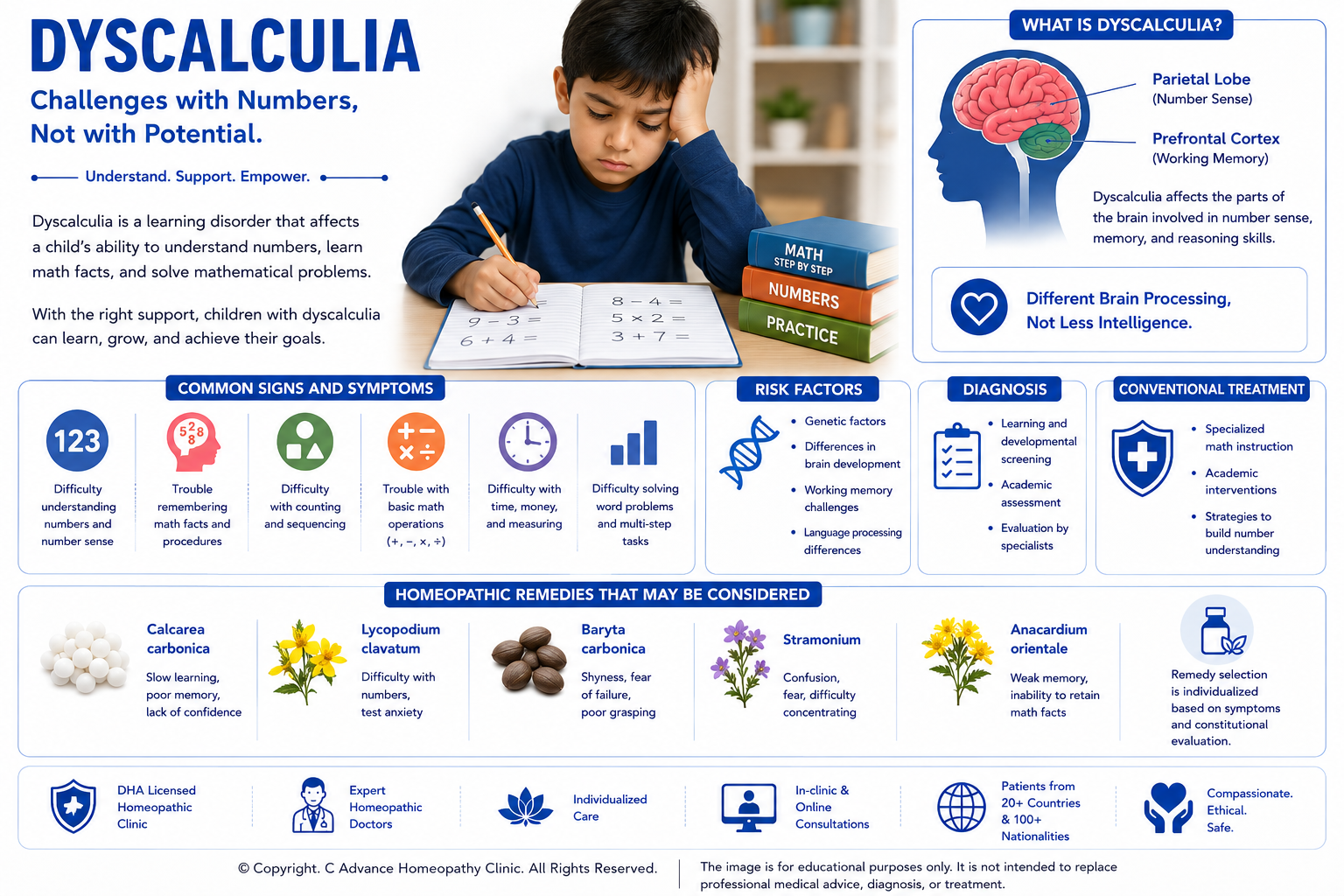
Common Signs and Symptoms of Dyscalculia
Common features include:
- Difficulty recognizing numbers
- Problems with counting
- Difficulty understanding mathematical concepts
- Frequent calculation errors
- Difficulty telling time
- Difficulty estimating quantities
- Difficulty remembering mathematical facts
- Difficulty managing money appropriate for age
Risk Factors for Dyscalculia
Several factors have been associated with an increased likelihood of dyscalculia, including:
- Family history of learning disorders
- Genetic factors
- Developmental language disorders
- Premature birth
- Certain neurological conditions
Conventional Management of Dyscalculia
Conventional management commonly includes:
- Comprehensive psychoeducational assessment
- Individualized mathematics intervention
- School accommodations
- Specialized educational support
- Parent education
- Regular educational review
Homeopathic Medicines Commonly Considered for Dyscalculia
Some homeopathic medicines that experienced homeopathic physicians may consider as part of an individualized treatment plan include:
- Baryta Carbonica
- Calcarea Phosphorica
- Anacardium Orientale
- Zincum Metallicum
- Lycopodium Clavatum
- Kali Phosphoricum
- Silicea
Homeopathic medicines should only be prescribed by a qualified homeopathic physician after an individualized clinical evaluation.
Important: Complementary Care for Dyscalculia
Dyscalculia should always be evaluated through a comprehensive psychoeducational and developmental assessment conducted by appropriately qualified professionals, such as an educational psychologist, clinical psychologist, developmental paediatrician, learning specialist, or neuropsychologist, to confirm the diagnosis, identify the child's specific mathematical learning difficulties, assess cognitive and academic abilities, and exclude other developmental, neurological, visual, or learning conditions that may affect mathematical performance. Early identification allows timely educational intervention and helps children develop effective mathematical reasoning and problem-solving skills while improving academic confidence.
Children diagnosed with dyscalculia may be considered for individualized homeopathic treatment as a complementary approach following appropriate educational and developmental assessment. Homeopathy may be integrated alongside individualized mathematics intervention programmes, specialized educational support, individualized educational plans (IEPs), school-based accommodations, parent education, and regular educational review. Parents are strongly encouraged to continue all recommended educational interventions, as these remain the foundation of evidence-based management for dyscalculia.
The primary role of complementary homeopathic care is to provide an individualized, child-centred approach based on the child's developmental history, learning profile, emotional characteristics, behavioural patterns, constitutional features, associated symptoms, medical history, family history, and overall health. Homeopathy should not be regarded as a substitute for individualized mathematics instruction, specialized educational programmes, school accommodations, or any other evidence-based intervention recommended by the child's educational and healthcare professionals.
Children who experience persistent academic regression despite appropriate intervention, significant difficulties across multiple areas of learning, marked attention or memory problems affecting overall academic performance, progressive neurological symptoms, recurrent seizures, visual impairment affecting learning, or sudden loss of previously acquired mathematical abilities should undergo prompt specialist evaluation, as these situations may indicate additional developmental, neurological, or medical conditions requiring further assessment and management.
4. Tic Disorders (Including Tourette Syndrome)
What are Tic Disorders?
Tic Disorders are neurodevelopmental conditions characterized by sudden, rapid, repetitive, non-rhythmic movements or vocalizations known as tics. These movements or sounds are usually involuntary, although some children may be able to suppress them temporarily. Tics often fluctuate in frequency and intensity and may become more noticeable during periods of stress, excitement, anxiety, or fatigue.
Tics are broadly classified into motor tics, which involve movements such as eye blinking, facial grimacing, shoulder shrugging, or head jerking, and vocal tics, which involve sounds such as throat clearing, sniffing, coughing, grunting, or repeating words. Some children experience only motor tics or only vocal tics, while others experience both.
Tourette Syndrome is the most recognized Tic Disorder and is diagnosed when both multiple motor tics and at least one vocal tic have been present for more than one year, beginning before 18 years of age.
The exact cause of Tic Disorders is not fully understood. Current evidence suggests that they result from a combination of genetic, neurological, and environmental factors affecting brain circuits involved in movement control. Many children with Tic Disorders may also have associated conditions such as ADHD, Obsessive-Compulsive Disorder (OCD), anxiety disorders, or learning difficulties.
In many children, tics improve significantly during adolescence, although some individuals continue to experience symptoms into adulthood. Early diagnosis and appropriate management can help reduce the impact of tics on daily life, school performance, and emotional well-being.
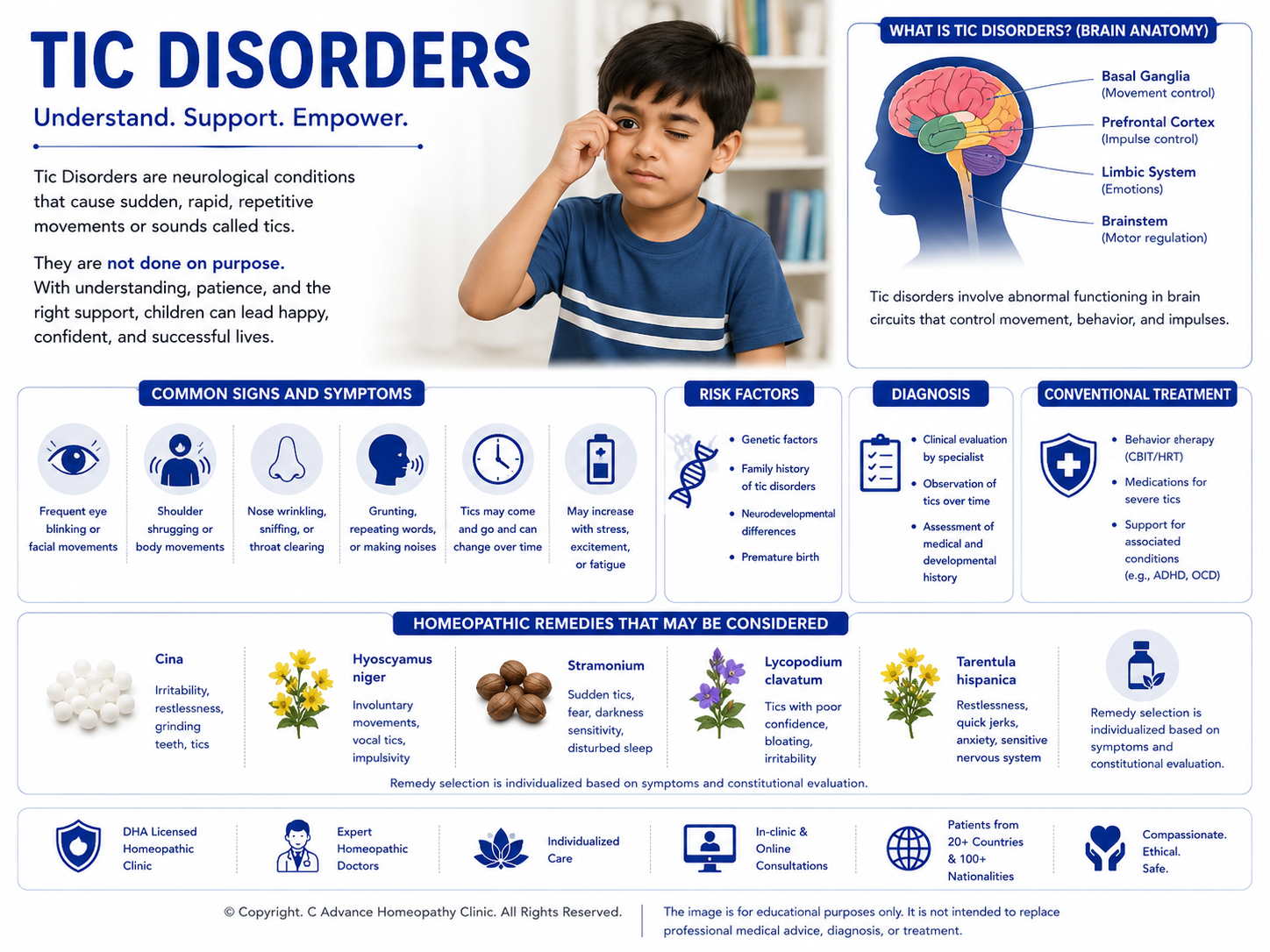
Common Signs and Symptoms of Tic Disorders
Symptoms vary considerably between children.
Common features include:
- Frequent eye blinking
- Facial grimacing
- Shoulder shrugging
- Head jerking
- Repetitive neck movements
- Nose twitching
- Repetitive throat clearing
- Sniffing or grunting sounds
- Repetitive coughing without infection
- Temporary suppression of tics followed by increased frequency
- Tics becoming worse during stress, excitement, or fatigue
- Associated attention or behavioural difficulties in some children
Risk Factors for Tic Disorders
Several factors have been associated with an increased likelihood of Tic Disorders, including:
- Family history of Tic Disorders or Tourette Syndrome
- Genetic factors
- Male gender
- ADHD
- Obsessive-Compulsive Disorder (OCD)
- Anxiety disorders
- Certain neurodevelopmental conditions
Having one or more of these factors does not necessarily mean that a child will develop a Tic Disorder.
Conventional Management of Tic Disorders
Treatment depends on the severity of symptoms, their impact on daily life, and the presence of associated conditions.
Conventional management commonly includes:
- Parent education and reassurance
- Behavioural therapy, including Comprehensive Behavioral Intervention for Tics (CBIT)
- Psychological support
- School-based accommodations
- Treatment of associated ADHD, OCD, or anxiety disorders
- Medication, when clinically indicated
- Regular developmental and neurological follow-up
Homeopathic Medicines Commonly Considered for Tic Disorders
Some homeopathic medicines that experienced homeopathic physicians may consider as part of an individualized treatment plan include:
- Agaricus Muscarius
- Zincum Metallicum
- Cuprum Metallicum
- Hyoscyamus Niger
- Tarentula Hispanica
- Stramonium
- Cina
- Tuberculinum
- Cicuta Virosa
- Medorrhinum
Homeopathic medicines should only be prescribed by a qualified homeopathic physician after an individualized clinical evaluation.
Important: Complementary Care for Tic Disorders (Including Tourette Syndrome)
Tic Disorders, including Tourette Syndrome, should always be evaluated by appropriately qualified healthcare professionals, such as a developmental paediatrician, paediatric neurologist, child psychiatrist, or clinical psychologist, to establish an accurate diagnosis, determine the type and severity of tics, identify associated conditions such as Attention-Deficit/Hyperactivity Disorder (ADHD), Obsessive-Compulsive Disorder (OCD), anxiety disorders, or learning difficulties, and develop an individualized management plan. Careful clinical assessment is essential to distinguish tic disorders from other movement disorders, seizures, stereotypies, or neurological conditions that may present with similar symptoms.
Children diagnosed with Tic Disorders or Tourette Syndrome may be considered for individualized homeopathic treatment as a complementary approach following appropriate specialist assessment. Homeopathy may be integrated alongside behavioural therapy, including Comprehensive Behavioral Intervention for Tics (CBIT), psychological support, school-based accommodations, management of associated ADHD, OCD, or anxiety disorders, medication when clinically indicated, and regular neurological or developmental follow-up. Parents are strongly encouraged to continue all recommended behavioural, educational, psychological, and medical interventions, as these remain the foundation of evidence-based management.
The primary role of complementary homeopathic care is to provide an individualized, child-centred approach based on the child's developmental history, behavioural profile, emotional characteristics, constitutional features, associated symptoms, medical history, family history, and overall health. Homeopathy should not be regarded as a substitute for behavioural therapy, psychological interventions, specialist neurological care, prescribed medication when indicated, or any other evidence-based treatment recommended by the child's healthcare team.
Children who develop sudden onset of severe or rapidly worsening tics, loss of consciousness, recurrent seizures, abnormal movements that interfere with breathing or swallowing, significant self-injurious behaviour, severe emotional distress, suicidal thoughts or self-harming behaviour, marked deterioration in school or social functioning, or any sudden neurological symptoms should undergo prompt specialist medical evaluation, as these situations may indicate an underlying neurological, psychiatric, or medical condition requiring urgent assessment and management.
5. Childhood-Onset Fluency Disorder (Stuttering)
What is Childhood-Onset Fluency Disorder (Stuttering)?
Childhood-Onset Fluency Disorder, commonly known as stuttering, is a communication disorder characterized by disruptions in the normal flow of speech. These disruptions may include repetition of sounds or syllables, prolongation of sounds, pauses during speech, or difficulty initiating words. Stuttering usually begins between two and six years of age, during the period of rapid language development.
Many young children experience temporary speech disfluency while learning language. However, persistent stuttering that continues beyond the expected developmental period may require professional assessment and intervention.
The exact cause of stuttering is not fully understood. Research suggests that genetic, neurological, developmental, and environmental factors all contribute to the disorder. Emotional stress does not cause stuttering, although anxiety, excitement, fatigue, or emotional situations may temporarily increase its severity.
Most children who stutter have normal intelligence and language development. Early assessment by a speech and language therapist and appropriate intervention can significantly improve speech fluency, communication confidence, and social participation.
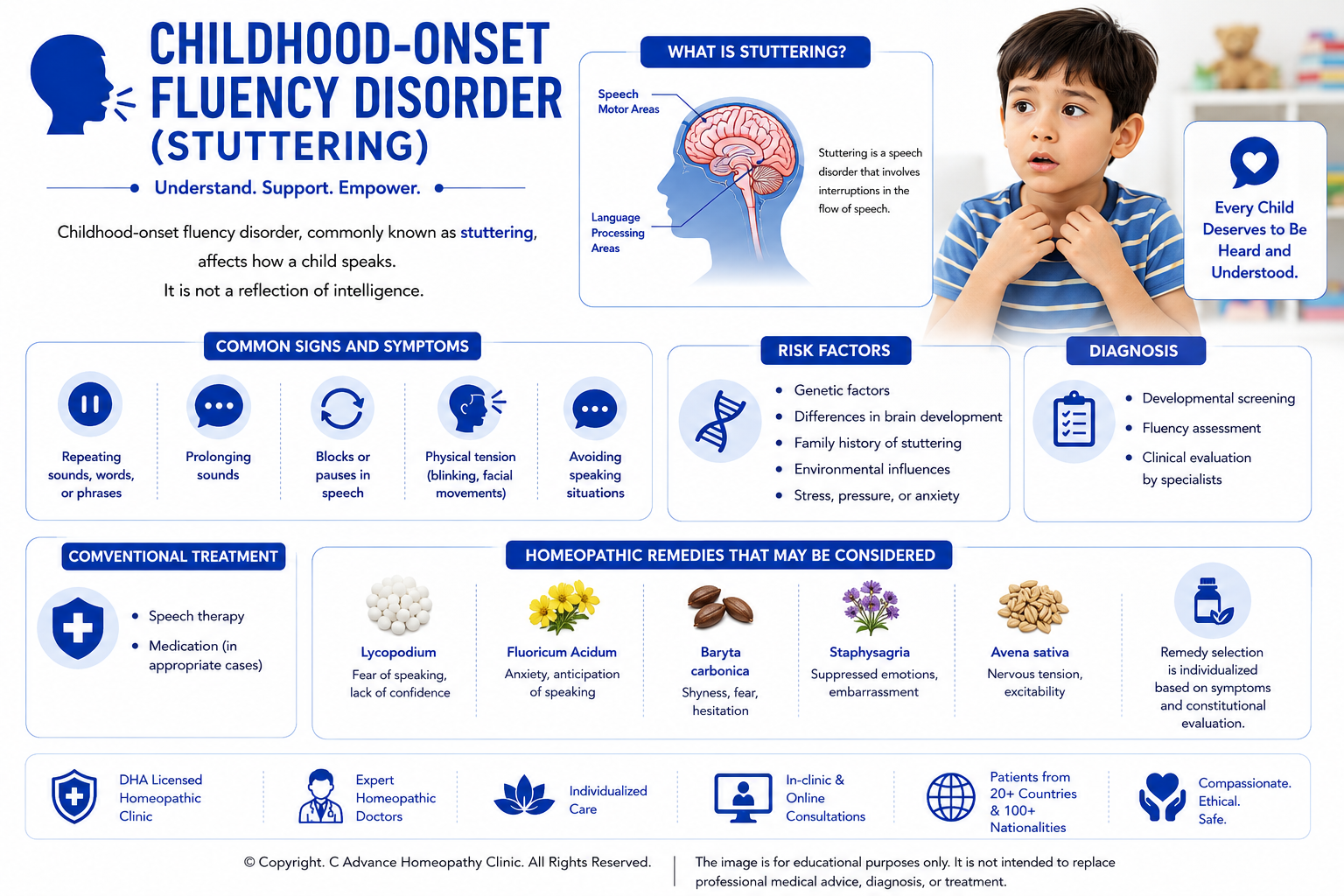
Common Signs and Symptoms of Childhood-Onset Fluency Disorder
Symptoms may vary between children.
Common features include:
- Repetition of sounds, syllables, or words
- Prolongation of speech sounds
- Difficulty initiating speech
- Pauses or blocks during speaking
- Facial tension while speaking
- Blinking or other associated facial movements during speech
- Avoidance of speaking situations
- Frustration or anxiety related to communication
- Reduced confidence while speaking
Risk Factors for Childhood-Onset Fluency Disorder
Several factors have been associated with an increased likelihood of persistent stuttering, including:
- Family history of stuttering
- Male gender
- Delayed language development
- Early developmental speech difficulties
- Neurodevelopmental conditions
- Persistence of symptoms beyond early childhood
Having one or more of these factors does not necessarily mean that a child will develop persistent stuttering.
Conventional Management of Childhood-Onset Fluency Disorder
Management is individualized according to the child's age, severity of symptoms, communication needs, and family circumstances.
Conventional management commonly includes:
- Speech and language therapy
- Parent counselling and education
- Fluency-shaping techniques
- Communication strategies for home and school
- Psychological support, when appropriate
- School accommodations
- Regular follow-up with speech and language professionals
Homeopathic Medicines Commonly Considered for Childhood-Onset Fluency Disorder
Some homeopathic medicines that experienced homeopathic physicians may consider as part of an individualized treatment plan include:
- Stramonium
- Hyoscyamus Niger
- Baryta Carbonica
- Cicuta Virosa
- Causticum
- Lycopodium Clavatum
- Gelsemium Sempervirens
- Calcarea Phosphorica
- Tuberculinum
- Zincum Metallicum
Homeopathic medicines should only be prescribed by a qualified homeopathic physician after an individualized clinical evaluation.
Important: Complementary Care for Childhood-Onset Fluency Disorder (Stuttering)
Childhood-Onset Fluency Disorder (Stuttering) should always be evaluated by appropriately qualified healthcare professionals, such as a speech and language therapist, developmental paediatrician, child psychologist, or paediatric neurologist, to establish an accurate diagnosis, assess the severity and pattern of speech disfluency, identify associated communication or developmental difficulties, and develop an individualized management plan. Early assessment helps distinguish normal developmental speech disfluency from persistent stuttering requiring intervention and allows timely support to improve communication, confidence, and social participation.
Children diagnosed with Childhood-Onset Fluency Disorder (Stuttering) may be considered for individualized homeopathic treatment as a complementary approach following appropriate developmental and speech assessment. Homeopathy may be integrated alongside speech and language therapy, parent counselling and education, fluency-shaping techniques, communication strategies for home and school, psychological support where appropriate, school-based accommodations, and regular follow-up with speech and language professionals. Parents are strongly encouraged to continue all recommended speech, educational, psychological, and developmental interventions, as these remain the foundation of evidence-based management.
The primary role of complementary homeopathic care is to provide an individualized, child-centred approach based on the child's developmental history, communication profile, emotional characteristics, behavioural patterns, constitutional features, associated symptoms, medical history, family history, and overall health. Homeopathy should not be regarded as a substitute for speech and language therapy, educational support, psychological care, or any other evidence-based intervention recommended by the child's healthcare team.
Children who experience sudden loss of previously acquired speech or language skills, persistent difficulty understanding language, progressive neurological symptoms, recurrent seizures, significant developmental regression, marked emotional distress related to communication, severe anxiety affecting daily functioning, or any sudden deterioration in speech associated with weakness or other neurological symptoms should undergo prompt specialist medical evaluation, as these situations may indicate an underlying neurological, developmental, or medical condition requiring further assessment and management.
A Note About Homeopathic Medicines
Homeopathy is a system of complementary medicine that has been practised worldwide for more than 200 years. It is based on the principle of individualization, where the selection of a homeopathic medicine depends not only on the diagnosed condition but also on the child's unique physical symptoms, developmental history, behavioural characteristics, emotional profile, constitutional makeup, medical history, family history, and overall health.
Unlike conventional medicine, where children with the same diagnosis may receive similar interventions, homeopathic treatment is individualized. Two children diagnosed with Autism Spectrum Disorder, ADHD, or another developmental condition may receive different homeopathic medicines because their symptom patterns, developmental characteristics, emotional responses, constitutional features, associated medical conditions, and overall health differ.
At Advance Homeopathy Clinic Dubai, every prescription is individualized following a comprehensive consultation. Our homeopathic physicians evaluate the child's developmental milestones, pregnancy and birth history, medical history, behavioural characteristics, communication abilities, educational progress, emotional profile, previous therapies, family history, laboratory investigations, specialist reports when available, and current interventions before selecting an appropriate homeopathic medicine.
Homeopathy should always be regarded as a complementary therapy and never as a substitute for developmental assessment, behavioural therapy, speech and language therapy, occupational therapy, educational intervention, psychological support, or conventional medical care. Children should continue regular follow-up with their paediatrician, developmental paediatrician, child psychiatrist, paediatric neurologist, psychologist, speech and language therapist, occupational therapist, educators, and other healthcare professionals involved in their care.
Our Homeopathic Approach
At Advance Homeopathy Clinic Dubai, we believe that successful homeopathic care begins with understanding the child rather than focusing solely on the diagnosis. Every consultation is designed to provide a comprehensive understanding of the child's developmental journey while respecting the essential role of evidence-based developmental medicine and multidisciplinary care.
Our comprehensive evaluation includes:
- Detailed developmental history
- Pregnancy, birth, and early childhood history
- Developmental milestones
- Communication and language development
- Behavioural assessment
- Emotional characteristics
- Social interaction and adaptive functioning
- Educational performance and learning profile
- Family and medical history
- Previous therapies and specialist assessments
- Review of laboratory investigations and specialist reports
- Individual constitutional assessment
- Selection of an individualized homeopathic medicine
- Regular follow-up to assess progress and review treatment
We work alongside your child's existing healthcare providers and encourage continued collaboration with developmental paediatricians, child psychiatrists, paediatric neurologists, psychologists, speech and language therapists, occupational therapists, behavioural therapists, and educators whenever appropriate. Our objective is to provide individualized complementary care while maintaining the highest standards of patient safety, professional ethics, and evidence-informed practice.
Why Choose Advance Homeopathy Clinic Dubai?
Advance Homeopathy Clinic Dubai is committed to providing ethical, evidence-informed, and patient-centred homeopathic care for children and their families.
Parents choose our clinic because we offer:
- DHA Licensed Homeopathy Clinic in Dubai
- Individualized homeopathic treatment tailored to every child
- Medical Director Dr. Aalim Dhandhukia with more than 35 years of clinical and teaching experience
- Comprehensive one-to-one consultations
- Evidence-informed clinical practice
- Homeopathy integrated with modern developmental medicine
- In-clinic and online consultations
- Patients from more than 20 countries and over 100 nationalities
- Multilingual patient support
- Free First Consultation to help parents understand whether homeopathy may complement their child's overall care
Our philosophy is simple: provide honest guidance, individualized care, and realistic expectations regarding the complementary role of homeopathy in developmental and behavioural disorders.
Frequently Asked Questions (FAQs)
Can homeopathy cure Autism Spectrum Disorder, ADHD, or other developmental disorders?
No. Homeopathy should not be considered a cure for Autism Spectrum Disorder, ADHD, Learning Disorders, Tic Disorders, or Childhood-Onset Fluency Disorder. Current scientific evidence does not support replacing conventional developmental care with homeopathy. At our clinic, homeopathy is offered only as a complementary therapy alongside evidence-based medical, developmental, behavioural, and educational interventions.
Can my child stop speech therapy, occupational therapy, behavioural therapy, or prescribed medications after starting homeopathic treatment?
No. Parents should never discontinue recommended therapies or prescribed medications without consulting the healthcare professionals managing their child's condition. Early intervention and multidisciplinary care remain the foundation of treatment for developmental and behavioural disorders.
Can homeopathy be used together with conventional treatments?
Yes. Homeopathy is commonly used alongside speech and language therapy, occupational therapy, behavioural therapy, educational support, psychological care, and conventional medical treatment. Parents should always inform every healthcare provider about all treatments their child is receiving.
Is homeopathy safe for children?
When prescribed by a qualified homeopathic physician and used alongside appropriate conventional medical and developmental care, homeopathy is generally considered safe for many children. It should never delay specialist assessment or replace evidence-based interventions.
Which developmental and behavioural disorders do you commonly manage?
Our clinic commonly provides complementary homeopathic care for children with:
- Autism Spectrum Disorder (ASD)
- Attention-Deficit/Hyperactivity Disorder (ADHD)
- Learning Disorders (Dyslexia, Dysgraphia, and Dyscalculia)
- Tic Disorders (including Tourette Syndrome)
- Childhood-Onset Fluency Disorder (Stuttering)
Every child undergoes a detailed individualized evaluation before treatment is recommended.
How are homeopathic medicines selected?
Homeopathic medicines are selected after a detailed consultation considering the child's developmental history, behavioural characteristics, emotional profile, communication abilities, constitutional features, medical history, family history, associated symptoms, and overall health. Treatment is individualized rather than based solely on the diagnosis.
How long does homeopathic treatment take?
The duration varies depending on the child's diagnosis, developmental profile, response to treatment, associated conditions, and treatment goals. Your homeopathic physician will discuss realistic expectations during your consultation.
Our Commitment to Evidence-Based Child Development Care
At Advance Homeopathy Clinic Dubai, we strongly support evidence-based medicine and early intervention. Developmental and behavioural disorders require timely diagnosis, comprehensive assessment, individualized intervention, and ongoing multidisciplinary management. We encourage every family to maintain regular follow-up with their child's healthcare professionals and to continue all recommended therapies, educational support programmes, and medical treatment plans. Although several published clinical studies have explored individualized homeopathic treatment in children with developmental and behavioural disorders, the current body of scientific evidence remains limited. Existing studies are generally small, vary considerably in methodology, and require confirmation through larger, well-designed randomized controlled trials. For this reason, homeopathy should be considered only as a complementary therapy and never as a replacement for established developmental, behavioural, educational, or medical interventions. Our commitment is to provide transparent, ethical, and scientifically responsible information so that parents can make informed decisions regarding their child's healthcare.
Research in Homeopathy and Child Development Disorders
Research Overview
Homeopathy has been investigated as a complementary approach in the management of selected child development and behavioural disorders, with research primarily focusing on developmental outcomes, behavioural symptoms, attention, emotional regulation, communication, learning abilities, and overall quality of life. Published studies have evaluated individualized homeopathic care in children with conditions such as Autism Spectrum Disorder (ASD), Attention-Deficit/Hyperactivity Disorder (ADHD), learning disorders, tic disorders, and other neurodevelopmental conditions.
The published literature includes observational studies, pragmatic clinical studies, randomized controlled trials, systematic reviews, and narrative reviews. Among developmental disorders, the greatest research attention has been directed toward ADHD and Autism Spectrum Disorder, while considerably fewer studies have evaluated homeopathy in learning disorders, tic disorders, Tourette syndrome, or childhood-onset fluency disorder (stuttering).
Because individualized homeopathic prescribing is based on each child's unique developmental profile, behavioural characteristics, emotional state, constitutional features, associated symptoms, and overall health rather than the diagnosis alone, evaluating its effectiveness using conventional clinical trial designs presents important methodological challenges. Consequently, the available evidence should be interpreted with consideration of both its strengths and its limitations.
Current State of Research
Published research in child development disorders includes observational studies, pragmatic clinical studies, randomized controlled trials, systematic reviews, and meta-analyses evaluating homeopathy as a complementary intervention alongside conventional developmental and educational care. Some individual studies have reported improvements in selected behavioural symptoms, attention, emotional regulation, parent-reported outcomes, and aspects of daily functioning in carefully selected children receiving individualized homeopathic treatment.
However, the overall body of scientific evidence remains limited and heterogeneous. Many published studies involve relatively small sample sizes, differences in diagnostic criteria, variability in participant characteristics, individualized prescribing approaches, inconsistent outcome measures, short follow-up periods, and methodological limitations that make direct comparison between studies difficult.
Systematic reviews generally conclude that the current evidence is insufficient to establish definitive effectiveness of homeopathy for routine management of neurodevelopmental disorders. While some studies report encouraging findings, further well-designed, adequately powered clinical trials using rigorous diagnostic criteria, standardized outcome measures, and longer follow-up are required before firm conclusions can be drawn regarding the role of individualized homeopathic care in child development disorders.
Current international clinical guidelines continue to recommend early diagnosis, comprehensive developmental assessment, individualized educational planning, behavioural interventions, speech and language therapy, occupational therapy, psychological support, family education, and medication where clinically indicated as the foundation of evidence-based management. Complementary therapies, including homeopathy, should therefore be regarded as supportive approaches that may be considered alongside—not as replacements for—recommended developmental, educational, and medical interventions.
Our Clinical Perspective
At Advance Homeopathy Clinic Dubai, we believe that every child with developmental, behavioural, learning, or communication difficulties deserves early identification, accurate diagnosis, comprehensive developmental assessment, and timely intervention. Evidence-based developmental therapies, educational support, behavioural programmes, speech and language therapy, occupational therapy, psychological care, and specialist medical management remain the foundation of care and should never be delayed or replaced by complementary therapies.
Our role is to provide individualized homeopathic care as a complementary approach, integrated within the child's overall developmental care plan. Every child is assessed as an individual, considering developmental history, behavioural characteristics, communication profile, learning abilities, emotional development, constitutional features, associated medical conditions, family history, and overall health before selecting an individualized homeopathic medicine.
Throughout this article, we have consistently emphasized that homeopathy is presented only as a complementary approach within multidisciplinary developmental care. We do not present homeopathy as a substitute for developmental assessment, behavioural therapy, speech and language therapy, occupational therapy, educational interventions, psychological care, prescribed medication, or any other evidence-based treatment recommended by the child's healthcare team.
Children who experience developmental regression, loss of previously acquired speech or social skills, recurrent seizures, significant behavioural deterioration, severe emotional distress, suicidal thoughts, persistent self-injurious behaviour, sudden neurological symptoms, or any other acute developmental or neurological concern should undergo immediate specialist medical evaluation. Patient safety, multidisciplinary collaboration, early intervention, and continuity of developmental care remain central to our clinical philosophy.
Our approach combines individualized homeopathic prescribing, careful developmental assessment, collaboration with developmental paediatricians, child psychiatrists, psychologists, therapists, educators, and other healthcare professionals whenever appropriate, together with an evidence-informed understanding of current medical research. As scientific knowledge continues to evolve, we remain committed to integrating emerging evidence into clinical practice while maintaining the principles of individualized patient care, child safety, responsible integrative healthcare, and family-centred developmental support.
