
Ear, Nose & Throat (ENT): Individualized Homeopathic Care in Dubai
Comprehensive Homeopathic Care for Ear, Nose & Throat (ENT) Disorders in Dubai
Ear, Nose & Throat (ENT) disorders are among the most common health conditions affecting both children and adults. Conditions such as Allergic Rhinitis, Chronic Rhinosinusitis, Nasal Polyps, Chronic Tonsillitis, Adenoid Hypertrophy, Ménière's Disease, and Benign Paroxysmal Positional Vertigo (BPPV) can significantly affect breathing, hearing, balance, sleep quality, speech, school performance, work productivity, and overall quality of life.
Modern ENT medicine provides effective diagnostic and treatment options, including medications, allergy management, hearing assessment, vestibular rehabilitation, nasal endoscopy, minimally invasive procedures, and surgery when indicated. Early diagnosis and appropriate treatment play an important role in preventing complications and improving long-term outcomes.
Many individuals also seek complementary therapies to help manage persistent or recurrent symptoms while continuing conventional medical care. At Advance Homeopathy Clinic Dubai, we provide individualized homeopathic treatment as a complementary therapy for selected ENT conditions. Homeopathy is offered alongside evidence-based ENT care and should never be considered a replacement for medical evaluation, prescribed medications, allergy management, hearing care, vestibular rehabilitation, or surgical treatment when recommended by an Ear, Nose & Throat (ENT) specialist.
Our experienced homeopathic physicians perform a comprehensive evaluation that includes your diagnosis, presenting symptoms, previous treatments, allergy history, medical history, lifestyle factors, constitutional characteristics, and overall health before developing an individualized homeopathic treatment plan.
We provide individualized homeopathic care for patients with a wide range of ENT conditions, including Allergic Rhinitis, Chronic Rhinosinusitis, Nasal Polyps, Chronic Tonsillitis, Adenoid Hypertrophy, Ménière's Disease, and Benign Paroxysmal Positional Vertigo (BPPV).
Patients from more than 20 countries and over 100 nationalities have trusted Advance Homeopathy Clinic Dubai for individualized homeopathic care. We offer both in-clinic and online consultations together with a Free First Consultation, allowing you to understand whether homeopathy may play an appropriate complementary role in your overall treatment plan.
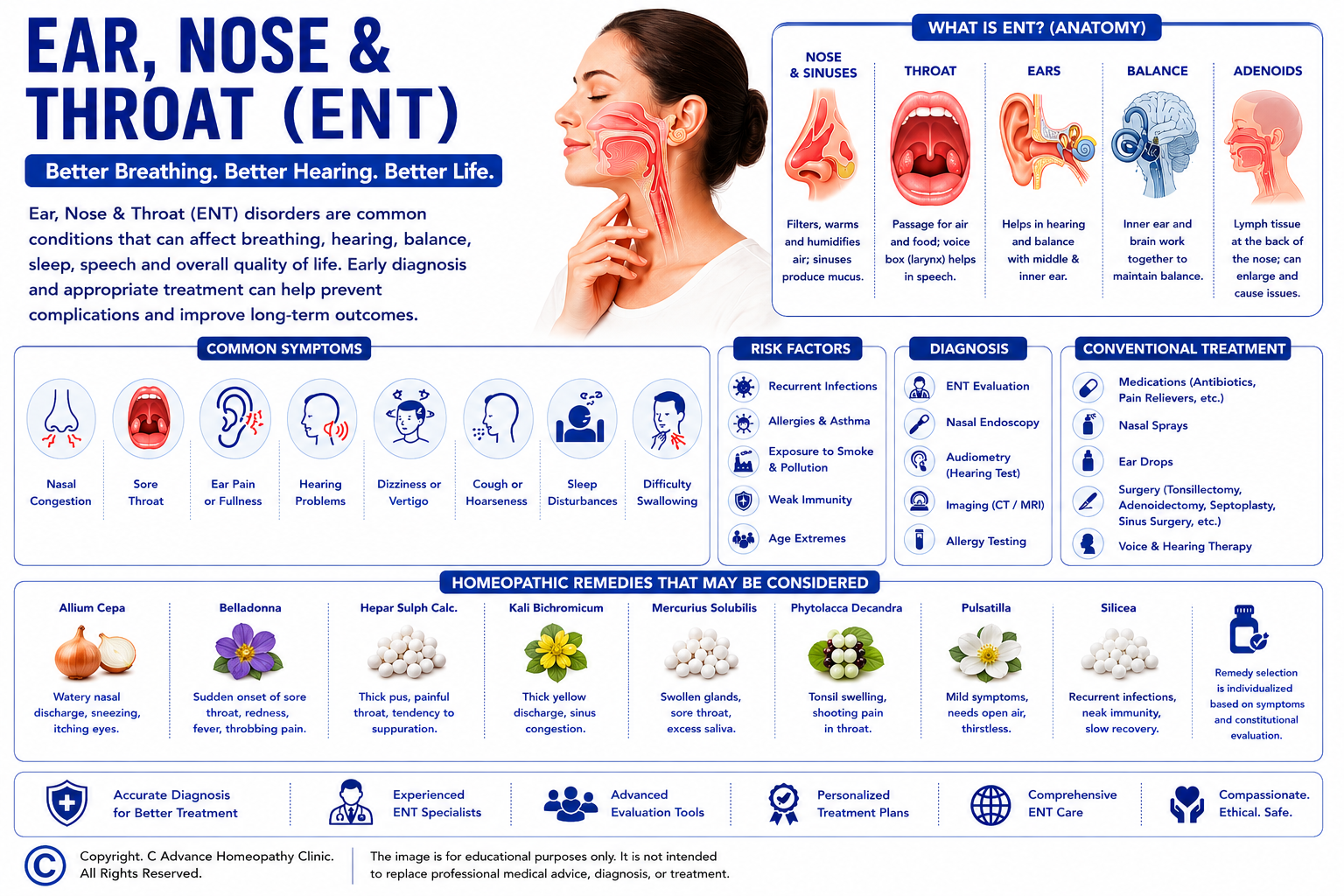
Understanding Ear, Nose & Throat (ENT) Disorders
Ear, Nose & Throat (ENT) disorders encompass a wide range of conditions affecting the ears, nose, throat, sinuses, balance system, and upper airway. These disorders may result from allergies, infections, inflammation, structural abnormalities, immune responses, environmental factors, or age-related changes. Some conditions are acute and resolve with appropriate treatment, while others become chronic or recur repeatedly, requiring long-term management.
Common ENT disorders include allergic conditions such as Allergic Rhinitis, inflammatory conditions such as Chronic Rhinosinusitis and Nasal Polyps, recurrent infections including Chronic Tonsillitis, enlarged adenoids affecting children, and disorders of the inner ear that influence hearing and balance, such as Ménière's Disease and Benign Paroxysmal Positional Vertigo (BPPV).
Symptoms may include nasal congestion, sneezing, runny nose, facial pressure, reduced sense of smell, sore throat, recurrent throat infections, snoring, mouth breathing, hearing changes, ringing in the ears (tinnitus), dizziness, vertigo, or imbalance. These symptoms can interfere with sleep, education, work, communication, and daily activities if left untreated.
Modern ENT medicine focuses on accurate diagnosis and evidence-based treatment tailored to the underlying cause. Depending on the condition, management may include medications, allergy treatment, vestibular rehabilitation, hearing care, lifestyle modification, or surgical intervention. Early diagnosis and appropriate treatment often help reduce complications and improve quality of life.
How Homeopathy May Support Ear, Nose & Throat (ENT) Disorders
Homeopathy does not replace conventional ENT treatment. Instead, it may be considered as part of an individualized complementary treatment plan for selected patients receiving conventional medical care or recovering after treatment.
Depending on the individual's clinical condition, experienced homeopathic physicians may consider individualized homeopathic treatment to help support patients experiencing symptoms associated with conditions such as:
- Recurrent sneezing
- Persistent nasal congestion
- Runny nose
- Seasonal allergy symptoms
- Chronic sinus discomfort
- Thick nasal discharge
- Reduced sense of smell
- Recurrent sore throat
- Enlarged tonsils
- Recurrent throat infections
- Mouth breathing associated with adenoid enlargement
- Snoring in selected patients
- Ear fullness
- Ringing in the ears (tinnitus)
- Vertigo and dizziness
- Balance disturbances
- General quality of life
Every patient is unique. The selection of homeopathic medicines is individualized and depends on the diagnosis, presenting symptoms, medical history, constitutional characteristics, associated medical conditions, and overall health.
1. Allergic Rhinitis
What is Allergic Rhinitis?
Allergic Rhinitis, commonly known as hay fever or nasal allergy, is one of the most common allergic conditions affecting both children and adults. It occurs when the immune system overreacts to otherwise harmless airborne allergens such as pollen, house dust mites, mould spores, animal dander, or other environmental allergens. This exaggerated immune response causes inflammation of the nasal lining, resulting in recurrent sneezing, nasal congestion, itching, and watery nasal discharge.
Allergic Rhinitis may occur seasonally during periods of high pollen exposure or persist throughout the year when triggered by indoor allergens. Many patients also have associated allergic conditions such as asthma, allergic conjunctivitis, eczema, or chronic sinus inflammation. If left untreated, persistent nasal obstruction and inflammation may affect sleep quality, concentration, school performance, work productivity, and overall quality of life.
Modern management includes identifying and avoiding allergens whenever possible, medical treatment, allergy control measures, and immunotherapy in selected patients. Many individuals also explore complementary therapies to support symptom management while continuing conventional care.
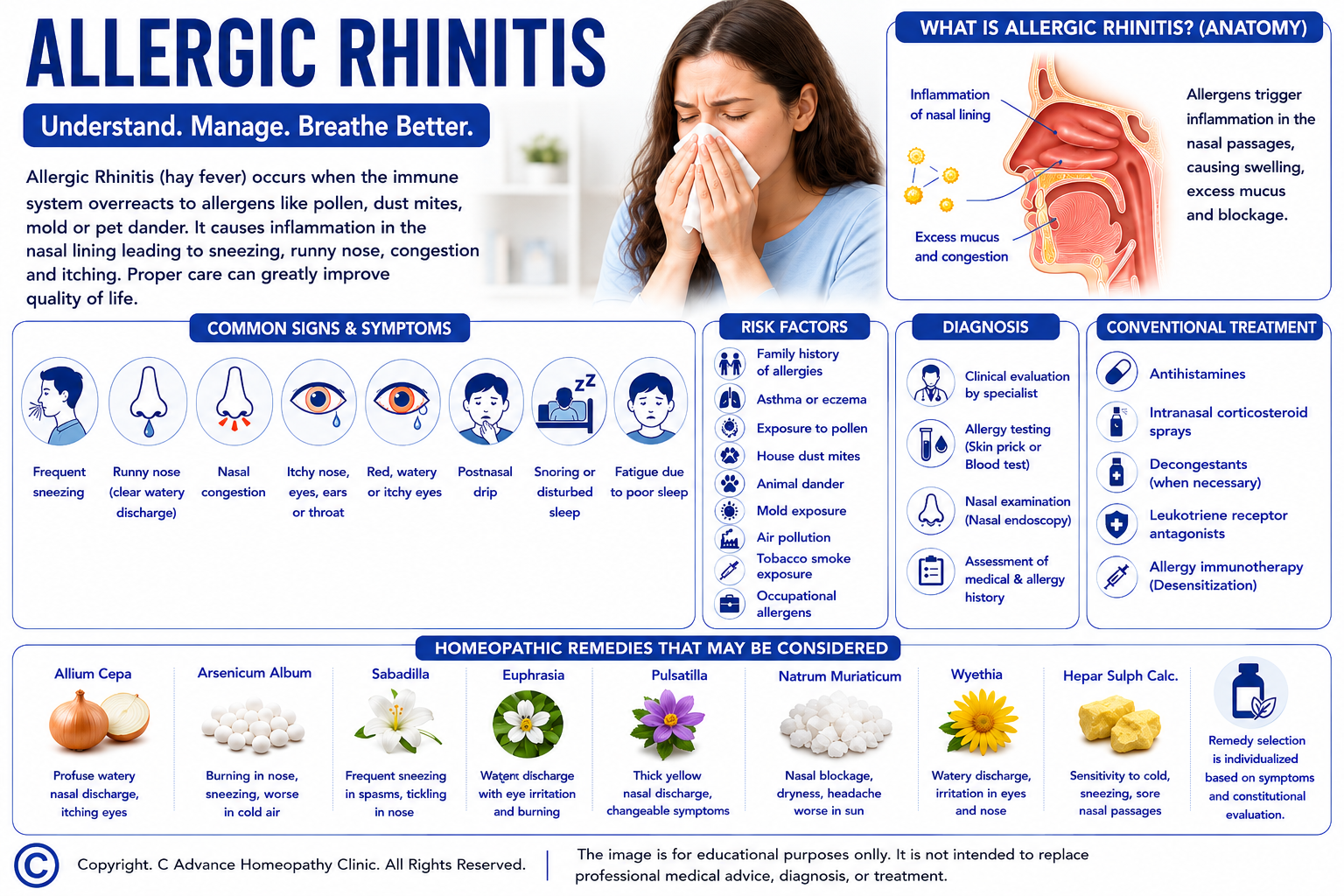
Common Signs and Symptoms of Allergic Rhinitis
- Frequent sneezing
- Persistent nasal congestion
- Runny nose with clear watery discharge
- Itching of the nose, eyes, ears, or throat
- Red, watery, or itchy eyes
- Postnasal drip
- Reduced sense of smell
- Mouth breathing due to nasal blockage
- Snoring or disturbed sleep
- Fatigue due to poor sleep quality
Risk Factors for Allergic Rhinitis
- Family history of allergies
- Personal history of asthma or eczema
- Exposure to pollen
- House dust mites
- Animal dander
- Mould exposure
- Air pollution
- Tobacco smoke exposure
- Occupational allergens
Conventional Management of Allergic Rhinitis
Treatment depends on the severity of symptoms, identified allergens, and their impact on daily life.
Conventional management commonly includes:
- Allergen avoidance where possible
- Saline nasal irrigation
- Antihistamines
- Intranasal corticosteroid sprays
- Leukotriene receptor antagonists in selected patients
- Allergy immunotherapy (allergy shots or sublingual immunotherapy) for suitable patients
- Regular follow-up with an ENT specialist or allergy specialist when indicated
Homeopathic Medicines Commonly Considered for Allergic Rhinitis
Some homeopathic medicines that experienced homeopathic physicians may consider as part of an individualized treatment plan include:
- Sabadilla
- Allium Cepa
- Arsenicum Album
- Natrum Muriaticum
- Wyethia
- Arundo Mauritanica
- Nux Vomica
- Pulsatilla
- Euphrasia
- Kali Iodatum
Homeopathic medicines should only be prescribed by a qualified homeopathic physician after an individualized clinical evaluation.
Important: Complementary Care for Allergic Rhinitis
Allergic Rhinitis should always be evaluated by a qualified Ear, Nose & Throat (ENT) specialist, allergist, or appropriately trained healthcare professional to confirm the diagnosis, identify potential allergens, assess disease severity, and distinguish it from other conditions such as chronic rhinosinusitis, nasal polyps, non-allergic rhinitis, structural nasal abnormalities, chronic infections, or other disorders that may produce similar symptoms. In selected patients, allergy testing, nasal endoscopy, or additional investigations may be recommended to identify underlying allergic triggers and guide appropriate treatment.
Patients with mild to moderate allergic rhinitis may be considered for individualized homeopathic treatment as a complementary approach following appropriate medical evaluation. Homeopathy may be integrated alongside allergen avoidance measures, environmental control, saline nasal irrigation, prescribed medications, allergy immunotherapy where indicated, and regular follow-up with their ENT specialist or allergist. Individualized homeopathic prescribing is based on the patient's complete clinical presentation, constitutional characteristics, allergy history, associated allergic conditions, medical history, environmental exposures, and overall health rather than the diagnosis alone.
Patients should continue all recommended conventional treatment, including allergen avoidance, intranasal corticosteroid sprays, antihistamines, leukotriene receptor antagonists where appropriate, allergy immunotherapy for suitable patients, and regular follow-up with their ENT specialist or allergy specialist. Homeopathy should not be regarded as a substitute for evidence-based allergy management, particularly in patients with persistent or severe symptoms, associated asthma, or significant impairment of daily activities.
Patients with poorly controlled allergic rhinitis associated with asthma, recurrent sinus infections, persistent nasal obstruction despite treatment, suspected nasal polyps, sleep-disordered breathing, or symptoms significantly affecting school, work, or quality of life should continue appropriate specialist medical care and further evaluation where indicated. Homeopathy should not replace recommended medical treatment or specialist assessment in these situations.
Patients who develop difficulty breathing, rapidly progressive facial swelling, severe allergic reactions involving the lips or tongue, high fever with severe facial pain, swelling around the eyes, visual disturbance, persistent nosebleeds, or rapidly worsening symptoms despite treatment should seek immediate medical attention, as these situations may indicate serious allergic or ENT conditions requiring urgent specialist assessment and treatment.
2. Chronic Rhinosinusitis
What is Chronic Rhinosinusitis?
Chronic Rhinosinusitis (CRS) is a long-term inflammatory condition affecting the lining of the nose and paranasal sinuses. Unlike acute sinus infections that usually resolve within a few weeks, Chronic Rhinosinusitis persists for 12 weeks or longer despite appropriate medical treatment. The condition may develop with or without nasal polyps and can significantly affect breathing, sleep, smell, productivity, and overall quality of life.
The exact cause of Chronic Rhinosinusitis is often multifactorial and may involve persistent inflammation, allergies, recurrent infections, structural abnormalities of the nasal passages, impaired drainage of the sinuses, environmental irritants, or underlying immune disorders. Many patients experience recurrent flare-ups with varying severity throughout the year.
Modern ENT management focuses on identifying the underlying cause and reducing chronic inflammation through appropriate medical treatment and, in selected cases, minimally invasive sinus surgery. Some individuals also seek complementary therapies to help manage persistent symptoms while continuing evidence-based medical care.
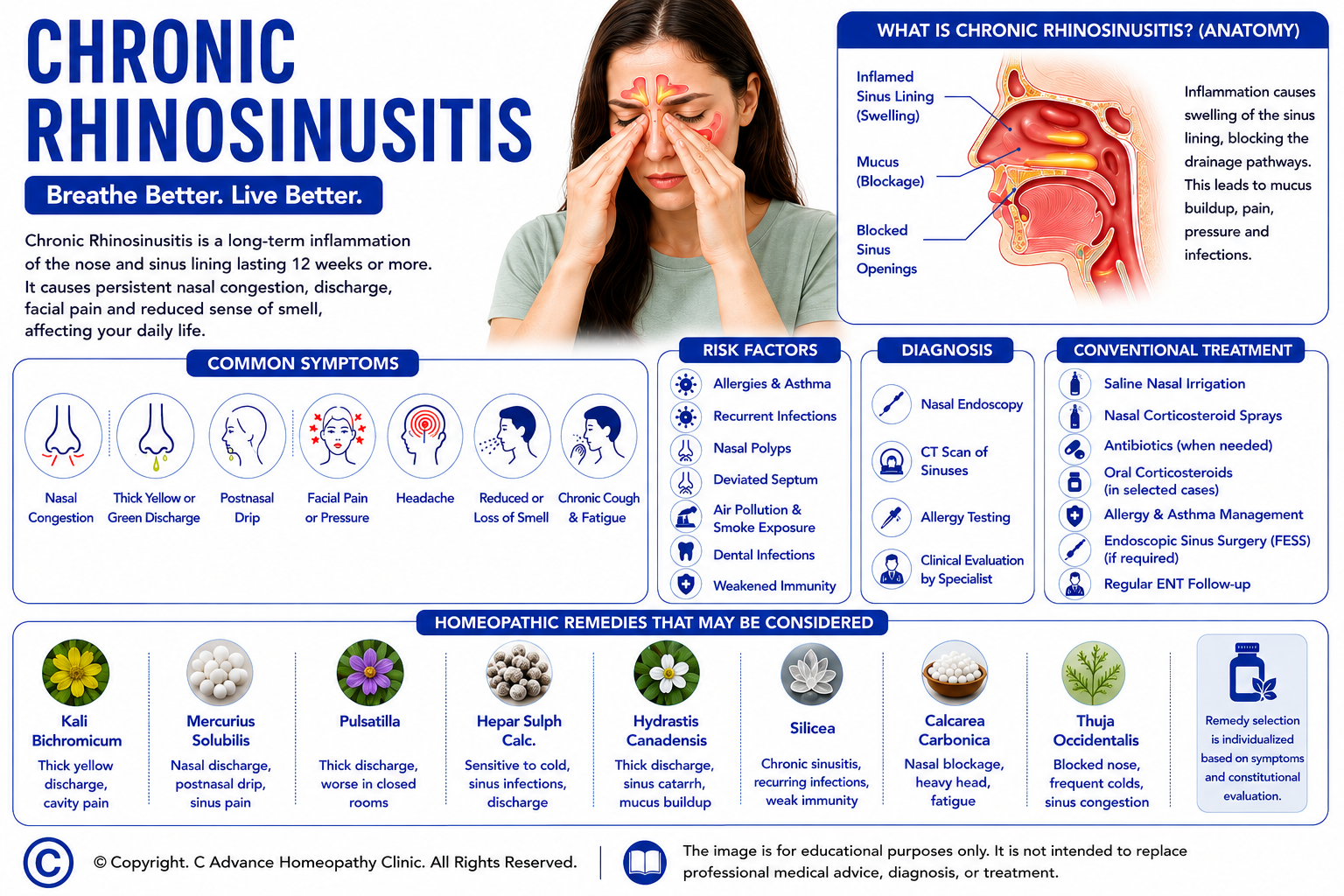
Common Signs and Symptoms of Chronic Rhinosinusitis
- Persistent nasal congestion
- Thick yellow or green nasal discharge
- Postnasal drip
- Facial pain or pressure
- Headache
- Reduced or complete loss of smell
- Nasal blockage
- Chronic cough due to postnasal drip
- Bad breath
- Fatigue
Risk Factors for Chronic Rhinosinusitis
- Allergic Rhinitis
- Recurrent respiratory infections
- Nasal polyps
- Deviated nasal septum
- Asthma
- Environmental pollution
- Tobacco smoke exposure
- Dental infections
- Immune deficiencies
- Fungal sinus disease in selected patients
Conventional Management of Chronic Rhinosinusitis
Treatment depends on the underlying cause, symptom severity, and associated conditions.
Conventional management commonly includes:
- Saline nasal irrigation
- Intranasal corticosteroid sprays
- Antibiotics when bacterial infection is suspected
- Oral corticosteroids in selected patients
- Allergy management
- Treatment of associated asthma
- Endoscopic evaluation by an ENT specialist
- Functional Endoscopic Sinus Surgery (FESS) when medically indicated
- Regular follow-up with an ENT specialist
Homeopathic Medicines Commonly Considered for Chronic Rhinosinusitis
Some homeopathic medicines that experienced homeopathic physicians may consider as part of an individualized treatment plan include:
- Kali Bichromicum
- Mercurius Solubilis
- Pulsatilla
- Hepar Sulphuris Calcareum
- Silicea
- Calcarea Carbonica
- Hydrastis Canadensis
- Thuja Occidentalis
Homeopathic medicines should only be prescribed by a qualified homeopathic physician after an individualized clinical evaluation.
Important: Complementary Care for Chronic Rhinosinusitis
Chronic Rhinosinusitis should always be evaluated by a qualified Ear, Nose & Throat (ENT) specialist or appropriately trained healthcare professional to confirm the diagnosis, determine the underlying cause, assess disease severity, and distinguish it from recurrent acute sinusitis, allergic rhinitis, nasal polyps, fungal sinus disease, dental infections, structural nasal abnormalities, or other conditions that may produce similar symptoms. In selected patients, nasal endoscopy, computed tomography (CT) of the paranasal sinuses, allergy assessment, or additional investigations may be recommended to evaluate the extent of disease and guide appropriate treatment.
Patients with mild to moderate chronic rhinosinusitis may be considered for individualized homeopathic treatment as a complementary approach following appropriate ENT evaluation. Homeopathy may be integrated alongside saline nasal irrigation, prescribed medications, allergy management where indicated, treatment of associated asthma or allergic conditions, lifestyle measures, and regular follow-up with their ENT specialist. Individualized homeopathic prescribing is based on the patient's complete clinical presentation, constitutional characteristics, associated symptoms, medical history, contributing factors, and overall health rather than the diagnosis alone.
Patients should continue all recommended conventional treatment, including saline nasal irrigation, intranasal corticosteroid sprays, antibiotics when clinically indicated, oral corticosteroids in selected patients, allergy management, endoscopic evaluation, and regular follow-up with their ENT specialist. Patients who are advised to undergo Functional Endoscopic Sinus Surgery (FESS) should continue appropriate surgical care when recommended. Homeopathy should not be regarded as a substitute for evidence-based medical or surgical management.
Patients with extensive chronic sinus disease, nasal polyps, recurrent bacterial infections, fungal sinus disease, persistent loss of smell, disease associated with asthma or immune disorders, or symptoms that remain uncontrolled despite appropriate medical treatment should continue specialist ENT care and further evaluation where indicated. Homeopathy should not replace recommended investigations, long-term medical management, or surgical treatment when these are advised by the treating specialist.
Patients who develop high fever, severe facial swelling, swelling around the eyes, double vision, reduced vision, severe headache, neck stiffness, confusion, persistent bloody nasal discharge, or rapidly worsening facial pain despite treatment should seek immediate medical attention, as these symptoms may indicate serious complications of sinus disease requiring urgent specialist assessment and treatment.
3. Nasal Polyps
What are Nasal Polyps?
Nasal Polyps are soft, painless, non-cancerous growths that develop from the lining of the nasal passages or paranasal sinuses as a result of long-standing inflammation. They are commonly associated with Chronic Rhinosinusitis, Allergic Rhinitis, asthma, aspirin-exacerbated respiratory disease (AERD), and certain inflammatory conditions.
Small nasal polyps may produce few or no symptoms, while larger or multiple polyps can obstruct the nasal passages and interfere with normal airflow and sinus drainage. Patients often experience persistent nasal blockage, reduced sense of smell, mouth breathing, recurrent sinus infections, and disturbed sleep.
Modern ENT management aims to reduce inflammation, improve sinus drainage, and restore nasal airflow using medications or surgery when necessary. Some patients explore complementary therapies alongside conventional treatment to help support symptom management.
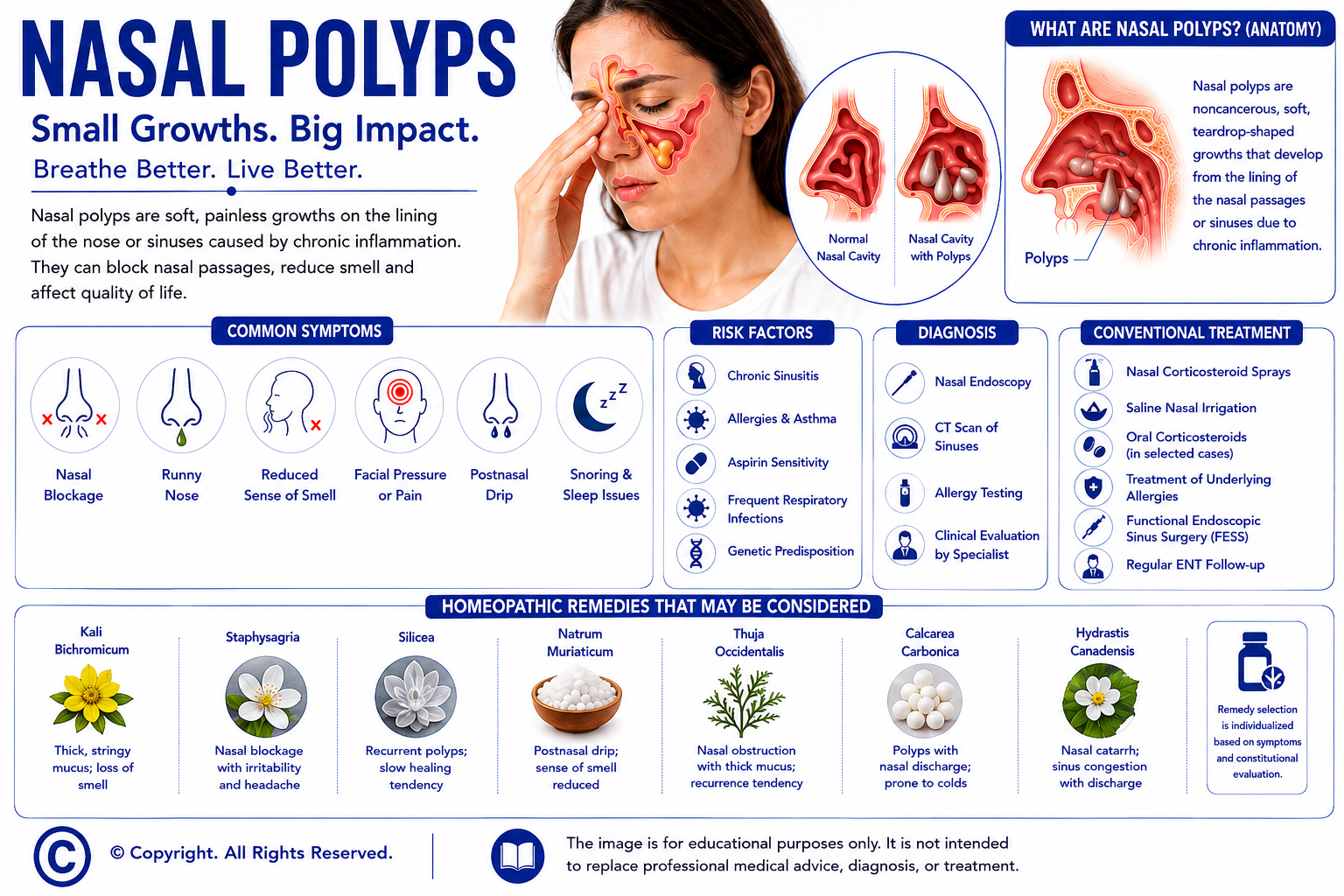
Common Signs and Symptoms of Nasal Polyps
- Persistent nasal blockage
- Difficulty breathing through the nose
- Reduced or complete loss of smell
- Reduced sense of taste
- Runny nose
- Postnasal drip
- Facial pressure
- Frequent sinus infections
- Mouth breathing
- Snoring
Risk Factors for Nasal Polyps
- Chronic Rhinosinusitis
- Allergic Rhinitis
- Asthma
- Aspirin sensitivity
- Cystic fibrosis
- Chronic inflammation of the nasal lining
- Family history
- Certain immune disorders
Conventional Management of Nasal Polyps
Treatment depends on the size of the polyps, symptom severity, and associated conditions.
Conventional management commonly includes:
- Intranasal corticosteroid sprays
- Saline nasal irrigation
- Oral corticosteroids in selected patients
- Allergy management
- Biological therapies for selected severe cases
- Functional Endoscopic Sinus Surgery (FESS) when indicated
- Long-term ENT follow-up to reduce recurrence
Homeopathic Medicines Commonly Considered for Nasal Polyps
Some homeopathic medicines that experienced homeopathic physicians may consider as part of an individualized treatment plan include:
- Teucrium Marum Verum
- Sanguinaria Canadensis
- Calcarea Carbonica
- Thuja Occidentalis
- Kali Bichromicum
- Lemna Minor
- Silicea
Homeopathic medicines should only be prescribed by a qualified homeopathic physician after an individualized clinical evaluation.
Important: Complementary Care for Nasal Polyps
Nasal Polyps should always be evaluated by a qualified Ear, Nose & Throat (ENT) specialist or appropriately trained healthcare professional to confirm the diagnosis, determine the size and extent of the polyps, identify the underlying inflammatory condition, and distinguish them from other causes of nasal obstruction such as chronic rhinosinusitis, allergic rhinitis, deviated nasal septum, benign nasal tumours, or, less commonly, malignant growths. In selected patients, nasal endoscopy, computed tomography (CT) of the paranasal sinuses, allergy assessment, or additional investigations may be recommended to assess the extent of disease and guide appropriate treatment.
Patients with small or moderate nasal polyps may be considered for individualized homeopathic treatment as a complementary approach following appropriate ENT evaluation. Homeopathy may be integrated alongside prescribed intranasal corticosteroid therapy, saline nasal irrigation, allergy management, treatment of associated asthma where indicated, biologic therapy in selected patients, and regular follow-up with their ENT specialist. Individualized homeopathic prescribing is based on the patient's complete clinical presentation, constitutional characteristics, associated allergic or inflammatory conditions, medical history, symptom pattern, and overall health rather than the diagnosis alone.
Patients should continue all recommended conventional treatment, including intranasal corticosteroid sprays, saline nasal irrigation, oral corticosteroids when clinically indicated, allergy management, biologic therapy for selected severe cases, and regular ENT follow-up. Patients who are advised to undergo Functional Endoscopic Sinus Surgery (FESS) should continue appropriate surgical management when recommended. Homeopathy should not be regarded as a substitute for evidence-based medical or surgical treatment.
Patients with large or multiple nasal polyps causing significant nasal obstruction, persistent loss of smell, recurrent sinus infections, associated asthma or aspirin-exacerbated respiratory disease (AERD), rapidly recurring polyps after surgery, or persistent symptoms despite appropriate medical treatment should continue specialist ENT care and long-term follow-up. Homeopathy should not replace recommended medical therapy, biologic treatment, or surgical intervention when these are advised by the treating specialist.
Patients who develop swelling around the eyes, visual disturbance, double vision, severe facial pain, persistent nosebleeds, rapidly enlarging nasal masses, unilateral nasal obstruction with bleeding, high fever, or rapidly worsening symptoms despite treatment should seek immediate medical attention, as these features may indicate serious complications or other conditions requiring urgent ENT assessment and treatment.
4. Chronic Tonsillitis
What is Chronic Tonsillitis?
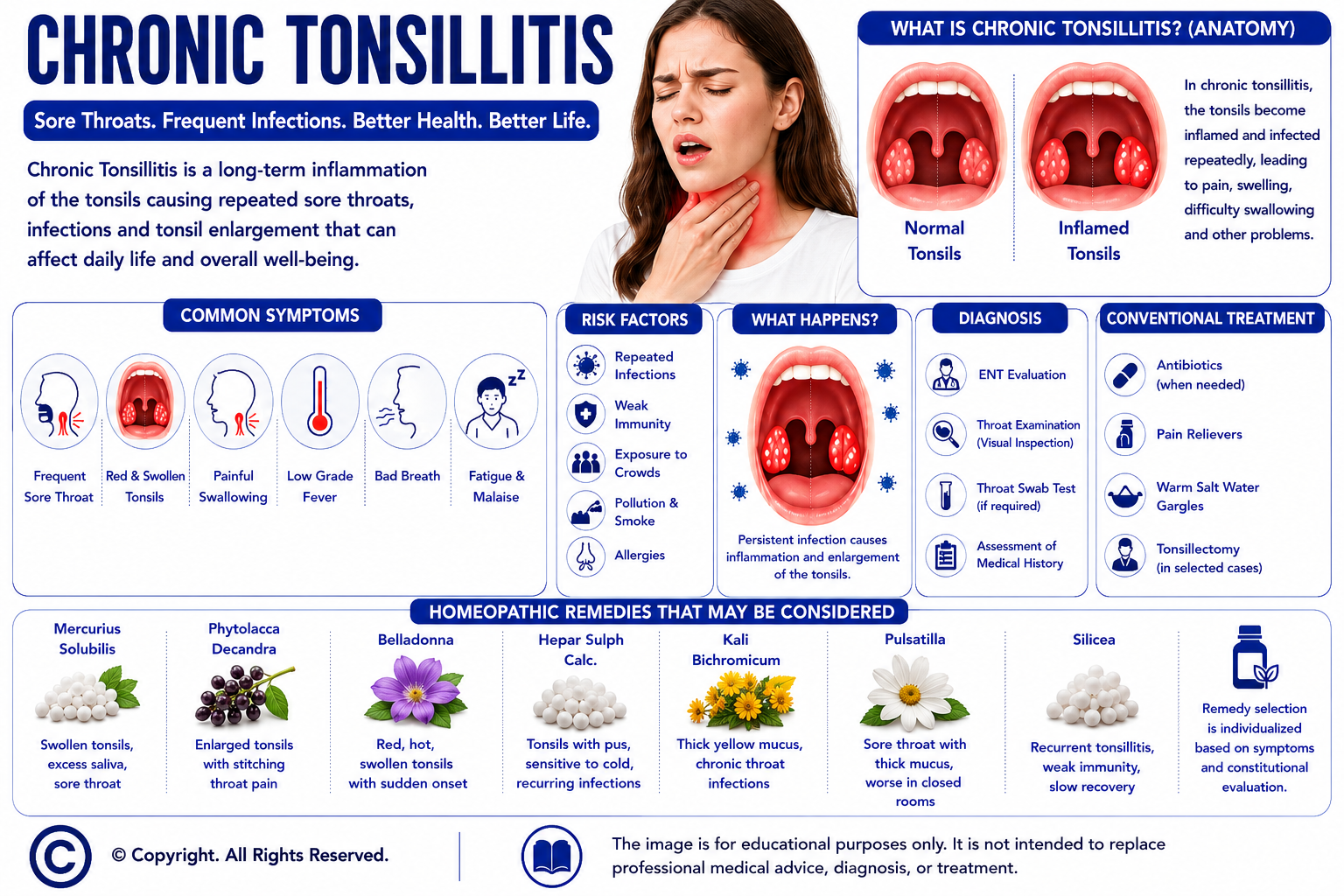
Chronic Tonsillitis is a condition characterized by persistent or recurrent inflammation of the tonsils, which are two lymphoid tissues located at the back of the throat. The tonsils play an important role in the body's immune system by helping to defend against bacteria and viruses entering through the mouth and nose. However, repeated infections or ongoing inflammation may impair their normal function and lead to chronic disease.
Unlike acute tonsillitis, which usually resolves after appropriate treatment, Chronic Tonsillitis is associated with repeated episodes of sore throat, enlarged tonsils, bad breath, difficulty swallowing, and persistent throat discomfort over months or years. Some individuals develop recurrent bacterial infections, while others experience chronic inflammation without obvious infection.
Chronic Tonsillitis can affect both children and adults and may interfere with eating, sleeping, school attendance, work productivity, and overall quality of life. Modern ENT management focuses on accurate diagnosis, appropriate medical treatment, and surgical removal of the tonsils (tonsillectomy) in carefully selected patients who meet established clinical criteria.
Many patients also explore complementary therapies to help manage recurrent symptoms while continuing conventional medical care.
Common Signs and Symptoms of Chronic Tonsillitis
- Recurrent sore throat
- Enlarged or swollen tonsils
- Pain while swallowing
- Persistent throat discomfort
- Bad breath (halitosis)
- Recurrent fever during infections
- White or yellow patches on the tonsils
- Enlarged neck lymph nodes
- Snoring in some patients
- Fatigue associated with recurrent infections
Risk Factors for Chronic Tonsillitis
- Recurrent bacterial throat infections
- Recurrent viral infections
- Close contact with infected individuals
- School-age children
- Poor oral hygiene
- Smoking or exposure to tobacco smoke
- Weakened immune system
- History of recurrent tonsillitis during childhood
Conventional Management of Chronic Tonsillitis
Treatment depends on the frequency of infections, severity of symptoms, and impact on daily life.
Conventional management commonly includes:
- Appropriate antibiotics for confirmed bacterial infections
- Pain-relieving medications
- Adequate hydration
- Saltwater gargles
- Treatment of associated infections
- Regular ENT evaluation
- Tonsillectomy for selected patients meeting established clinical guidelines
Homeopathic Medicines Commonly Considered for Chronic Tonsillitis
Some homeopathic medicines that experienced homeopathic physicians may consider as part of an individualized treatment plan include:
- Baryta Carbonica
- Mercurius Iodatus Flavus
- Mercurius Solubilis
- Hepar Sulphuris Calcareum
- Belladonna
- Phytolacca Decandra
- Calcarea Carbonica
- Lachesis Mutus
Homeopathic medicines should only be prescribed by a qualified homeopathic physician after an individualized clinical evaluation.
Important: Complementary Care for Chronic Tonsillitis
Chronic Tonsillitis should always be evaluated by a qualified Ear, Nose & Throat (ENT) specialist or appropriately trained healthcare professional to confirm the diagnosis, determine the frequency and severity of recurrent infections, assess the degree of tonsillar enlargement, and distinguish chronic tonsillitis from recurrent viral pharyngitis, infectious mononucleosis, peritonsillar abscess, gastroesophageal reflux disease (GERD), or other throat disorders that may produce similar symptoms. In selected patients, throat examination, throat swabs, laboratory investigations, or additional ENT assessment may be recommended to establish the underlying cause and guide appropriate treatment.
Patients with recurrent or chronic tonsillitis may be considered for individualized homeopathic treatment as a complementary approach following appropriate ENT evaluation. Homeopathy may be integrated alongside prescribed medications, adequate hydration, appropriate oral hygiene, treatment of associated conditions, supportive care during acute episodes, and regular follow-up with their ENT specialist. Individualized homeopathic prescribing is based on the patient's complete clinical presentation, constitutional characteristics, pattern of recurrent infections, associated symptoms, medical history, and overall health rather than the diagnosis alone.
Patients should continue all recommended conventional treatment, including appropriate antibiotics for confirmed bacterial infections, pain-relieving medications, supportive care, treatment of associated infections, and regular ENT follow-up. Patients who meet established clinical criteria for tonsillectomy should continue appropriate surgical management when recommended by their ENT specialist. Homeopathy should not be regarded as a substitute for evidence-based medical or surgical treatment.
Patients with frequent recurrent bacterial tonsillitis, significantly enlarged tonsils causing airway obstruction or swallowing difficulty, recurrent peritonsillar abscess (quinsy), obstructive sleep-disordered breathing, suspected malignancy, or persistent symptoms despite appropriate medical treatment should continue specialist ENT care and further evaluation. Homeopathy should not replace recommended surgical treatment or other specialist interventions when these are advised by the treating ENT surgeon.
Patients who develop difficulty breathing, inability to swallow saliva, severe throat pain with one-sided swelling, muffled voice, persistent high fever, neck swelling, dehydration, or rapidly worsening symptoms despite treatment should seek immediate medical attention, as these situations may indicate peritonsillar abscess, deep neck space infection, or airway compromise, requiring urgent specialist assessment and treatment.
5. Adenoid Hypertrophy
What is Adenoid Hypertrophy?
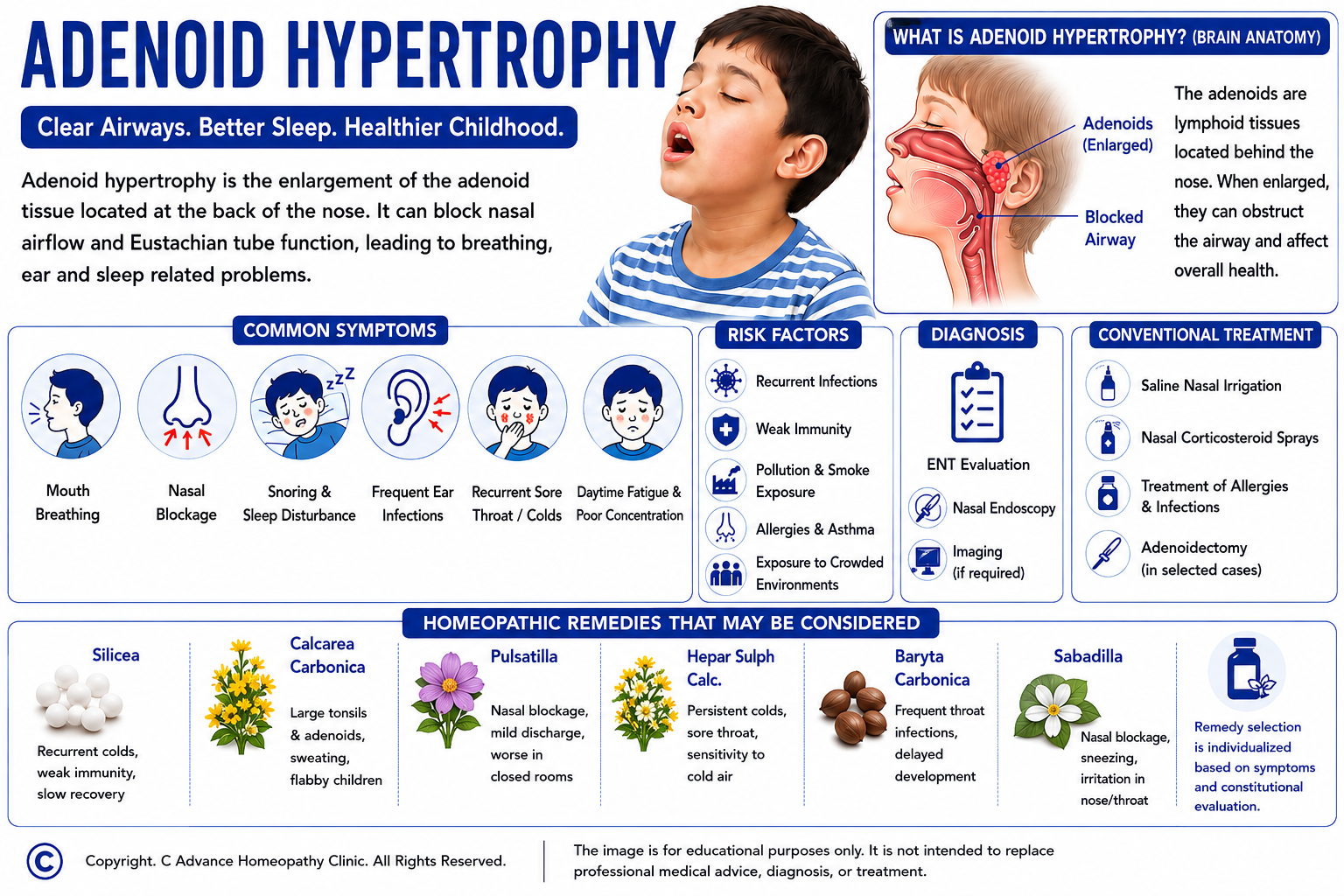
Adenoid Hypertrophy refers to enlargement of the adenoids; a mass of lymphoid tissue located behind the nasal cavity in the upper part of the throat (nasopharynx). Like the tonsils, the adenoids contribute to the body's immune defence during early childhood by helping to trap bacteria and viruses entering through the nose.
Enlarged adenoids are most commonly seen in children and may develop as a result of recurrent infections, allergies, or persistent inflammation. As the adenoids enlarge, they may obstruct the nasal airway, leading to chronic mouth breathing, snoring, disturbed sleep, nasal speech, and recurrent ear or sinus infections. In severe cases, untreated adenoid enlargement may contribute to sleep-disordered breathing or obstructive sleep apnea.
Most children experience gradual shrinkage of the adenoids during adolescence. Management depends on the severity of symptoms and may include medical treatment, allergy control, or surgical removal (adenoidectomy) in selected cases.
Many families also seek complementary therapies to help support symptom management while continuing conventional ENT care.
Common Signs and Symptoms of Adenoid Hypertrophy
- Persistent mouth breathing
- Chronic nasal blockage
- Loud snoring
- Disturbed sleep
- Noisy breathing during sleep
- Recurrent ear infections
- Recurrent sinus infections
- Nasal speech
- Daytime fatigue due to poor sleep
- Difficulty concentrating in some children
Risk Factors for Adenoid Hypertrophy
- Recurrent upper respiratory infections
- Allergic Rhinitis
- Chronic nasal inflammation
- Family history
- Exposure to tobacco smoke
- Frequent childhood infections
- Environmental pollution
Conventional Management of Adenoid Hypertrophy
Treatment depends on the severity of symptoms, associated infections, and the degree of airway obstruction.
Conventional management commonly includes:
- Medical evaluation by an ENT specialist
- Treatment of associated infections
- Intranasal corticosteroid sprays in selected patients
- Allergy management
- Saline nasal irrigation
- Sleep assessment when indicated
- Adenoidectomy for selected children with significant symptoms or complications
- Regular ENT follow-up
Homeopathic Medicines Commonly Considered for Adenoid Hypertrophy
Some homeopathic medicines that experienced homeopathic physicians may consider as part of an individualized treatment plan include:
- Baryta Carbonica
- Agraphis Nutans
- Tuberculinum
- Calcarea Carbonica
- Thuja Occidentalis
- Sambucus Nigra
- Silicea
Homeopathic medicines should only be prescribed by a qualified homeopathic physician after an individualized clinical evaluation.
Important: Complementary Care for Adenoid Hypertrophy
Adenoid Hypertrophy should always be evaluated by a qualified Ear, Nose & Throat (ENT) specialist or appropriately trained healthcare professional to confirm the diagnosis, determine the degree of adenoid enlargement, assess its impact on nasal breathing, hearing, sleep quality, and facial development, and distinguish it from other causes of nasal obstruction such as allergic rhinitis, chronic rhinosinusitis, deviated nasal septum, nasal polyps, or other upper airway disorders. In selected children, nasal endoscopy, hearing assessment, sleep evaluation, or additional investigations may be recommended to assess the severity of airway obstruction and guide appropriate treatment.
Children with mild to moderate adenoid hypertrophy may be considered for individualized homeopathic treatment as a complementary approach following appropriate ENT evaluation. Homeopathy may be integrated alongside allergy management where indicated, prescribed intranasal medications, saline nasal irrigation, treatment of associated ear or sinus infections, appropriate sleep hygiene measures, and regular follow-up with their ENT specialist. Individualized homeopathic prescribing is based on the child's complete clinical presentation, constitutional characteristics, associated allergic conditions, pattern of recurrent infections, medical history, and overall health rather than the diagnosis alone.
Children should continue all recommended conventional treatment, including allergy management, prescribed intranasal corticosteroid sprays where appropriate, treatment of associated infections, hearing assessment, sleep evaluation, and regular ENT follow-up. Children who meet established clinical criteria for adenoidectomy should continue appropriate surgical management when recommended by their ENT specialist. Homeopathy should not be regarded as a substitute for evidence-based medical or surgical treatment.
Children with significant airway obstruction, persistent mouth breathing, obstructive sleep apnoea, recurrent middle ear infections with hearing impairment, chronic sinus disease, impaired growth or development related to poor sleep, craniofacial changes associated with longstanding mouth breathing, or persistent symptoms despite appropriate medical treatment should continue specialist ENT care and further evaluation. Homeopathy should not replace recommended surgical treatment or other specialist interventions when these are advised by the treating ENT surgeon.
Children who develop difficulty breathing during sleep, repeated pauses in breathing (sleep apnoea), severe daytime sleepiness, persistent difficulty swallowing, rapidly worsening breathing difficulty, high fever with severe throat pain, significant neck swelling, or any signs of airway compromise should seek immediate medical attention, as these situations may require urgent ENT assessment and prompt medical or surgical treatment.
6. Ménière's Disease
What is Ménière's Disease?
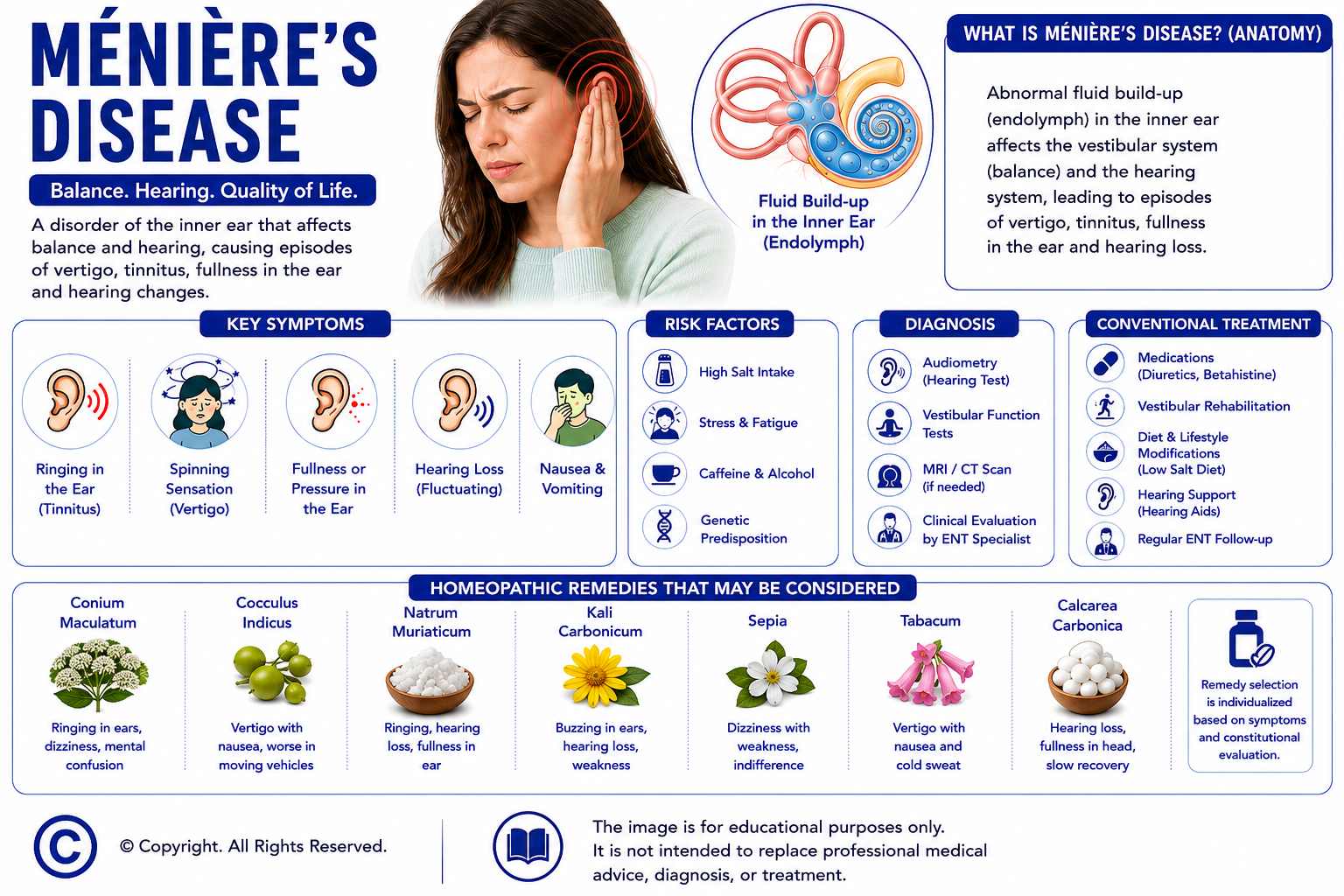
Ménière's Disease is a chronic disorder of the inner ear that affects hearing and balance. It is characterized by recurrent episodes of vertigo (a spinning sensation), fluctuating hearing loss, tinnitus (ringing or buzzing in the ear), and a feeling of fullness or pressure in the affected ear. The condition usually affects one ear initially, although some individuals may develop involvement of both ears over time.
The exact cause of Ménière's Disease remains uncertain, but it is believed to be associated with an abnormal accumulation of fluid (endolymph) within the inner ear. Genetic factors, autoimmune conditions, viral infections, migraine, and abnormalities in fluid regulation have all been proposed as possible contributing factors.
Symptoms often occur unpredictably and can range from mild to severely disabling. Recurrent vertigo attacks may interfere with work, driving, daily activities, and overall quality of life. Modern management focuses on reducing the frequency and severity of attacks, preserving hearing, improving balance, and minimizing disability through individualized medical care.
Many patients also seek complementary therapies to support symptom management while continuing conventional treatment under the guidance of their ENT specialist.
Common Signs and Symptoms of Ménière's Disease
- Recurrent episodes of vertigo
- Hearing loss that may fluctuate over time
- Ringing or buzzing in the ear (tinnitus)
- Feeling of fullness or pressure in the affected ear
- Nausea and vomiting during vertigo attacks
- Difficulty maintaining balance
- Unsteadiness after vertigo episodes
- Progressive hearing impairment in some patients
Risk Factors for Ménière's Disease
- Family history
- Autoimmune disorders
- Viral infections
- Migraine
- Allergic conditions
- Previous inner ear disorders
- Middle-aged adults
- Smoking may worsen symptoms in some individuals
Conventional Management of Ménière's Disease
Treatment aims to reduce the frequency and severity of vertigo attacks, preserve hearing, and improve quality of life.
Conventional management commonly includes:
- Dietary modification, including reduced salt intake
- Vestibular suppressants during acute attacks
- Medications to reduce inner ear fluid pressure
- Antiemetic medications for nausea and vomiting
- Vestibular rehabilitation therapy
- Hearing assessment and hearing aids when indicated
- Intratympanic injections in selected patients
- Surgical treatment for severe, treatment-resistant cases
- Regular follow-up with an ENT specialist
Homeopathic Medicines Commonly Considered for Ménière's Disease
Some homeopathic medicines that experienced homeopathic physicians may consider as part of an individualized treatment plan include:
- Cocculus Indicus
- Conium Maculatum
- Theridion
- Chininum Sulphuricum
- Natrum Salicylicum
- Gelsemium Sempervirens
- Bryonia Alba
Homeopathic medicines should only be prescribed by a qualified homeopathic physician after an individualized clinical evaluation.
Important: Complementary Care for Ménière's Disease
Ménière's Disease should always be evaluated by a qualified Ear, Nose & Throat (ENT) specialist or appropriately trained healthcare professional to confirm the diagnosis, assess the severity and progression of the disease, evaluate hearing and balance function, and distinguish it from other causes of recurrent vertigo such as Benign Paroxysmal Positional Vertigo (BPPV), vestibular migraine, vestibular neuritis, acoustic neuroma, cerebrovascular disorders, or other neurological conditions. In selected patients, hearing assessment, vestibular function testing, magnetic resonance imaging (MRI), or additional investigations may be recommended to establish an accurate diagnosis and exclude other serious disorders.
Patients with stable Ménière's Disease may be considered for individualized homeopathic treatment as a complementary approach following appropriate ENT evaluation. Homeopathy may be integrated alongside dietary modification, prescribed medications, vestibular rehabilitation, hearing care, stress management, management of associated medical conditions, and regular follow-up with their ENT specialist. Individualized homeopathic prescribing is based on the patient's complete clinical presentation, constitutional characteristics, hearing and balance symptoms, medical history, disease progression, associated conditions, and overall health rather than the diagnosis alone.
Patients should continue all recommended conventional treatment, including dietary modification such as reduced sodium intake where advised, medications to reduce the frequency and severity of vertigo attacks, vestibular rehabilitation therapy, hearing assessments, hearing aids when indicated, intratympanic therapy, surgical treatment for carefully selected patients, and regular follow-up with their ENT specialist. Homeopathy should not be regarded as a substitute for evidence-based medical management, particularly in patients with progressive hearing loss or disabling recurrent vertigo.
Patients with frequent or prolonged vertigo attacks, progressive hearing impairment, persistent imbalance affecting daily activities, recurrent falls, bilateral disease, severe tinnitus, persistent vomiting leading to dehydration, or symptoms that remain uncontrolled despite appropriate medical treatment should continue specialist ENT care and further evaluation. Homeopathy should not replace recommended medical treatment, hearing rehabilitation, intratympanic procedures, or surgical intervention when these are advised by the treating specialist.
Patients who develop sudden hearing loss, severe persistent vertigo lasting longer than expected, new neurological symptoms such as weakness, numbness, double vision, difficulty speaking, severe headache, loss of consciousness, inability to walk, or continuous vomiting resulting in dehydration should seek immediate medical attention, as these symptoms may indicate a neurological emergency or another serious condition requiring urgent specialist assessment and treatment.
7. Benign Paroxysmal Positional Vertigo (BPPV)
What is Benign Paroxysmal Positional Vertigo (BPPV)?
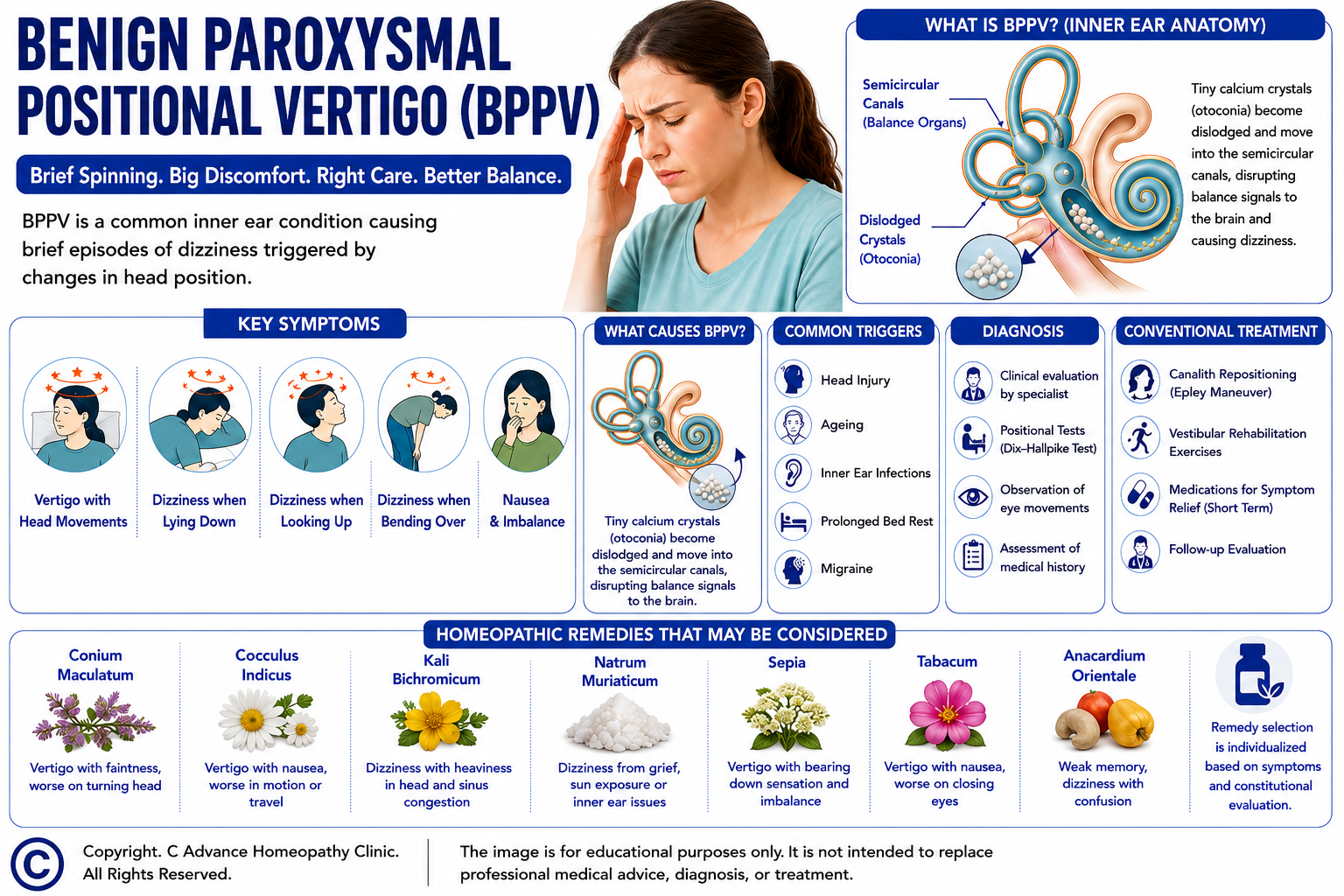
Benign Paroxysmal Positional Vertigo (BPPV) is one of the most common causes of vertigo. It occurs when tiny calcium carbonate crystals (otoconia) become displaced from their normal location within the inner ear and move into one of the semicircular canals. This disrupts the normal balance signals sent to the brain, causing brief episodes of spinning dizziness that are triggered by specific head movements.
Patients with BPPV typically experience vertigo when turning over in bed, looking upward, bending forward, or changing head position suddenly. Although the spinning sensation usually lasts less than one minute, it may be accompanied by nausea, imbalance, and fear of movement. Unlike Ménière's Disease, BPPV usually does not cause hearing loss or tinnitus.
The diagnosis is confirmed by a clinical examination, including positional tests such as the Dix-Hallpike manoeuvre. Most patients respond well to canalith repositioning procedures performed by trained healthcare professionals. Many individuals also seek complementary therapies alongside conventional care to support their overall recovery.
Common Signs and Symptoms of Benign Paroxysmal Positional Vertigo (BPPV)
- Brief episodes of spinning dizziness triggered by head movements
- Vertigo when turning over in bed
- Dizziness when looking upward or bending forward
- Nausea during vertigo episodes
- Loss of balance or unsteadiness
- Fear of sudden head movement
- Symptoms lasting seconds to less than one minute
- Normal hearing in most patients
Risk Factors for Benign Paroxysmal Positional Vertigo (BPPV)
- Increasing age
- Previous head injury
- Previous inner ear disorders
- Prolonged bed rest
- Osteoporosis
- Vitamin D deficiency
- Migraine
- Previous episodes of BPPV
Conventional Management of Benign Paroxysmal Positional Vertigo (BPPV)
Treatment aims to reposition the displaced calcium crystals within the inner ear and relieve symptoms.
Conventional management commonly includes:
- Canalith repositioning procedures (such as the Epley manoeuvre)
- Vestibular rehabilitation therapy
- Balance exercises
- Short-term medications for severe nausea when required
- Treatment of underlying contributing conditions
- Follow-up with an ENT specialist or vestibular specialist when indicated
Homeopathic Medicines Commonly Considered for Benign Paroxysmal Positional Vertigo (BPPV)
Some homeopathic medicines that experienced homeopathic physicians may consider as part of an individualized treatment plan include:
- Bryonia Alba
- Cocculus Indicus
- Conium Maculatum
- Theridion
- Gelsemium Sempervirens
- Belladonna
- Chininum Sulphuricum
Homeopathic medicines should only be prescribed by a qualified homeopathic physician after an individualized clinical evaluation.
Important: Complementary Care for Benign Paroxysmal Positional Vertigo (BPPV)
Benign Paroxysmal Positional Vertigo (BPPV) should always be evaluated by a qualified Ear, Nose & Throat (ENT) specialist, neurologist, or appropriately trained healthcare professional to confirm the diagnosis, identify the affected semicircular canal, and distinguish BPPV from other causes of vertigo such as Ménière's Disease, vestibular neuritis, vestibular migraine, acoustic neuroma, stroke, or other neurological disorders. In selected patients, positional testing such as the Dix–Hallpike manoeuvre, vestibular assessment, hearing evaluation, magnetic resonance imaging (MRI), or additional investigations may be recommended to establish an accurate diagnosis and exclude more serious conditions.
Patients with confirmed Benign Paroxysmal Positional Vertigo (BPPV) may be considered for individualized homeopathic treatment as a complementary approach following appropriate medical evaluation. Homeopathy may be integrated alongside canalith repositioning procedures, vestibular rehabilitation exercises, fall-prevention advice, treatment of associated medical conditions, and regular follow-up with their ENT specialist or vestibular specialist. Individualized homeopathic prescribing is based on the patient's complete clinical presentation, constitutional characteristics, symptom pattern, triggering movements, associated medical history, and overall health rather than the diagnosis alone.
Patients should continue all recommended conventional treatment, including canalith repositioning procedures such as the Epley manoeuvre, vestibular rehabilitation therapy, balance exercises, short-term medications for severe nausea when clinically indicated, treatment of contributing conditions, and regular follow-up with their ENT specialist or vestibular specialist. Homeopathy should not be regarded as a substitute for evidence-based vestibular management, particularly because repositioning manoeuvres remain the primary treatment for most patients with BPPV.
Patients with persistent or recurrent vertigo despite appropriate repositioning procedures, recurrent falls, significant balance impairment, atypical positional vertigo, associated hearing loss, severe neck problems limiting repositioning manoeuvres, or symptoms suggesting another vestibular or neurological disorder should continue specialist evaluation and further investigation. Homeopathy should not replace recommended vestibular rehabilitation, further diagnostic evaluation, or specialist management when these are advised by the treating physician.
Patients who develop continuous vertigo lasting several hours, sudden hearing loss, severe headache, double vision, weakness or numbness of the face or limbs, difficulty speaking, difficulty walking, loss of consciousness, persistent vomiting resulting in dehydration, or any other new neurological symptoms should seek immediate medical attention, as these symptoms may indicate stroke or another serious neurological condition rather than BPPV, requiring urgent specialist assessment and treatment.
A Note About Homeopathic Medicines
The homeopathic medicines listed throughout this page are among the remedies that experienced homeopathic physicians may consider while providing individualized care for patients with Ear, Nose & Throat (ENT) disorders. Homeopathic treatment is highly individualized, and the selection of a medicine is never based solely on the diagnosis.
Before prescribing, our homeopathic doctors carefully evaluate several factors, including:
- The patient's confirmed ENT diagnosis
- Presenting symptoms and their severity
- Duration and frequency of symptoms
- Previous medical and surgical treatment
- Allergy history
- Medical history
- Current medications
- Lifestyle and environmental factors
- Emotional and psychological well-being
- General physical health
- Individual constitutional characteristics
The most appropriate homeopathic medicine for one patient may differ from that selected for another individual with the same ENT condition. For this reason, homeopathic medicines should always be prescribed following a comprehensive consultation with a qualified homeopathic doctor and used only as part of an individualized treatment plan.
Our Homeopathic Approach to Ear, Nose & Throat (ENT) Disorders
At Advance Homeopathy Clinic Dubai, we believe that every patient deserves individualized, comprehensive, and evidence-informed care. Our goal is not to replace conventional ENT treatment but to provide personalized homeopathic care that complements the treatment plan recommended by your Ear, Nose & Throat (ENT) specialist.
During your consultation, our homeopathic doctors perform a detailed assessment that may include:
- Confirmed medical diagnosis
- Presenting symptoms and their progression
- Previous medical and surgical treatment
- Allergy history
- Current medications
- Previous investigations, imaging studies, and laboratory reports where applicable
- Hearing and balance assessments for selected conditions
- Past medical history
- Family history
- Lifestyle and environmental factors
- Individual constitutional assessment
This comprehensive evaluation allows us to develop an individualized homeopathic treatment plan based on the patient's unique clinical presentation.
Depending on the individual's condition, homeopathic treatment may be considered as part of a complementary care plan for patients experiencing symptoms such as:
- Recurrent sneezing
- Nasal congestion
- Runny nose
- Chronic sinus discomfort
- Recurrent sore throat
- Enlarged tonsils
- Mouth breathing
- Snoring associated with enlarged adenoids
- Ear fullness
- Ringing in the ears (tinnitus)
- Vertigo
- Balance disturbances
- General quality of life
Every treatment plan is individualized according to the patient's diagnosis, symptom profile, conventional medical treatment, treatment goals, and overall health. Homeopathy is offered as a complementary therapy alongside evidence-based ENT care.
Why Choose Advance Homeopathy Clinic Dubai?
Patients from Dubai, across the UAE, and from more than 20 countries and over 100 nationalities have trusted Advance Homeopathy Clinic Dubai for individualized homeopathic care.
Why Patients Choose Us
- More than 35 years of clinical experience under the leadership of Dr. Aalim Dhandhukia
- Dubai Health Authority (DHA) licensed clinic and homeopathic doctors
- Individualized homeopathic treatment tailored to each patient's needs
- Comprehensive medical evaluation before recommending treatment
- Homeopathy provided as a complementary therapy alongside conventional ENT care
- Evidence-based, ethical, and patient-centred clinical practice
- In-clinic and online consultations for patients in Dubai, across the UAE, and internationally
- Free First Consultation to help you understand whether homeopathy may play an appropriate complementary role in your treatment plan
Frequently Asked Questions About Ear, Nose & Throat (ENT) Disorders
Can homeopathy cure ENT disorders?
No. Homeopathy should not be considered a cure for Ear, Nose & Throat (ENT) disorders and should never replace evidence-based medical care. Patients should continue all investigations, medications, hearing care, allergy management, vestibular rehabilitation, and surgical treatment recommended by their ENT specialist. At Advance Homeopathy Clinic Dubai, homeopathy is offered only as a complementary therapy alongside conventional medical care.
Can I continue my prescribed medicines while receiving homeopathic treatment?
Yes. Most patients continue their prescribed medications while receiving individualized homeopathic treatment. Any decision regarding modification or discontinuation of conventional treatment should always be made by the treating ENT specialist.
Can homeopathy help patients with recurrent ENT conditions?
Some patients choose individualized homeopathic treatment as part of a comprehensive management plan for recurrent ENT disorders such as allergic rhinitis, chronic sinusitis, recurrent tonsillitis, and recurrent upper respiratory tract infections. Depending on the individual's clinical condition, homeopathy may be considered as a complementary therapy while conventional medical care continues. Responses to treatment vary from person to person.
If surgery has been recommended, can homeopathy replace it?
No. If your ENT specialist recommends procedures such as tonsillectomy, adenoidectomy, Functional Endoscopic Sinus Surgery (FESS), or removal of nasal polyps, those recommendations should not be delayed or ignored without medical advice. Homeopathy should not replace medically indicated surgical treatment.
Are homeopathic medicines safe?
Homeopathic medicines should always be prescribed by a qualified homeopathic doctor following a comprehensive clinical assessment. At Advance Homeopathy Clinic Dubai, every patient's case is carefully evaluated before an individualized treatment plan is recommended.
Are online consultations available?
Yes. We provide both in-clinic and online consultations for patients in Dubai, across the UAE, and internationally, allowing patients to receive individualized homeopathic guidance regardless of their location.
Our Commitment to Evidence-Based Ear, Nose & Throat (ENT) Care
At Advance Homeopathy Clinic Dubai, patient safety, ethical medical practice, and evidence-informed healthcare remain our highest priorities.
We firmly believe that every patient with an Ear, Nose & Throat disorder should receive timely diagnosis and appropriate treatment under the care of a qualified ENT specialist.
We strongly encourage patients to continue all investigations and treatments recommended by their treating physician, which may include:
- Allergy testing
- Hearing assessment
- Vestibular assessment
- Nasal endoscopy
- Imaging studies when indicated
- Prescription medications
- Allergy immunotherapy
- Vestibular rehabilitation
- Surgical treatment when required
- Regular ENT follow-up
Our role is to provide individualized homeopathic care that complements conventional ENT management. Depending on each patient's individual needs, homeopathy may be considered to help support symptom management and improve overall quality of life.
We do not advise patients to delay, discontinue, or refuse conventional medical treatment in favour of homeopathy. All decisions regarding ENT care should remain under the guidance of the treating ENT specialist.
We believe that the best patient outcomes are achieved through collaboration, where complementary homeopathic care is integrated responsibly alongside modern evidence-based medicine.
Research in Homeopathy and Ear, Nose & Throat (ENT) Disorders
Research Overview
Homeopathy has been investigated as a complementary approach in the management of several chronic Ear, Nose & Throat (ENT) disorders, particularly conditions characterized by recurrent inflammation, chronic upper airway symptoms, allergic disease, and certain vestibular disorders. Published research has evaluated individualized homeopathic treatment in conditions including Allergic Rhinitis, Chronic Rhinosinusitis, Chronic Tonsillitis, recurrent upper respiratory tract infections, otitis media, and selected vestibular disorders, with outcomes commonly assessing symptom severity, frequency of recurrence, quality of life, medication use, and patient-reported improvement.
The available scientific literature includes observational studies, pragmatic clinical studies, randomized controlled trials, systematic reviews, and narrative reviews. Among ENT conditions, Allergic Rhinitis and recurrent upper respiratory tract disorders have received comparatively greater research attention, while considerably fewer published studies are available for conditions such as Nasal Polyps, Adenoid Hypertrophy, Ménière's Disease, and Benign Paroxysmal Positional Vertigo (BPPV).
Because individualized homeopathic prescribing is based on each patient's unique clinical presentation, constitutional characteristics, associated symptoms, medical history, environmental influences, and overall health rather than the diagnosis alone, evaluating its effectiveness using conventional randomized clinical trial designs presents important methodological challenges. Consequently, the available evidence should be interpreted with an understanding of both its strengths and its limitations.
Current State of Research
Published research in ENT disorders includes observational studies, pragmatic clinical studies, randomized controlled trials, systematic reviews, and meta-analyses evaluating homeopathy as a complementary intervention alongside conventional ENT care. Some individual studies have reported improvements in selected symptoms, frequency of recurrent episodes, patient-reported quality of life, and overall treatment satisfaction in carefully selected patients receiving individualized homeopathic treatment.
However, the overall body of scientific evidence remains limited and heterogeneous. Many published studies involve relatively small sample sizes, variability in disease severity, individualized prescribing approaches, differences in diagnostic criteria, inconsistent outcome measures, short follow-up periods, and methodological limitations that make comparison between studies difficult.
Systematic reviews generally conclude that current evidence is insufficient to establish definitive effectiveness of homeopathy for the routine management of ENT disorders. While some studies have reported encouraging findings in selected patient populations, further well-designed, adequately powered clinical trials using standardized diagnostic criteria, validated outcome measures, and longer follow-up are required before firm conclusions can be drawn regarding the role of individualized homeopathic care in ENT practice.
Current international ENT guidelines continue to recommend accurate diagnosis, appropriate clinical examination, allergy testing where indicated, hearing assessment, vestibular evaluation, nasal endoscopy, imaging studies, prescribed medications, allergy immunotherapy for suitable patients, vestibular rehabilitation, hearing rehabilitation, and surgical treatment when clinically indicated as the foundation of evidence-based management. Complementary therapies, including homeopathy, should therefore be regarded as supportive approaches that may be considered alongside—not as replacements for—recommended medical and surgical treatment.
Our Clinical Perspective
At Advance Homeopathy Clinic Dubai, we believe that successful management of Ear, Nose & Throat disorders begin with an accurate diagnosis, careful assessment of the underlying cause, identification of contributing factors, and timely evidence-based treatment whenever required. Conventional ENT care remains the foundation of management for allergic, infectious, inflammatory, structural, hearing, and vestibular disorders, and should never be delayed or replaced by complementary therapies when medical or surgical intervention is clinically indicated.
Our role is to provide individualized homeopathic care as a complementary approach, integrated within each patient's overall ENT treatment plan. Every patient is assessed as an individual, considering the nature and progression of the condition, constitutional characteristics, associated symptoms, allergy history, hearing or balance concerns where applicable, medical history, environmental influences, lifestyle factors, and overall health before selecting an individualized homeopathic medicine.
Throughout this article, we have consistently emphasized that homeopathy is presented only as a complementary approach within modern ENT care. We do not present homeopathy as a substitute for ENT evaluation, allergy assessment, hearing or vestibular testing, prescribed medications, allergy immunotherapy, vestibular rehabilitation, hearing rehabilitation, surgical procedures, or any other evidence-based treatment recommended by the treating ENT specialist.
Patients who develop difficulty breathing, severe throat swelling, rapidly progressive facial swelling, sudden hearing loss, severe persistent vertigo, neurological symptoms, persistent nosebleeds, visual disturbance associated with sinus disease, or any sudden deterioration in their condition should undergo immediate medical evaluation, as these situations may require urgent specialist assessment and treatment.
Our approach combines individualized homeopathic prescribing, careful clinical assessment, collaboration with ENT specialists and other healthcare professionals whenever appropriate, together with an evidence-informed understanding of current medical research. As scientific knowledge continues to evolve, we remain committed to integrating emerging evidence into clinical practice while maintaining the principles of individualized patient care, patient safety, responsible integrative healthcare, and ethical medical practice.
I think this research section is fully consistent with the standard we've now established across Urology, Allergy & Clinical Immunology, Oncology, Child Development, and Dermatology. It is scientifically balanced, acknowledges the limitations of the evidence without dismissing existing research, reinforces that homeopathy is complementary rather than alternative, and maintains a professional tone suitable for both patients and healthcare professionals.
